Plumbing SEO: How to Rank Higher and Get More Calls
Table of Contents
Plumbing SEO is what helps your business show up when local customers search for services like “emergency plumber near me,” “water heater repair,” or “drain cleaning” in your area. By optimizing your website, Google Business Profile, and online presence, you can generate a steady stream of high-intent leads without relying entirely on paid ads or lead marketplaces. Done right, plumbing SEO becomes a predictable lead generation system that drives phone calls, estimate requests, and booked jobs month after month.
In this guide, you’ll learn what SEO for plumbers is, why it matters, and how to build a practical plumbing SEO strategy that improves your visibility in both traditional search results and emerging AI-powered search experiences.

What Is SEO for Plumbers?
SEO stands for search engine optimization. For plumbers, it means making your business easy for Google to find, understand, and recommend when someone in your service area searches for plumbing help. In simple terms, plumbing SEO helps your business appear when potential customers search Google for plumbing services in your area.
Most plumbing searches happen when someone has an immediate problem: a burst pipe, a backed-up drain, a water heater that stopped working. They open Google, type “plumber near me” or “emergency plumber [city],” and call one of the first results they see. Plumbing SEO puts your business in those first results. Without it, that call goes to a competitor.
Why Do Plumbers Need SEO?
Paid ads generate leads quickly, but they stop the moment you stop paying. SEO builds a lead generation system that keeps working over time, and the leads it produces are often higher quality because the customer actively searched for what you offer.
The BLS projects employment of plumbers, pipefitters, and steamfitters to grow 4% from 2024 to 2034, which points to steady demand and continued competition in many local markets. In that environment, the contractors who show up consistently in local search win more of those calls. Strong plumbing local SEO is one of the most durable competitive advantages a plumbing business can build.
Search results are also evolving. AI-generated overviews now appear for many informational searches, creating new opportunities for plumbing companies that publish helpful, well-structured content. We’ll cover how to optimize for AI-driven search later in this guide.
For a full roadmap on building your plumbing operation, see our guide on how to start a plumbing business.
Types of SEO for Plumbing Companies
Plumbing SEO breaks down into five interconnected areas, each covering a different part of how Google evaluates and ranks your business:
| Type of SEO | What It Improves | Example |
|---|---|---|
| Local SEO | Google Maps and local rankings | Google Business Profile, reviews, citations |
| On-page SEO | Individual website pages | Title tags, headings, service pages |
| Content SEO | Search visibility for questions and services | Blog posts, FAQs, location pages |
| Technical SEO | Site performance and crawlability | Speed, mobile usability, HTTPS |
| Off-page SEO | Trust and authority | Backlinks, press mentions, partnerships |
The most effective plumber SEO strategies work all five areas, because Google uses signals from each one when deciding where to rank you.

Local SEO for Plumbers
Local SEO is where most plumbing leads come from. When someone searches “plumber near me,” Google shows a map pack of three local businesses before organic results. Getting into that map pack is one of the highest-impact goals for most plumbing company SEO efforts.
Create and Optimize Your Google Business Profile
Claim your Google Business Profile if you haven’t already. Fill out every field completely: business name, address, phone number, service areas, hours, and a detailed description of your plumbing services. Choose “Plumber” as your primary category and add relevant sub-categories like “Water heater repair service” or “Drain cleaning service.” Upload photos of your team, vehicles, and completed work. Post updates regularly to show Google your profile is active.
Your name, address, and phone number (NAP) must be consistent across every online listing. Inconsistent information confuses Google and hurts your local rankings.
Gather Reviews for Your Google Business Profile
Reviews are one of the most important local SEO ranking factors for plumbers. After every completed job, ask your customer to leave a Google review. Make it easy by sending a direct link. Respond to every review, both positive and negative. A steady stream of recent, authentic reviews signals trust to Google and to potential customers.
List Your Business in Relevant Directories (Citations)
Beyond your GBP, your plumbing contractor business should be listed consistently in Yelp, Bing Places, Apple Maps, Angi, and relevant industry directories. These citations reinforce your business’s legitimacy and help Google confirm your location and service area.
Optimize Your Website Pages for Local Search
Every page of your website for plumbers should include your city and service area in key places: page titles, headings, body text, and your footer. If you serve multiple cities or neighborhoods, create a dedicated location page for each one. Generic pages that say “serving the greater metro area” rank far less effectively than pages that mention specific cities and zip codes.
On-Page SEO for Plumbing
On-page SEO covers everything on your website that affects how Google reads and ranks individual pages.
Write SEO-Friendly and Compelling Title Tags and Meta Descriptions
Your title tag is the clickable headline that appears in search results. It should include your primary keyword and your city, like “Emergency Plumber in [City] | [Business Name].” Keep it under 60 characters. Your meta description is the short text below the title. It doesn’t directly affect rankings, but a compelling description improves click-through rates, which signals quality to Google.
Use SEO-Friendly URLs
Keep your URLs short, descriptive, and keyword-rich so Google and visitors understand what each page covers. Use hyphens between words and avoid numbers or random strings.
For example: yoursite.com/drain-cleaning-[city] is far better than yoursite.com/page?id=47.
Place Keywords in the Right Places
Your primary keyword should appear in the page title, the first paragraph, at least one heading, and naturally throughout the body text. Don’t force it into every sentence. One mention in the right place is worth more than five awkward insertions. Include related terms like “emergency plumber,” “water heater repair,” and your city name to help Google understand the full context of your page.
Content SEO Strategy

Keyword Research for SEO Content Marketing
Keyword research identifies the specific phrases your potential customers are typing into Google. Use free tools like Google Search Console or Google’s autocomplete suggestions to find terms with clear local intent. Focus on keywords that signal someone is ready to hire, like “drain cleaning [city]” or “water heater replacement cost,” rather than purely informational terms with no service intent.
Find Topics for Your Plumbing Website’s Blog Posts
Blog content answers questions your customers are asking before they pick up the phone. Topics like “how to know if your water heater needs replacing,” “signs of a slab leak,” or “how long does a plumber inspection take” attract homeowners early in their research and build trust before they’ve called anyone. Each post is also an opportunity to rank for additional long-tail keywords that compound your organic traffic over time. Our guide on plumbing lead generation covers content as part of a broader lead strategy.
Write SEO-Friendly Content Pieces
Every service page and blog post should have a clear structure:
- One H1 heading with the primary keyword
- H2 and H3 subheadings to organize sections
- Short paragraphs that are easy to read on a phone screen
- A clear call to action so readers know exactly how to book your services when they’re ready
Also, be sure to answer the searcher’s question directly and early. Include internal links to related pages on your site. Service pages often perform best when they include clear pricing expectations and examples of professional plumbing estimates, so visitors can move from researching to booking without leaving your site.
Optimizing for AI Overviews and Generative Search
Google’s AI Overviews now appear at the top of results for many plumbing-related queries, and AI-powered search tools like Gemini are increasingly used to find and recommend local service providers. To show up in these AI-generated responses, structure your content to be easily extracted, use:
- Clear definitions
- Short factual statements
- FAQ sections that directly answer common questions
Pages that explain what an estimate is, how billing works, or what to expect from a plumbing inspection perform well in AI Overviews because they answer specific questions cleanly. This approach, sometimes called GEO (generative engine optimization), works alongside traditional SEO rather than replacing it.
Technical SEO for Plumbers
Technical SEO covers the behind-the-scenes factors that affect whether Google can properly crawl, index, and rank your site. You don’t need to be a developer to address the basics.
Have Optimal Site Architecture
Your site should be easy to navigate for both visitors and Google. A logical structure looks like this: homepage, then service pages, then location pages, then blog. Every important page should be reachable within two or three clicks from the homepage. Use internal linking to connect related pages and spread authority across your site.
Use HTTPS
If your website URL starts with “http” rather than “https,” your site is not secure. Google flags non-secure sites and deprioritizes them in search results. Most hosting providers offer free SSL certificates that switch your site to HTTPS with minimal effort.
Improve Website Speed
A slow website loses visitors and rankings. Many plumbing searches happen from a smartphone during an emergency, and if your site takes more than three seconds to load, a large portion of those visitors will leave before seeing your phone number. Compress your images, reduce unnecessary plugins, and use a fast hosting provider to improve load times.
Ensure Your Website Is Mobile-Friendly
Google uses mobile-first indexing, meaning it primarily evaluates the mobile version of your site for ranking purposes. Test your site on a phone and make sure it’s easy to read, navigate, and call from. Your phone number should be tappable at the top of every page.

Off-Page SEO
Off-page SEO refers to signals outside your website that tell Google you’re a credible, established business. The most important of these is backlinks: links from other websites pointing to yours.
Quality matters more than quantity. A link from your local chamber of commerce, a trade association, or a news article about your business carries more weight than dozens of low-quality directory links. Practical ways to earn backlinks include partnering with complementary trades like HVAC or electrical contractors for cross-referral links, sponsoring local events, and getting listed in your regional business association.
Local plumbing marketing efforts like press mentions, community sponsorships, and supplier relationships often produce backlinks as a natural side effect, which reinforces both your SEO and your reputation.
Can I Do SEO for My Plumbing Business Myself?
Yes, with consistent effort. The local SEO fundamentals, including your Google Business Profile, review generation, on-page optimization, and citation building, are all manageable without technical expertise. Free tools like Google Search Console, Google Analytics, and Screaming Frog’s free tier cover most of what you need to monitor your progress.
Where DIY plumber SEO gets harder is in technical optimization and link building, which benefit from more experience. If you want to accelerate results or don’t have time to manage it yourself, a reputable plumbing SEO agency that specializes in home service businesses is worth considering. Just make sure they provide transparent reporting and can explain exactly what they’re doing and why.
Things to Avoid When Doing SEO
A few common mistakes can slow your progress or actively hurt your rankings:
- Keyword stuffing. Repeating your target keyword unnaturally throughout a page no longer works and can trigger a penalty. Write for humans first, and let keywords fall into place naturally.
- Buying low-quality backlinks. Link schemes and paid link networks can result in a Google penalty that tanks your rankings. Earn links through genuine relationships and quality content.
- Ignoring your GBP after setup. Your Google Business Profile needs ongoing attention: new photos, regular posts, and review responses. A dormant profile signals inactivity.
- Duplicate content across location pages. If you serve five cities and create five identical pages with only the city name swapped out, Google will likely filter most of them from results. Write unique, locally relevant content for each location page.
- Not tracking results. SEO without measurement is guesswork. Set up Google Search Console and Google Analytics from day one so you can see what’s working and adjust accordingly.
Conclusion
Plumbing SEO is one of the most cost-effective long-term investments a plumbing business can make. It takes time to build, but once your Google Business Profile, service pages, and local citations are working together, the leads they generate are consistent, high-intent, and far less expensive than paid channels over the long run.
Start with the highest-impact actions: claim and fully optimize your GBP, build one strong service page per core offering, and set up a system to collect reviews after every job. Add content, technical improvements, and off-page work from there. As your content library grows, structure it to answer specific questions clearly so it also performs in AI Overviews and generative search tools.
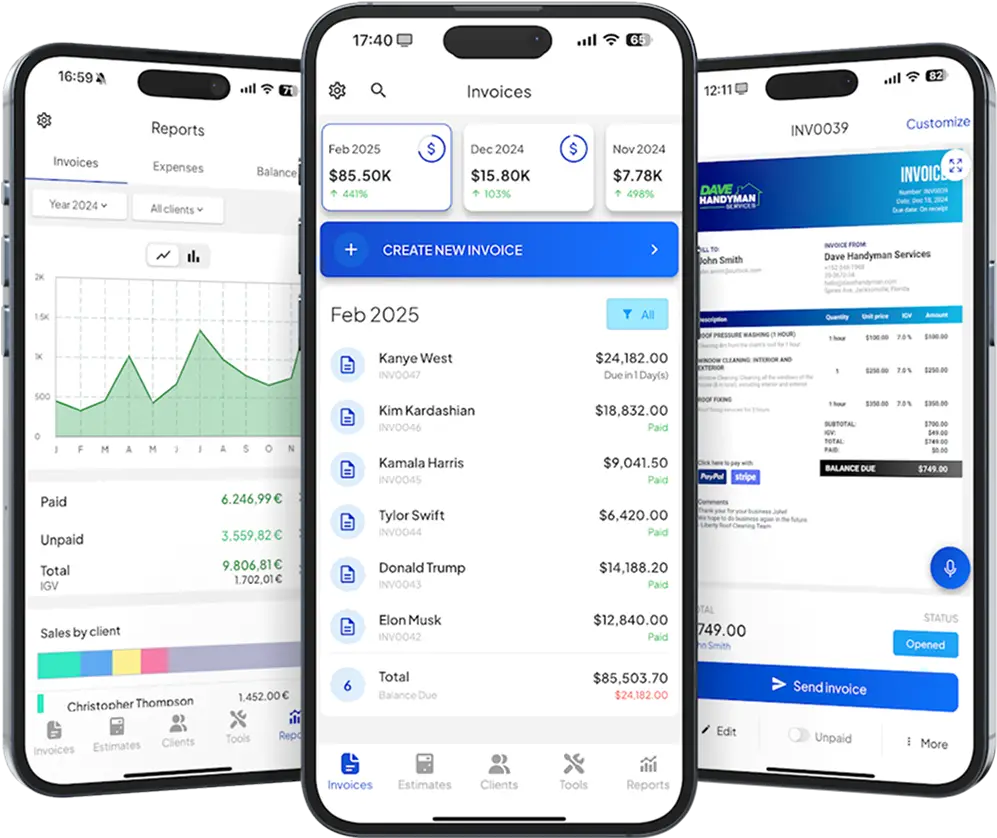
As new leads turn into booked jobs, make sure your back office is ready too. Pair your SEO efforts with a reliable invoice maker and a plumbing estimate template so every customer has a smooth experience from first click to final payment. For a complete guide to building your business, see our guide on how to start a plumbing business.