- Home
- »
- Free Resources for Small Businesses
- »
- Free Business Calculators
- »
- Down payment
Down Payment Calculator
Calculate how much you need for a down payment, estimate your loan amount and monthly payment, and see how closing costs affect the total.
Down Payment Calculator
Purchase price of the property
Total cash on hand for down payment and closing costs
Share of the home price paid upfront
Annual mortgage rate
Length of the mortgage

Down Payment Breakdown
| Item | Amount |
|---|---|
| Home Price AUTO | $0.00 |
| Down Payment AUTO | $0.00 |
| Closing Costs | $0.00 |
| Loan Amount | $0.00 |
| Monthly Payment | $0.00 |
Note: Since the down payment is less than 20%, you will likely be required to pay Private Mortgage Insurance (PMI).
Monthly payment covers principal and interest only — property taxes, homeowners insurance, HOA dues and PMI are not included.
How to Use the Down Payment Calculator
Choose how you want to calculate your down payment, enter your numbers, and get a clear breakdown of your home price, upfront cash, loan amount, and monthly payment.

1
Choose What You Want to Calculate
Select the calculation that matches what you already know: home price, cash needed, or down payment percentage. This makes it easy to work backward from your budget or compare different options.
2
Enter Your Purchase Details
Add your available cash or target home price, then enter your desired down payment. You can also include closing costs to get a more complete picture of how much you’ll need upfront.
3
Add Your Loan Details
Enter your interest rate and loan term to see how your down payment affects the loan amount and estimated monthly payment.
4
Compare Your Results
Review your down payment, home loan amount, closing costs, and monthly payment in one place. Try different numbers to see what fits your budget before buying a house.
See What Your Down Payment Really Means
Whether you’re buying a home or comparing loan options, see how your down payment affects the amount you’ll need upfront and what you may pay each month.
Plan Your Upfront Costs
See how your down payment and closing costs add up so you know how much cash you may need before buying a house.
Compare Loan Options
Change your down payment, interest rate, and loan term to see how different choices affect your loan amount and monthly payment.
Work Back From Your Budget
Not sure how much house you can afford? Start with the cash you have available and use the calculator to estimate a home price that fits your budget and income.
Explore Different Scenarios
Try a larger or smaller down payment and compare the results. You can also see how extra payments could affect your mortgage over time.

Mortgage Payment Formula
The monthly payment formula used in the calculator is:
M = P × [r(1+r)ⁿ / ((1+r)ⁿ − 1)]
Where M is your monthly payment, P is your loan principal, r is your monthly interest rate, and n is the total number of monthly payments.
Down Payment Calculation Example
For a $400,000 home with a 20% down payment, you’d put $80,000 down and finance the remaining $320,000. Add your closing costs, interest rate, and loan term to get a clearer estimate of your upfront cash and monthly payment.
Compare Different Down Payment Options
A larger down payment means borrowing less, while a smaller one means taking on a larger loan. Try different percentages in the down payment calculator to see how your upfront costs and monthly payment change.
Avoid Common Calculation Mistakes
Don’t look at the down payment alone. Mortgage rates, interest rate, closing costs, loan term, and your available income can all affect what you can realistically afford. Use the calculator to compare the numbers before choosing a home loan.
Should You Put More or Less Money Down?
The size of your down payment affects how much you borrow, what you pay upfront, and potentially how much interest you pay over time. A larger down payment can reduce your home loan, while a smaller one can leave more of your income available for other expenses. Use the calculator to compare both options before deciding what works for you.
When a Larger Down Payment Makes Sense
Putting more money down means borrowing less. That can lower your monthly payment and reduce the total interest you pay over the life of the loan. Depending on the loan, a larger down payment may also help you avoid mortgage insurance or qualify for better mortgage rates.
When a Smaller Down Payment May Be Better
A smaller down payment means less cash tied up in your home at closing. This can leave more money available for moving costs, emergencies, renovations, or other financial goals. However, borrowing more can mean higher monthly payments and more interest over time.
Compare Your Options Before You Buy
There isn’t one right average down payment for every buyer. Your budget, income, loan type, interest rate, and other costs all matter. Try different percentages in a down payment calculator to see how each option changes your loan amount and monthly payment.
Try the down payment calculatorHow Can You Fund Your Down Payment?
Your down payment doesn’t have to come from just one source. Depending on your situation and loan requirements, you may be able to combine your savings with other sources of funds.
Use Your Savings
Personal savings are one of the most common ways to fund a down payment. Make sure you also have enough set aside for closing costs, moving expenses, and unexpected costs.
Look Into Assistance
Some buyers may qualify for down payment assistance programs. Availability and eligibility vary by location, income, property, and loan type.
Consider Gift Funds
Some mortgage programs allow eligible buyers to use money gifted by family. Lenders may require documentation confirming the money is a genuine gift.
Explore Other Financing
You may have other ways to cover part of your upfront costs. Understand the fees, interest, and repayment requirements before using them.
Know How Much Cash You Actually Need
Your upfront cost isn’t just the down payment. You’ll also need to account for closing costs and other purchase expenses — see the full picture before you buy.
Calculate Down Payment FreeMore Free Calculators from Invoice Fly
Explore more free Invoice Fly calculators to help with taxes, payroll, pricing, and other business numbers.
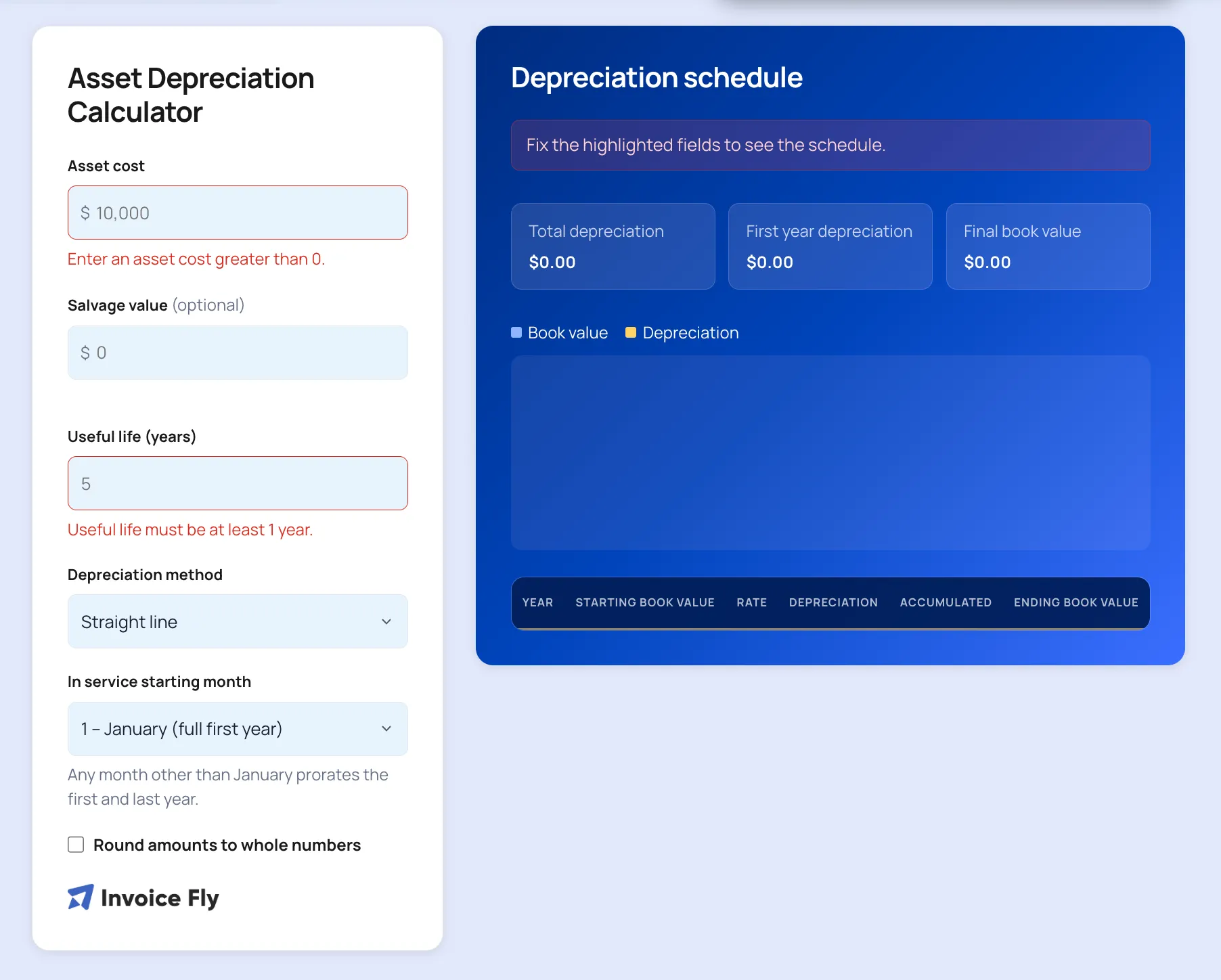 Open calculator
Depreciation Calculator
Calculate how an asset’s value changes over time.
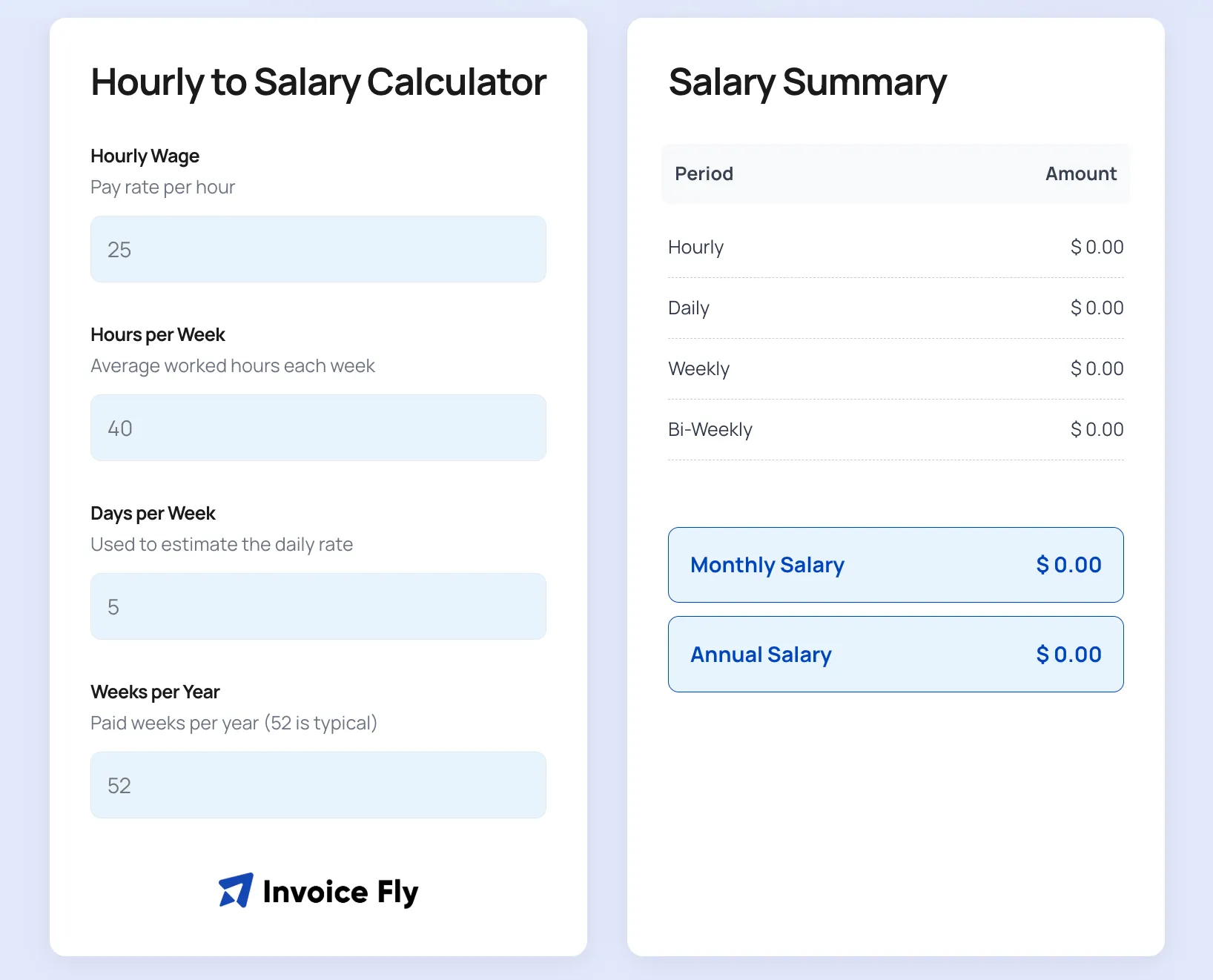 Open calculator
Hourly to Salary Calculator
Convert your hourly rate into weekly, monthly, and annual income.
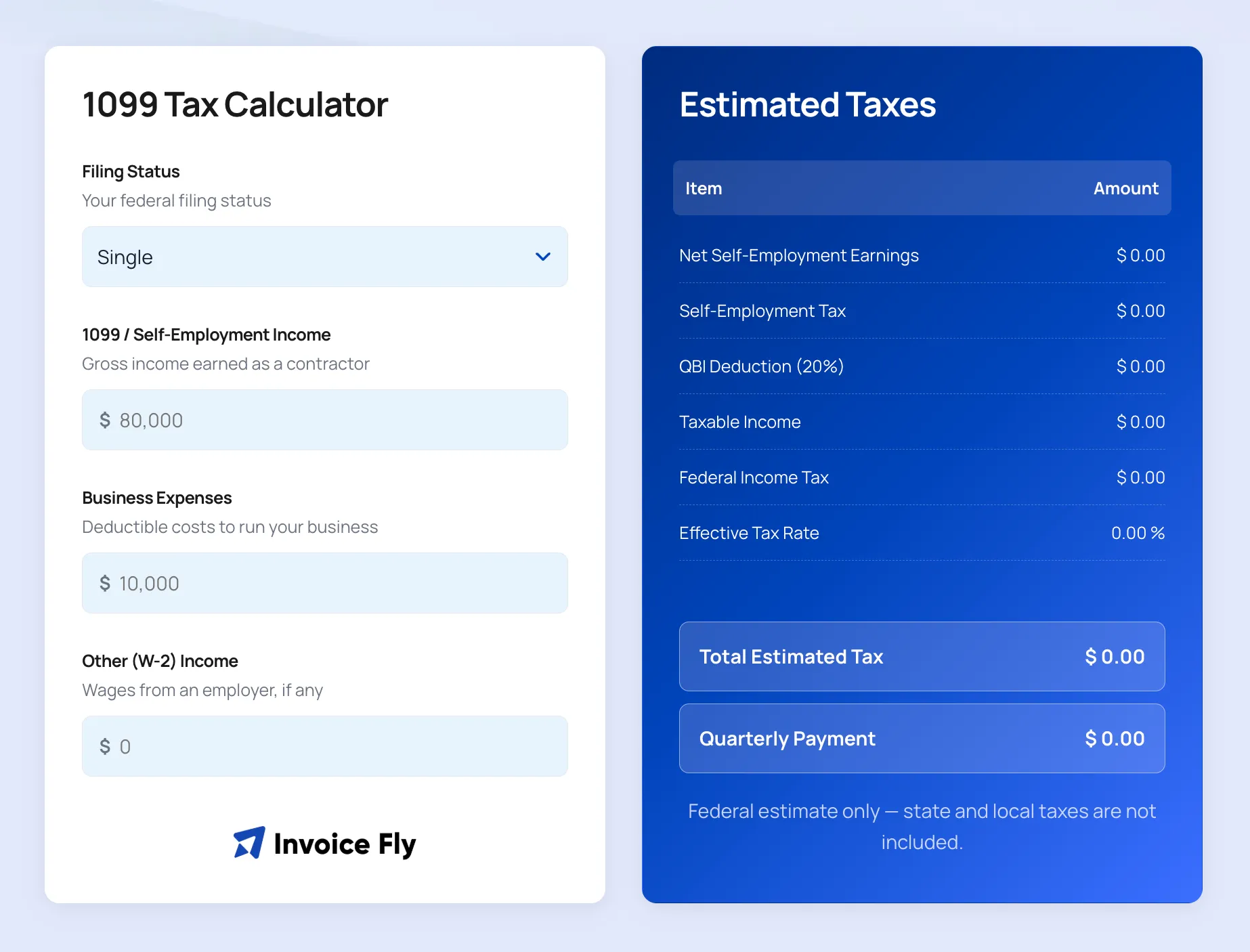 Open calculator
Tax Calculator 1099
Estimate your taxes based on your 1099 income.
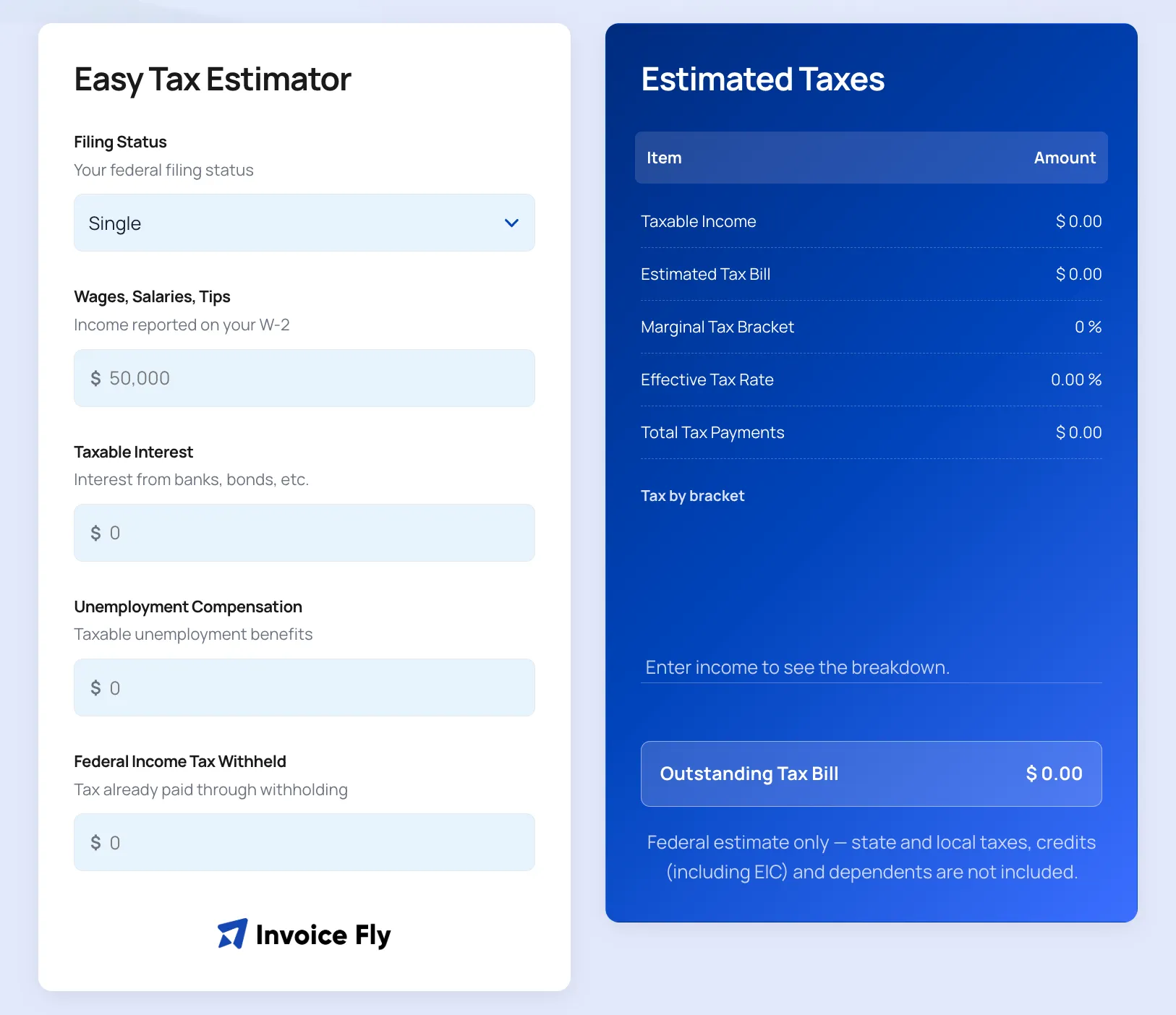 Open calculator
IRS Estimated Taxes Payment
Estimate your federal tax payments based on your income and withholding.
 Open calculator
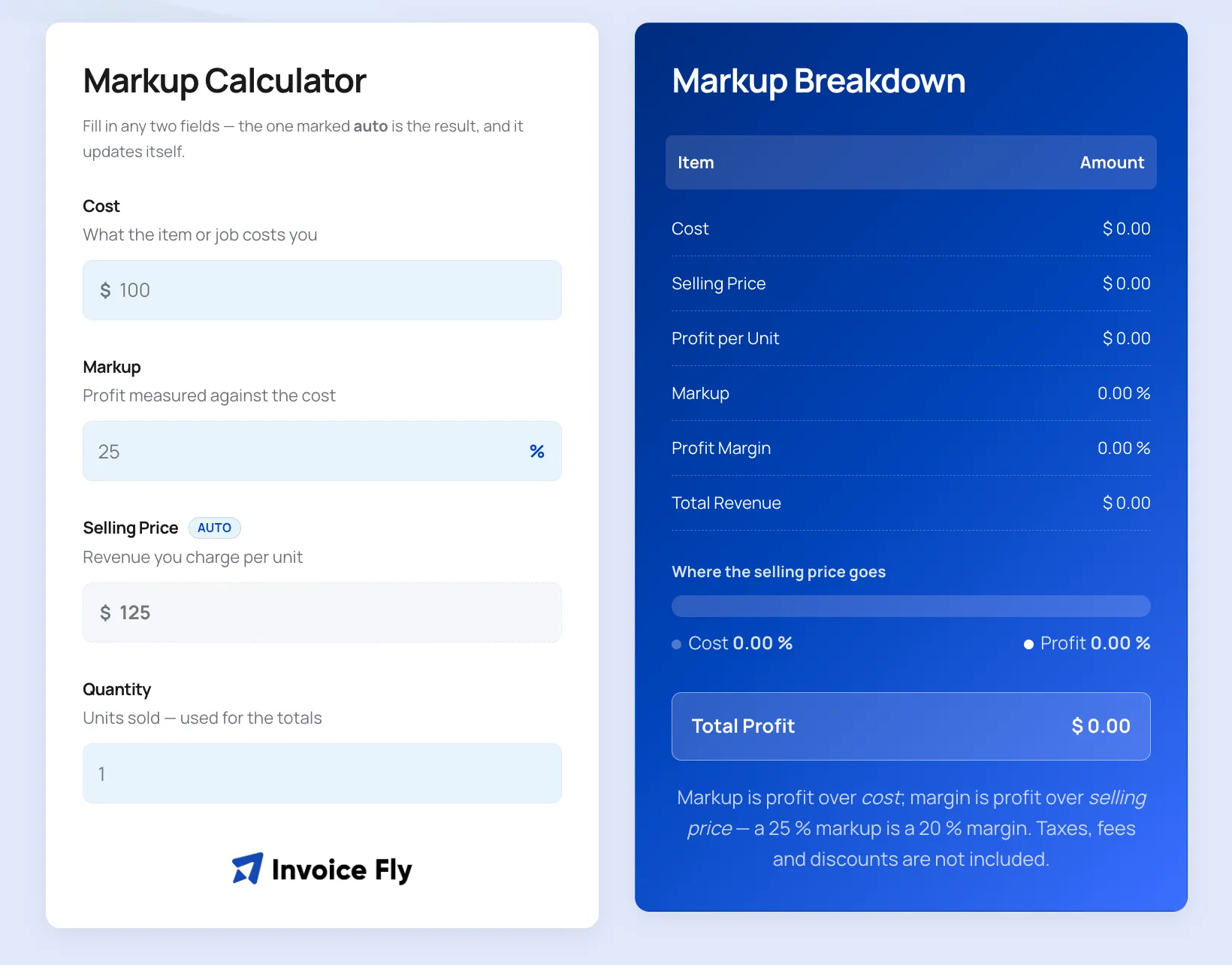
Markup Calculator
Calculate markup, selling price, and profit.
 Open calculator
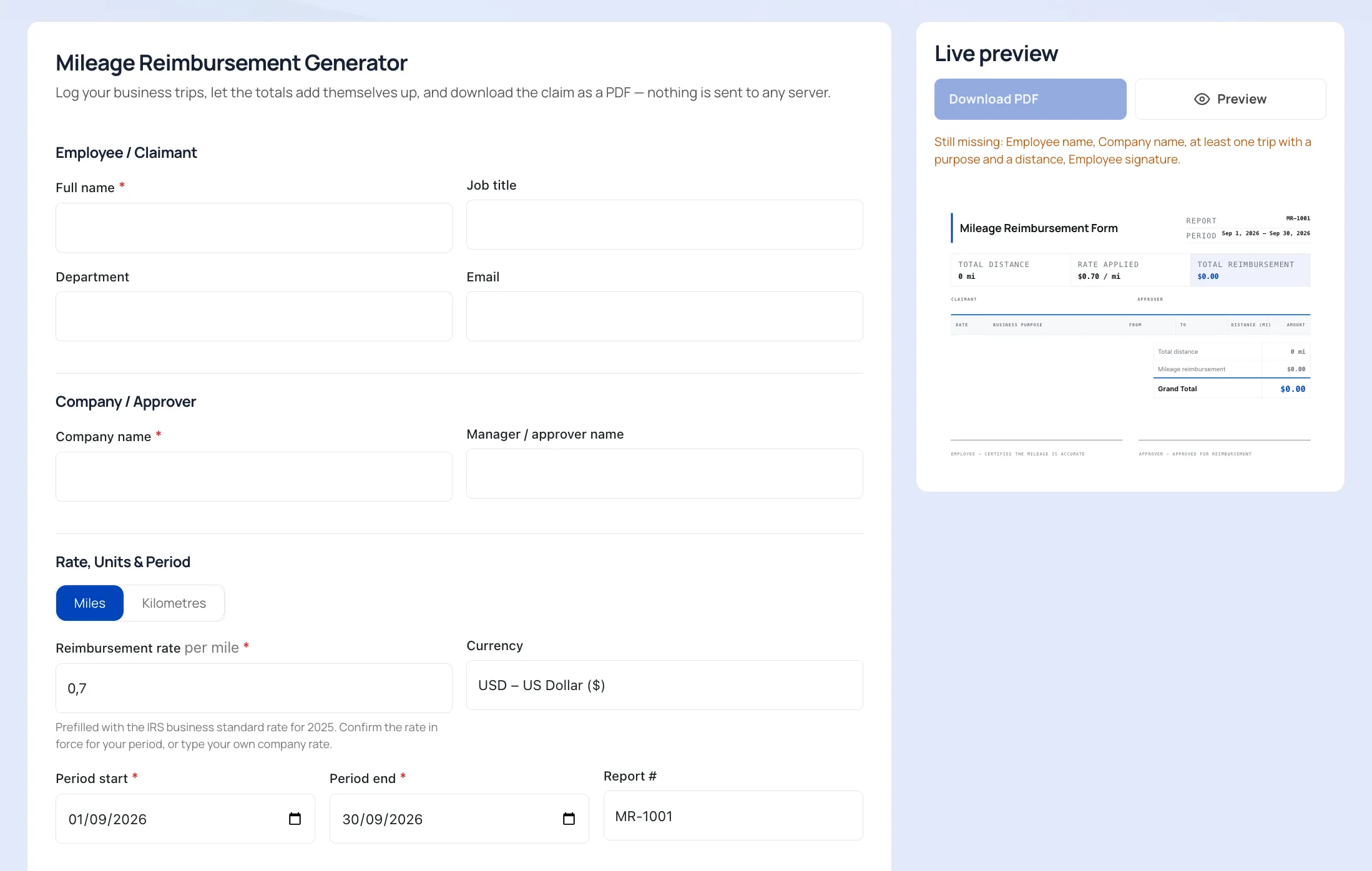
Federal Reimbursement for Mileage
Calculate mileage reimbursement for business travel.
 Open calculator
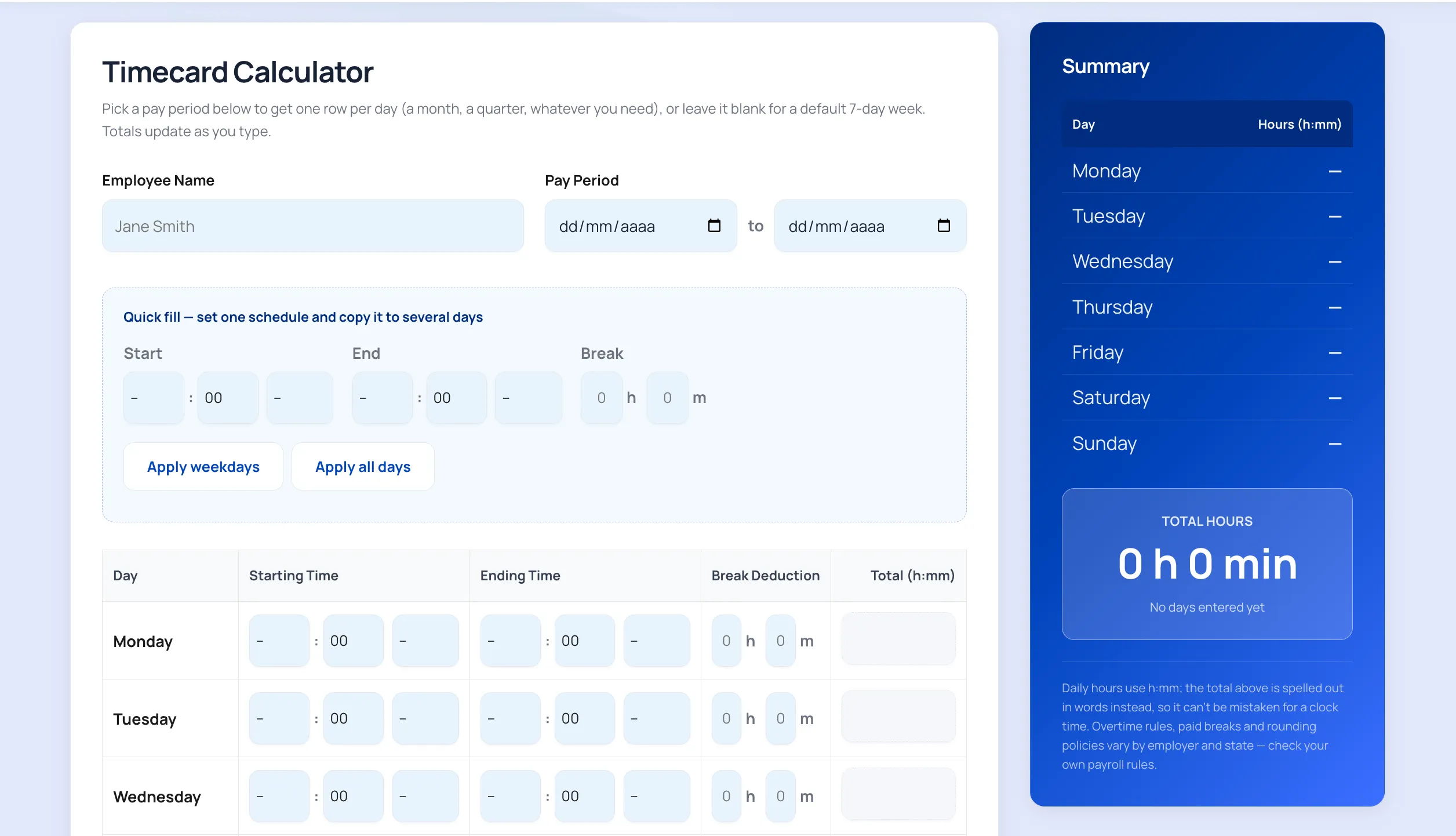
Calculating Timesheet
Calculate hours worked and total pay.
Down Payment Calculator FAQs
To calculate your down payment, multiply the home price by your desired down payment percentage. For example, a 20% down payment on a $300,000 home would be $60,000. Use our down payment calculator to quickly work out the amount and see your estimated loan amount and monthly payment.
Start with the home price and the percentage you plan to put down. Multiply the two to find your down payment amount, then subtract it from the home price to find your home loan amount. You can also add closing costs to estimate how much cash you'll need upfront.
The amount you need depends on the percentage required by your loan and lender. For example, a 10% down payment on a $300,000 house would be $30,000, while a 20% down payment would be $60,000. Use the calculator to compare different percentages and see how they affect your loan.
A 30% down payment is calculated by multiplying the home price by 0.30. For a $300,000 house, that would be $90,000. A larger down payment means a smaller amount to finance, which can reduce your estimated monthly mortgage payment.
A good down payment depends on your budget, loan type, and financial goals. Putting more money down can reduce your home loan and monthly payment, while a smaller down payment can help you keep more cash available for other expenses.
Your down payment can affect the terms of your mortgage, including the interest rate you may qualify for. A larger down payment can also reduce the amount you need to borrow. Compare different down payment amounts to see how they change your estimated loan and monthly payment.
No. Your down payment goes toward the purchase price of the home, while closing costs are separate expenses associated with completing the purchase. When planning how much cash you need, make sure you account for both.
Know How Much You Need for Your Down Payment
Use our free down payment calculator to see how much cash you’ll need upfront, including your down payment and closing costs, and estimate your home loan and monthly payment.