- Home
- »
- Free Resources for Small Businesses
- »
- Free Business Calculators
- »
- Hourly to salary calculator
Hourly to salary calculator
Convert your hourly pay into weekly pay, monthly salary, and annual income in seconds. Enter your hourly rate, hours per week, and weeks per year to see your estimated salary instantly.
Hourly to Salary Calculator
Hourly Wage
Pay rate per hour
Hours per Week
Average worked hours each week
Days per Week
Used to estimate the daily rate
Weeks per Year
Paid weeks per year (52 is typical)

Salary Summary
Turn your hourly pay into the full picture.
Enter your pay and work details, and get a clear breakdown of what you earn.

1
Start with your hourly rate
Enter what you earn per hour and let our hourly compensation calculator handle the conversion.
2
Set your working hours
Add the hours you normally work each week and the number of weeks you work each year.
3
See your salary breakdown
Get your weekly pay, monthly salary, and annual salary in one clear view.
4
Adjust and recalculate
Change any number to instantly see how a different rate or schedule affects your results.
See where an hourly salary calculator can help.
From comparing job offers to setting your freelance rate, turn an hourly rate into numbers you can actually use.
Compare hourly and salaried job offers
See what an hourly job is worth as an annual salary and compare it directly with a salaried offer. Get a clearer picture of the -compensation before you decide.
Plan your annual income
Estimate your annual income from your weekly or hourly pay when you’re budgeting, planning for a loan, or simply figuring out what you’ll earn over the year.
Set your freelance rate
Know what your target salary works out to per hour before setting a freelance or contract rate. It’s an easy way to make sure your rate reflects the income you want to earn.
Adjust for your actual schedule
Working part-time, taking unpaid time off, or following a variable schedule? Adjust your hours and weeks worked to see how your monthly salary, weekly pay, and annual earnings change.
Check pay against local standards
Compare an employee’s hourly earnings with minimum wage requirements, including rates that apply in North Carolina, when reviewing compensation.

The math behind your salary is simple.
The formula is simple: Annual Salary = Hourly Rate × Hours/Week × Weeks/Year. Your hourly rate is what you earn per hour, while your hours per week and weeks worked each year determine your total annual income. Think of it as a quick alternative to doing the same calculation manually in Excel.
Example Calculation
Say you earn $20 per hour, work 40 hours a week, and work 50 weeks a year. Your annual salary would be $40,000.That’s your gross income before tax and income tax deductions, so your actual take-home pay may be lower.
Other Salary Scenarios
Not everyone works the same schedule. If you’re a part-time employee working 20 hours a week for 48 weeks at $15 per hour, your annual salary would be $14,400. Try different hours, rates, and weeks to see how your weekly pay, monthly salary, and annual compensation change.
Common Calculation Errors
The easiest way to get an hourly-to-salary calculation wrong? Forgetting that your schedule matters. Unpaid time off, fewer working weeks, or changing hours can all affect your annual income. Make sure you’re using the hours and weeks you actually work when comparing your pay with another employee salary, compensation level, or minimum wage.
Your salary calculator, wherever you go
From checking a new job offer to setting your freelance rate, Invoice Fly puts your salary calculator in your pocket so you can work out the numbers wherever you are.
Need to calculate something else?
Explore more free calculators from Invoice Fly and work out taxes, payments, pricing, and other numbers in just a few clicks.
 Open calculator
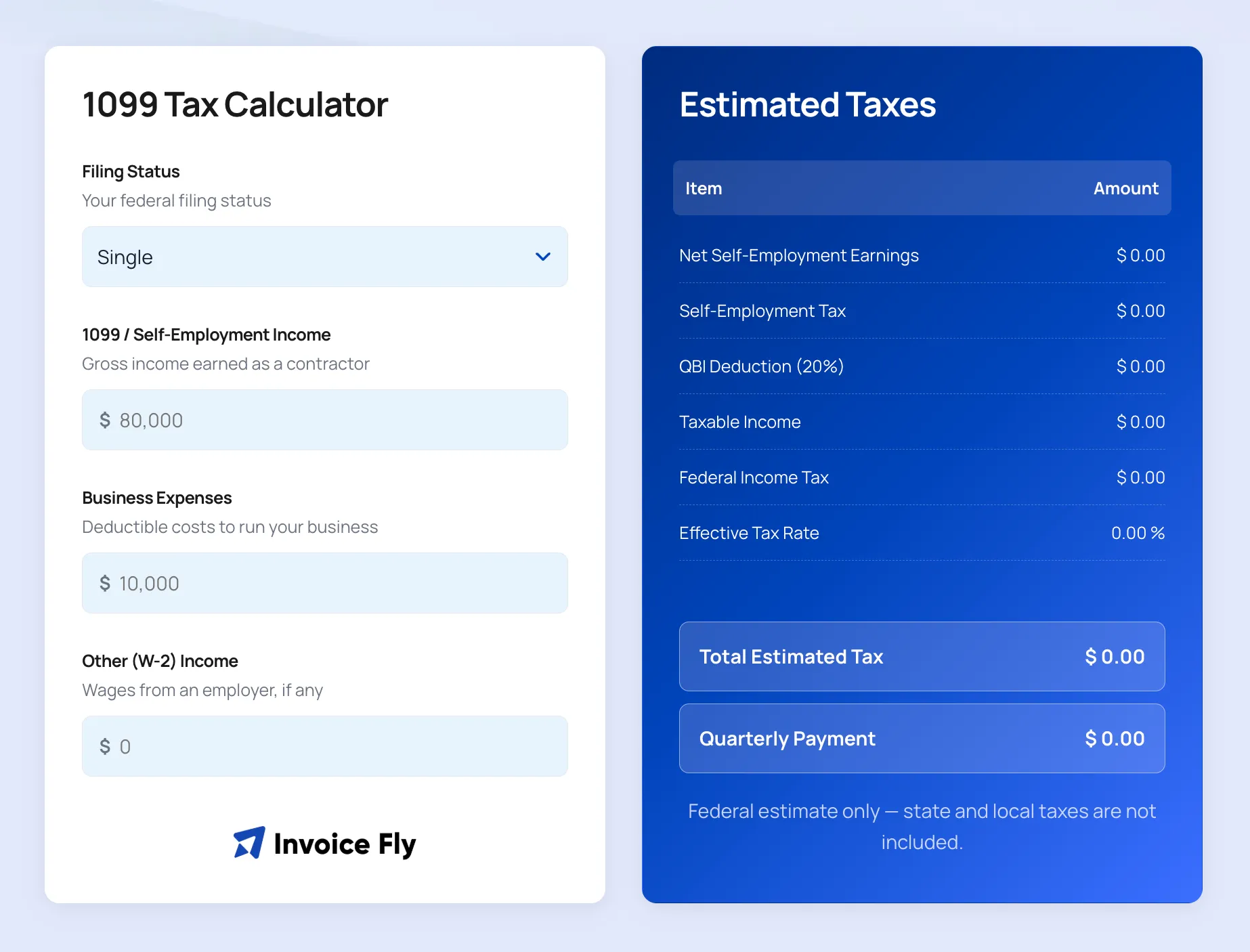
1099 Tax Calculator
Estimate your self-employment taxes and see how much you may need to set aside from your 1099 income.
 Open calculator
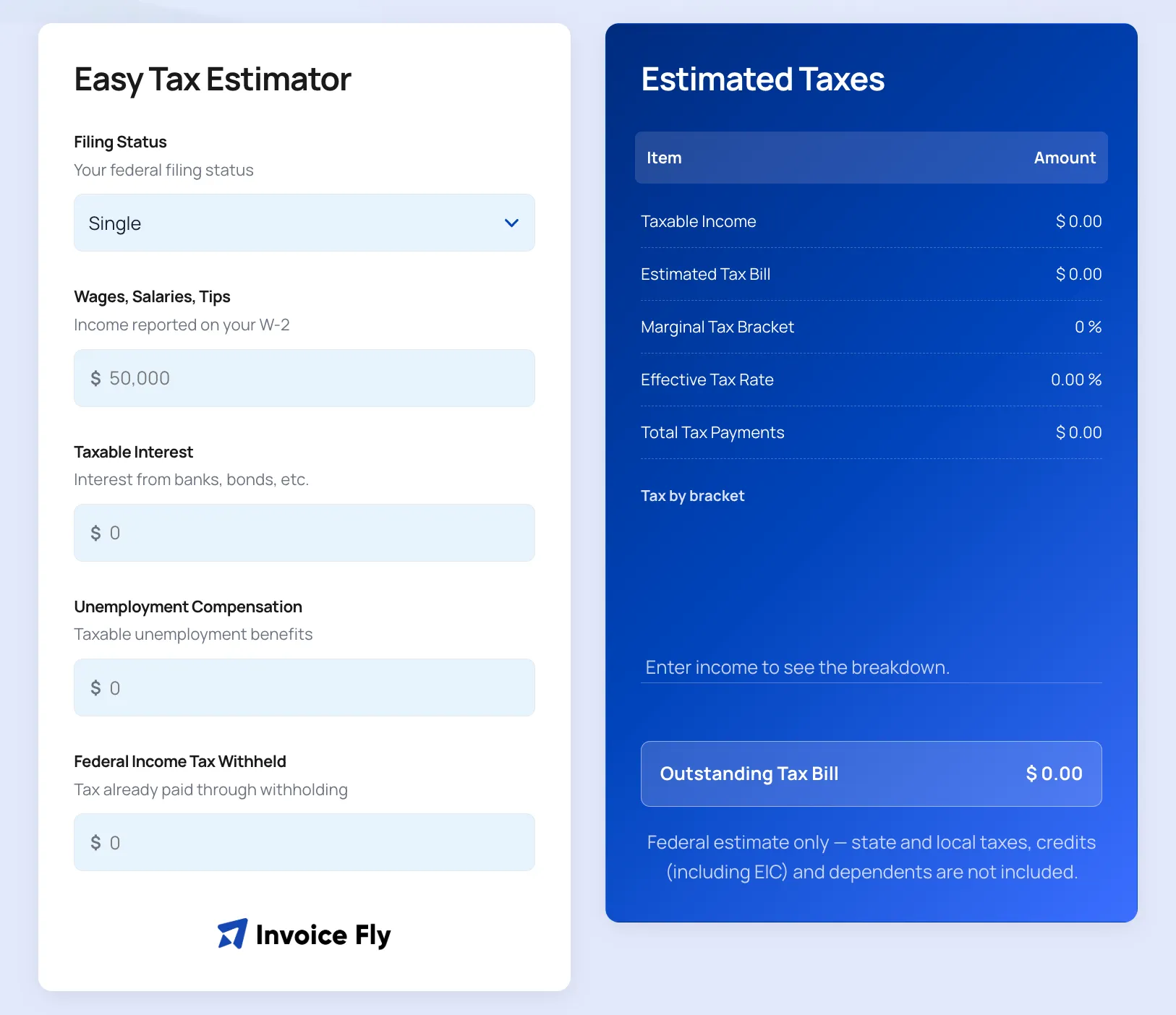
Estimated Tax Payment Calculator
Calculate your estimated quarterly tax payments and stay on top of what you may owe throughout the year.
 Open calculator
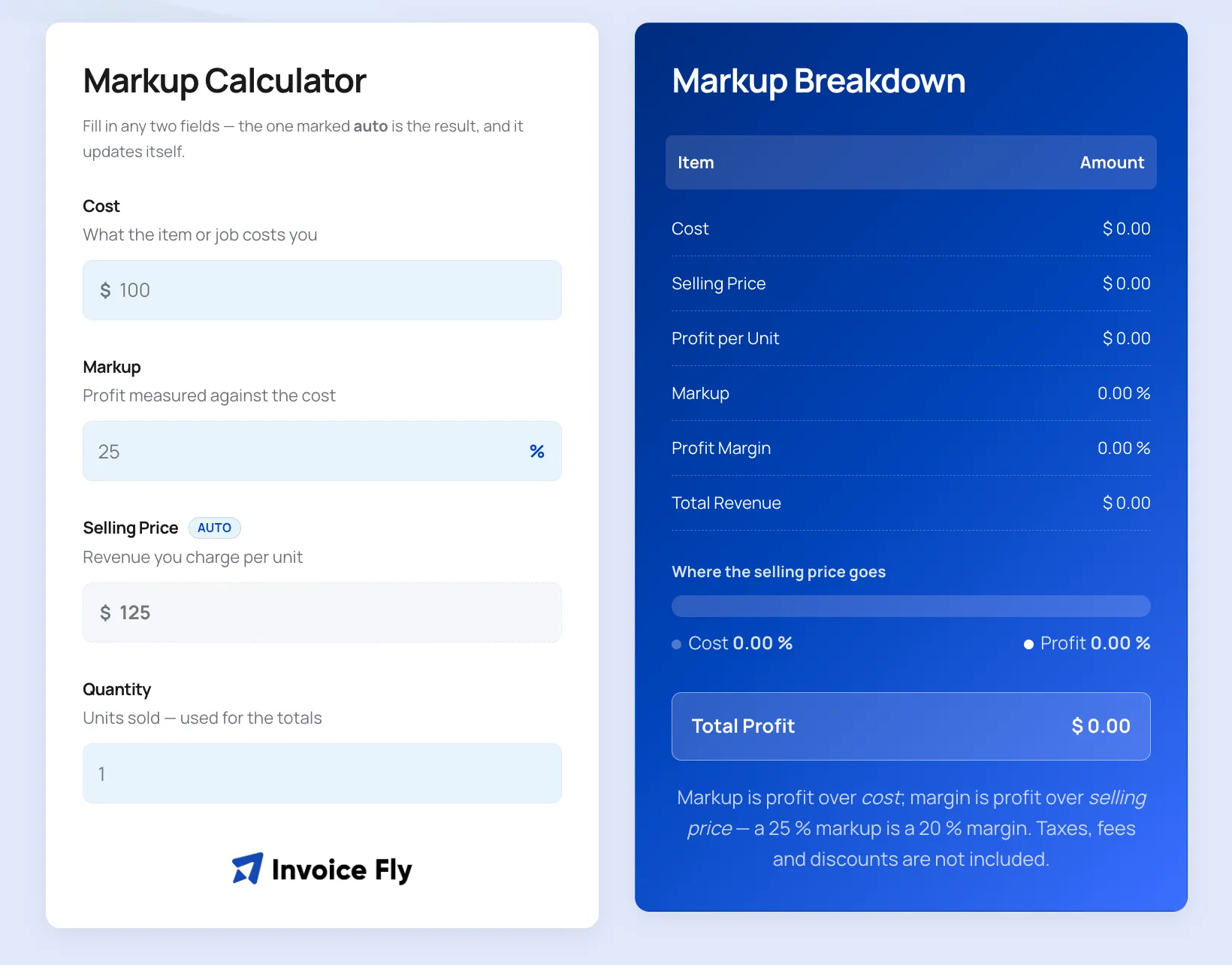
Markup Calculator
Calculate your markup and profit margin to make sure you're pricing your products or services profitably.
 Open calculator
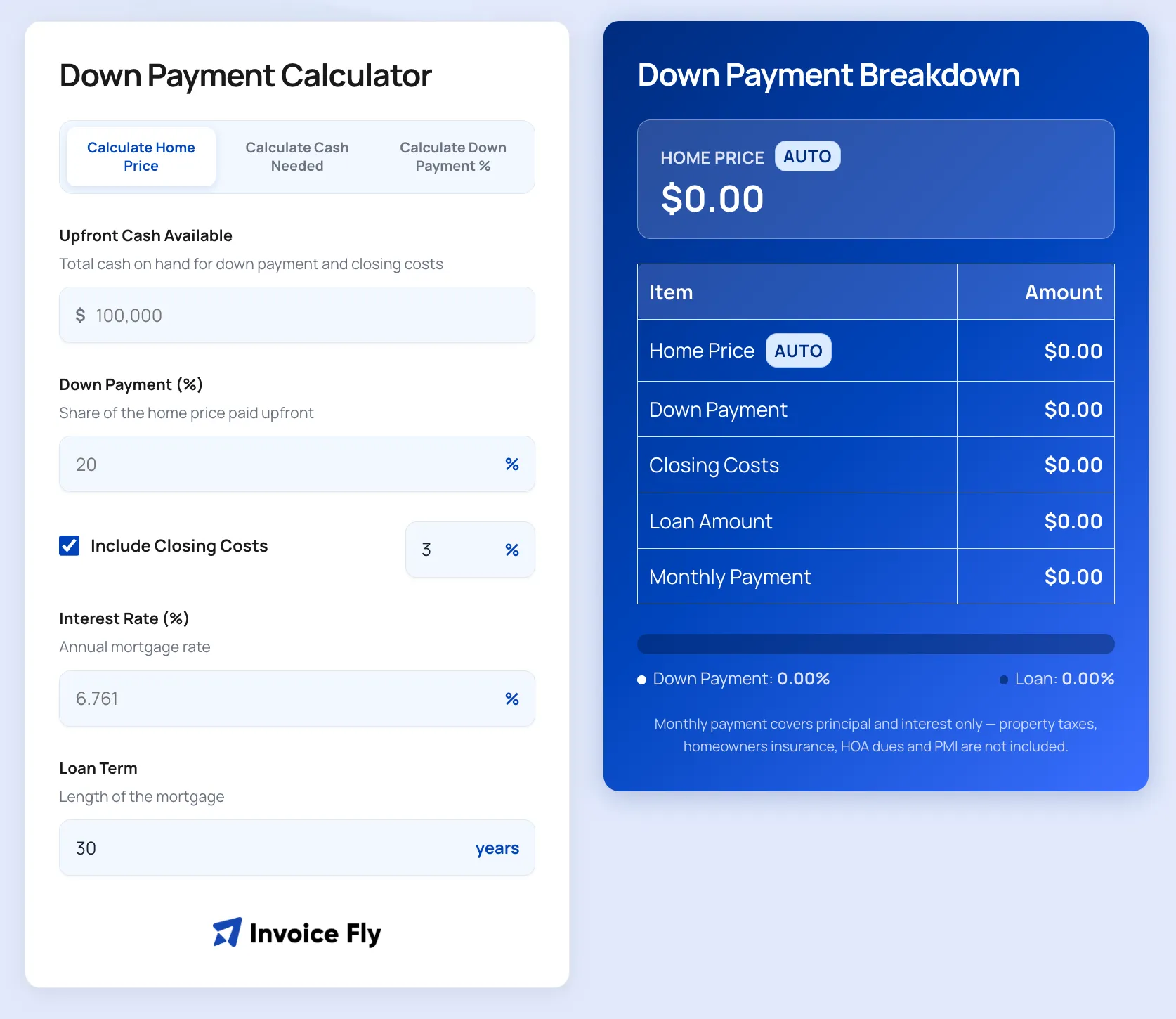
Down Payment Calculator
See how much you'll need for a down payment and estimate the amount you may need to put toward your purchase.
 Open calculator
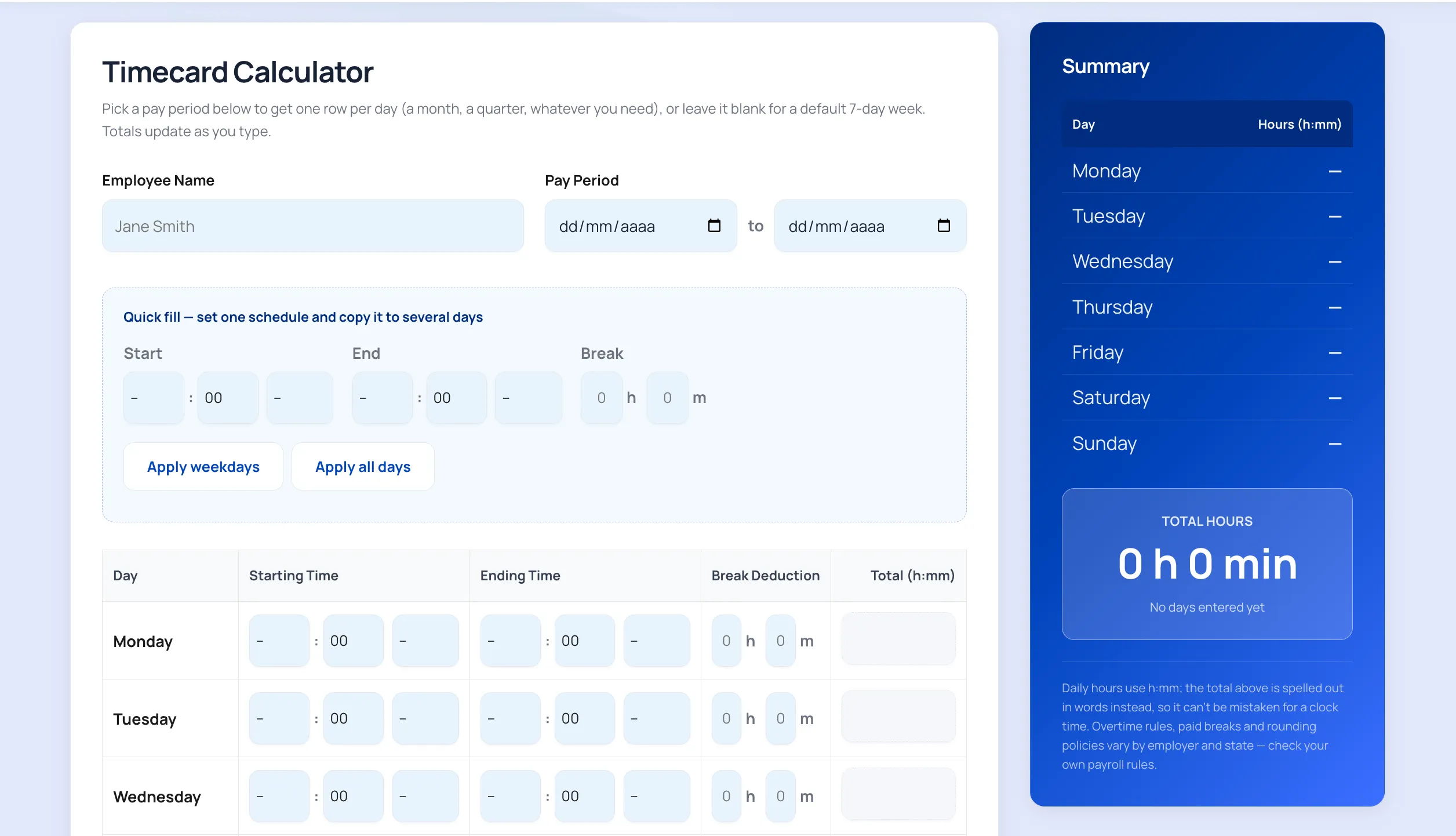
Timesheet Calculator
Calculate your total work hours and pay from your timesheet, including regular and overtime hours.
 Open calculator
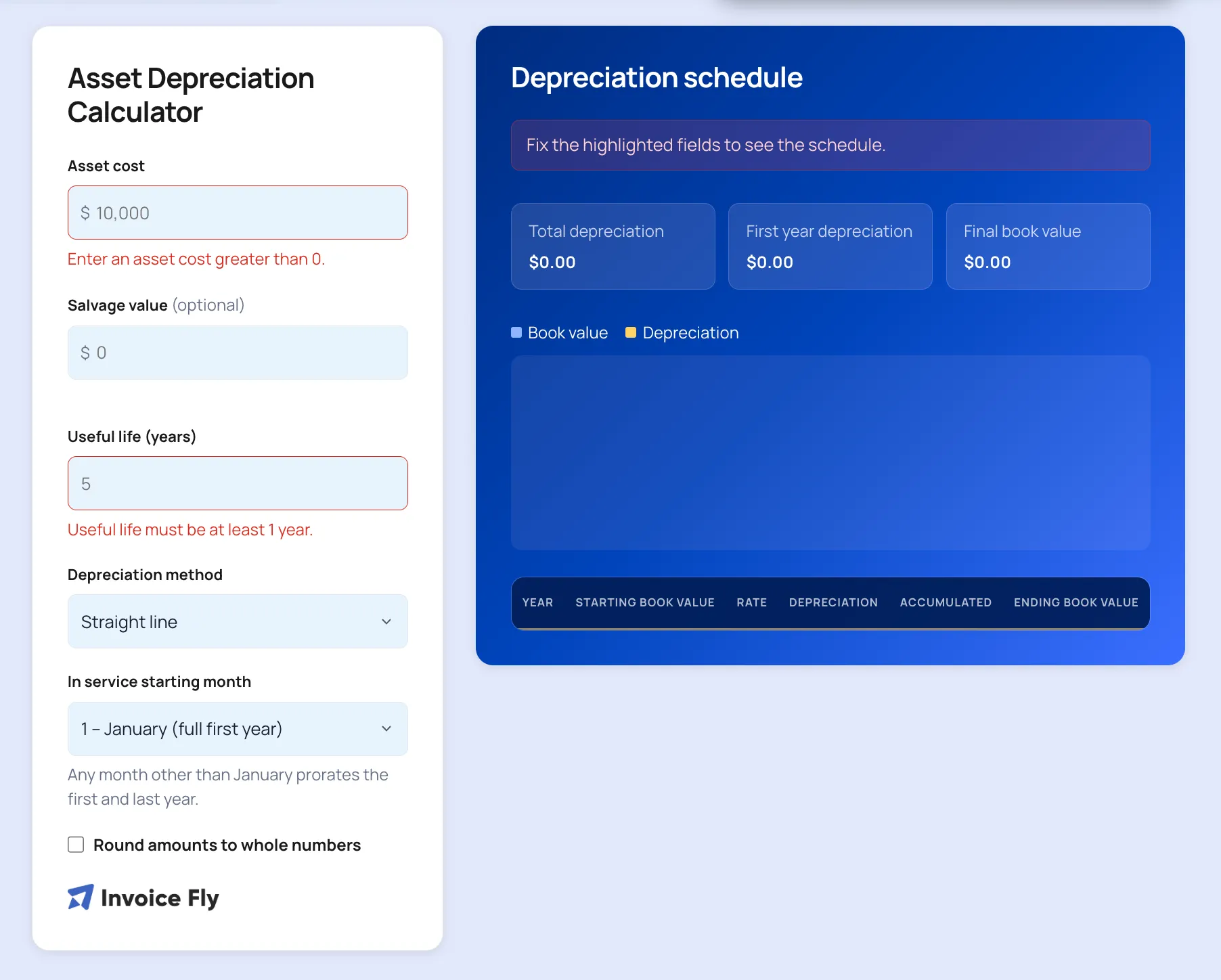
Depreciation Calculator
Calculate how an asset's value changes over time and estimate its depreciation expense.
FAQ's About Hourly to Salary Calculator
Multiply your hourly rate by the number of hours you work per week, then multiply by the number of weeks you work per year. For example, $15 per hour × 40 hours × 52 weeks = $31,200 per year. Use our Hourly to Salary Calculator to make the conversion automatically and see your weekly pay, monthly salary, and annual income.
Divide your annual salary by the total number of hours you work in a year. For a standard full-time schedule, that's 2,080 hours (40 hours per week × 52 weeks). For example, $60,000 ÷ 2,080 = $28.85 per hour. You can also adjust the hours and weeks in the calculator to match your actual work schedule.
The standard formula is Annual Salary = Hourly Rate × Hours per Week × Weeks per Year. To convert an annual salary back to an hourly rate, use Hourly Rate = Annual Salary ÷ (Hours per Week × Weeks per Year). This makes it easy to compare hourly compensation with an annual salary.
At $20 per hour, working 40 hours a week for 52 weeks, you would earn $41,600 per year before taxes. That's approximately $3,467 in monthly salary or $800 in weekly pay.
A $50,000 annual salary equals approximately $24.04 per hour, assuming you work 40 hours per week for 52 weeks. If your schedule is different, use your actual hours and weeks worked for a more accurate salary and hourly calculation.
2,080 hours comes from a standard full-time work schedule of 40 hours per week multiplied by 52 weeks per year. It's commonly used to convert between an employee salary and an hourly rate, although your actual annual hours may vary depending on your schedule and unpaid time off.
No. This calculator assumes straight-time pay for the hours you enter. If you earn overtime or work more than your standard weekly hours, your actual annual income may be higher than the estimate shown.
If your vacation and holidays are paid, you can generally use 52 weeks when calculating your annual salary. If you take unpaid time off, reduce the weeks-per-year value to reflect the time you actually work. This helps make your hourly earnings calculation more accurate.
At $25 per hour, working 40 hours a week for 52 weeks, you would earn $52,000 per year, or approximately $4,333 per month before taxes and deductions.
It depends on your work schedule, overtime, benefits, bonuses, and overall compensation. Hourly pay can be more valuable when overtime is available, while a salary can provide more predictable income. Compare the annual salary equivalent first, then consider the full compensation package.
Divide the employee's annual salary by the total number of hours they work in a year. For a standard 40-hour workweek and 52 weeks per year, that's 2,080 hours. If the employee works a different schedule or takes unpaid leave, adjust the calculation accordingly.
Multiply the employee's hourly rate by their hours per week and weeks worked per year. For example, an employee earning $15 per hour and working 40 hours per week for 52 weeks would earn $31,200 per year before taxes and deductions.
Enter the actual number of weeks you work per year instead of automatically using 52. If you take unpaid leave, for example, reducing the number of working weeks will give you a more accurate annual income estimate.
Learn more with Invoice Fly Academy.
Get practical guides and tips on hourly pay, salary, taxes, compensation, and everything in between, so you can make better sense of your numbers.



Get to know what your hourly rate adds up to.
See your weekly pay, monthly salary, and annual income in seconds.