- Home
- »
- Free Resources for Small Businesses
- »
- Free Business Tools
- »
- Contract independent
Contract Independent
Create a professional independent contractor contract in minutes. Add your business, client, project, services, pricing, payment terms, and tax details to create a clear 1099 contract for your next job.
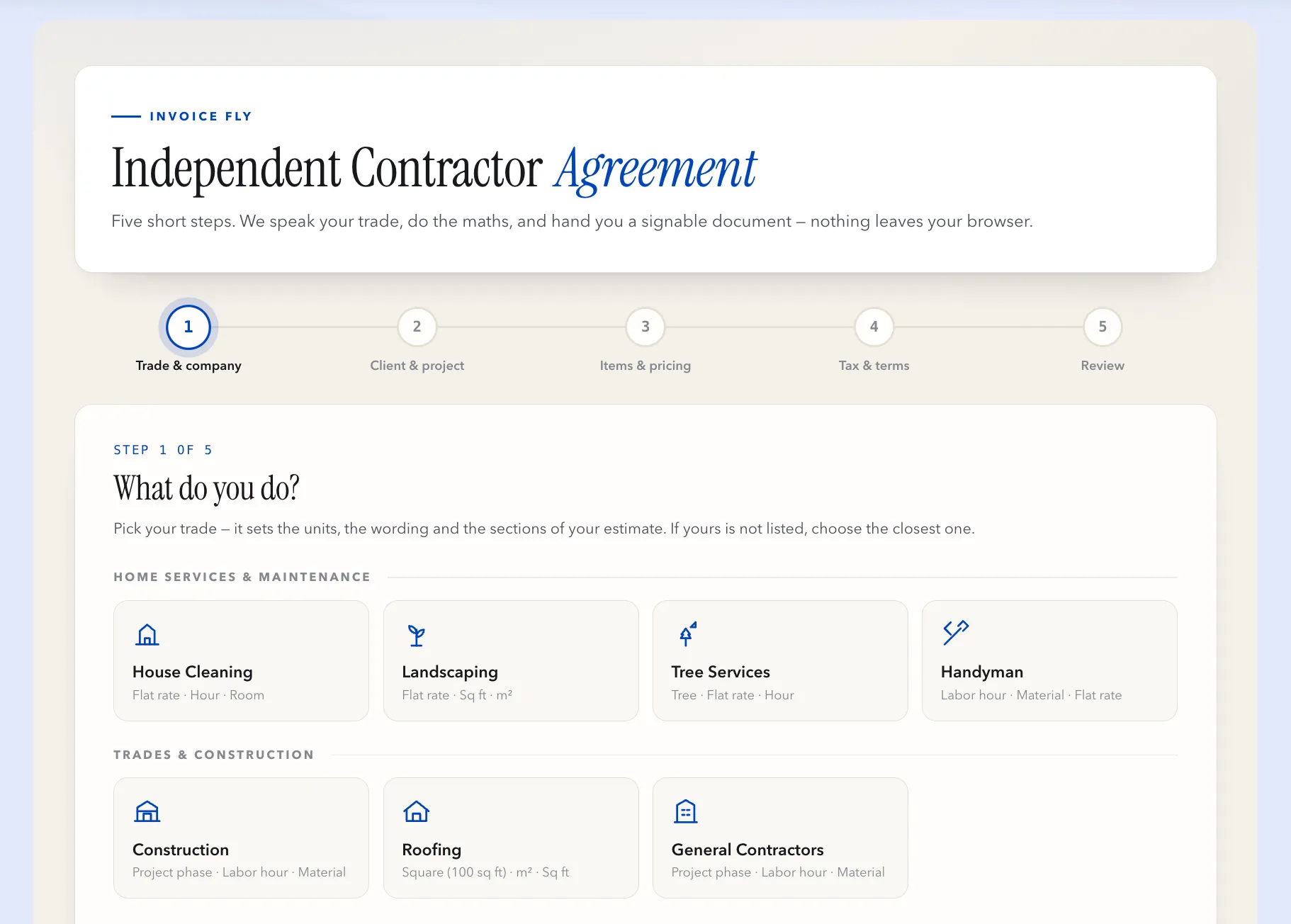
Independent ContractorAgreement
Five short steps. We speak your trade, do the maths, and hand you a signable document — nothing leaves your browser.
Step 1 of 5
What do you do?
Pick your trade — it sets the units, the wording and the sections of your estimate. If yours is not listed, choose the closest one.
Home Services & Maintenance
Trades & Construction
Automotive & Manufacturing
Health, Wellness & Specialized Services
Your business
Step 2 of 5
Who is it for?
Their details, and a title they will recognise at a glance.
The job
Step 3 of 5
Items & pricing
| Description | Unit | Qty | Unit price | Line total | Remove |
|---|
Subtotal —
Step 4 of 5
Tax, discount & terms
The discount comes off the subtotal first; tax is then calculated on the discounted amount.
Terms
Step 5 of 5
Check it, then send it
Open the document to see exactly how it will print. Anything wrong, step back and fix it — nothing is final until you download.
- Subtotal
- —
- Discount
- —
- Tax
- —
- Total
- —
Running total —
Invoice Fly provides this tool to help you build estimates faster and is not a substitute for professional legal, tax or accounting advice. Invoice Fly is not responsible for errors, omissions, or any consequences arising from the use of this document.

What is an independent Contractor Agreement?
An independent contractor contract is a written agreement between a business or client and a self-employed professional. It outlines the work being provided, pricing, payment terms, project details, and responsibilities of both parties.
Whether you’re a 1099 independent contractor, freelancer, consultant, general contractor, or other self-employed professional, a written agreement helps make expectations clear before work begins.
An independent contractor agreement can be used for everything from a construction contract or landscaping project to professional, administrative, transportation, and other services.
Create Your Independent Contractor Contract in 5 Steps

1
Choose Your Trade and Add Your Business
Start by selecting the type of work you provide, such as construction, landscaping, cleaning, roofing, handyman services, or general contracting. Then add your business name and contact details.
2
Add Your Client and Project Details
Enter your client’s information and the details of the project or job covered by your contract form.
3
Add Services, Items, and Pricing
Describe the work you’ll provide and add your rates, quantities, or project pricing. This gives both parties a clear view of what the 1099 contractor is being hired to do and how much the work costs.
4
Set Your Tax and Contract Terms
Add the relevant tax and payment information and define the terms of your agreement. If you’re working as a 1099 individual contractor, make sure the contract accurately reflects your working arrangement.
5
Review Your Agreement
Check your business, client, project, pricing, tax, and contract details. Once everything looks right, generate your completed independent contractor agreement.
Make Independent Contractor Agreements Easier
Start With a Ready-to-Use Template
Skip the blank Word document. Start with an independent contractor template designed around the information you actually need for a project.
Create Contracts for Different Types of Work
Whether you’re self-employed in construction, landscaping, cleaning, roofing, automotive, manufacturing, or professional services, create a simple contractor agreement around your work.
Keep Pricing and Services Clear
Document your services, items, rates, and payment information so your client knows exactly what they’re agreeing to.
Keep Your 1099 Work Organized
Create a clear 1099 contract for your client and keep the important details of your contractor relationship together.
Spend Less Time on Paperwork
Instead of building a contract form from scratch, enter your information and let Invoice Fly organize it into a professional agreement.
Independent Contractor vs Employee
Independent contractors and employees can perform similar types of work, but they generally have different working relationships with the businesses they work for.
Independent Contractor
An independent contractor is generally self-employed and provides services under an agreement with a client or business.
Employee
Employees typically work as part of an employer’s organization and are subject to employment and payroll rules.
Whether someone is correctly classified as an independent contractor depends on the actual working relationship and applicable laws, not simply what the contract calls them.

Contractor or employee?
Independent Contractor Agreements by State
Independent contractor rules can vary by state, so the requirements that apply to a California independent contractor may differ from those that apply to an independent contractor in Texas or Colorado.
If you’re creating an agreement in Texas, a Colorado independent contractor agreement, or a contract for a California independent contractor, make sure your agreement and working relationship comply with the applicable state and federal requirements.

When Should You Use an Independent Contractor Contract?
An independent contractor agreement can be useful whenever a self-employed professional provides services to a client or business. You may use one for:

Get it in writing
A written agreement gives both parties a clear record of the services, pricing, payment terms, and other conditions they’ve agreed to.
More Forms & Templates
Need more than a rent receipt? Create the everyday business and payment documents you need with Invoice Fly. Choose a template, fill in your details, and get your document ready in minutes.
Open form
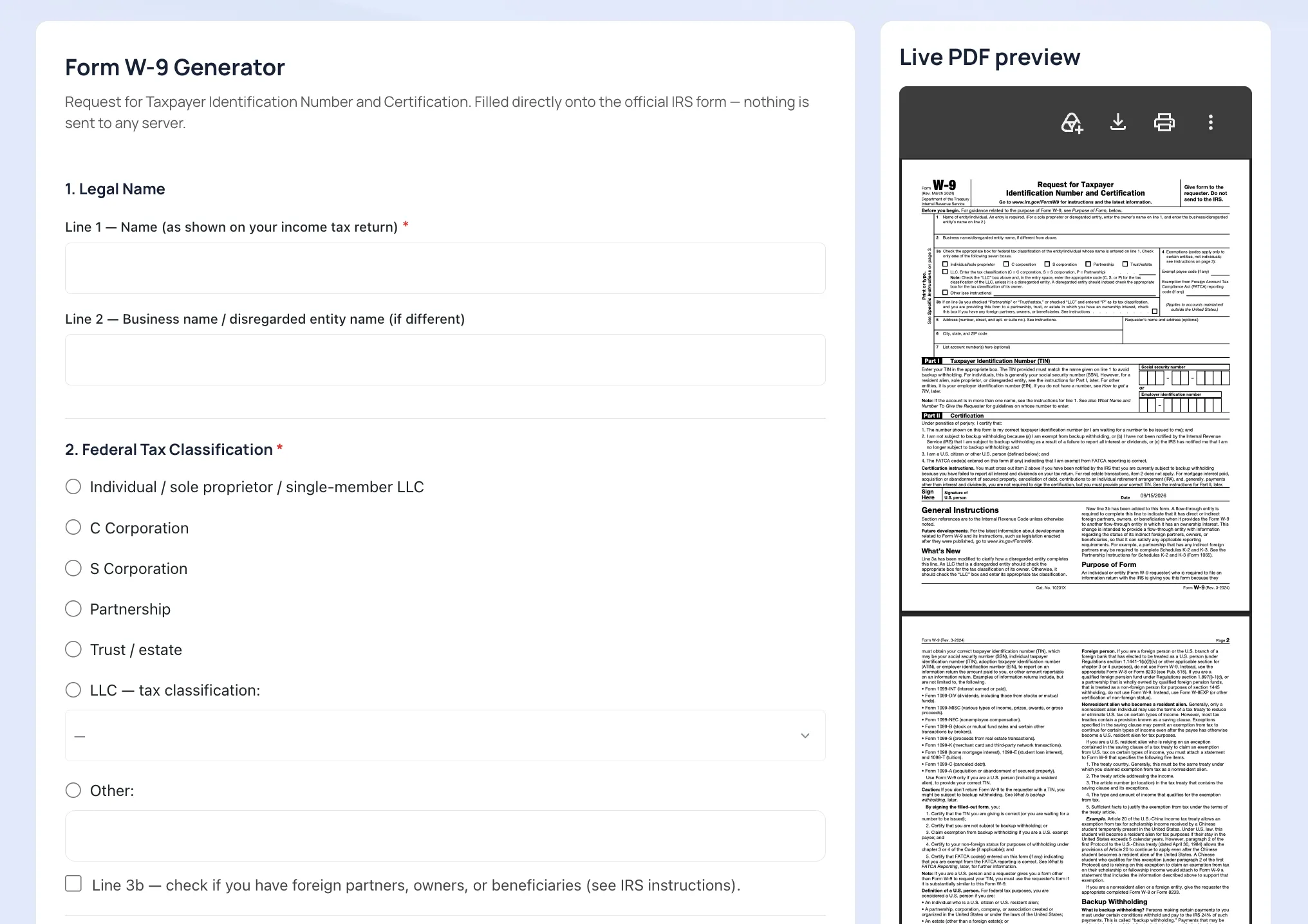
W-9 Form
Fill out a W9 Form with your tax information and get your completed document ready to use.
Open template
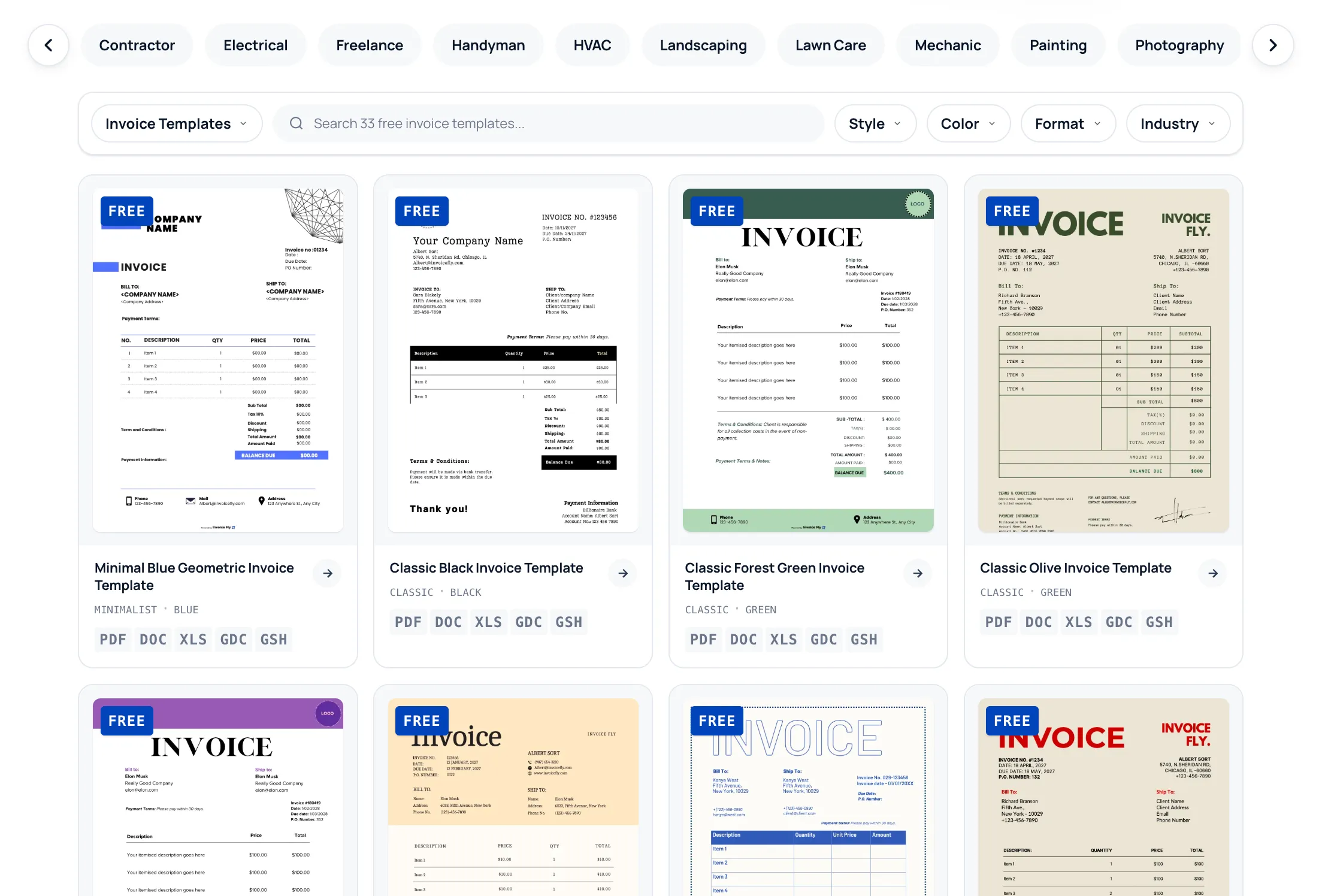
Invoice Template
Create a clear invoice with your business, customer, payment, and item details.
Open template
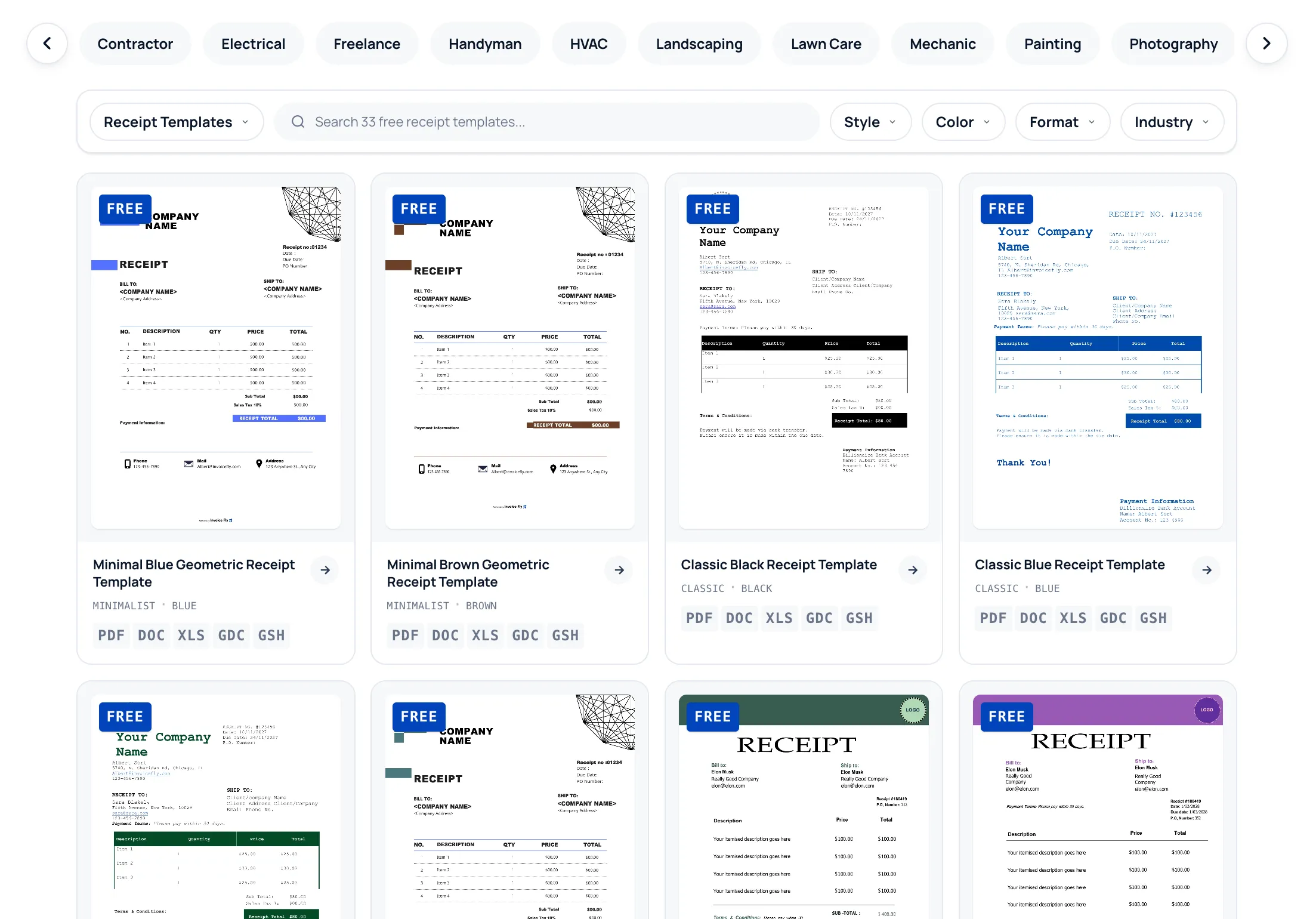
Receipt Template
Create a professional receipt to keep a clear record of payments and transactions.
Open generator
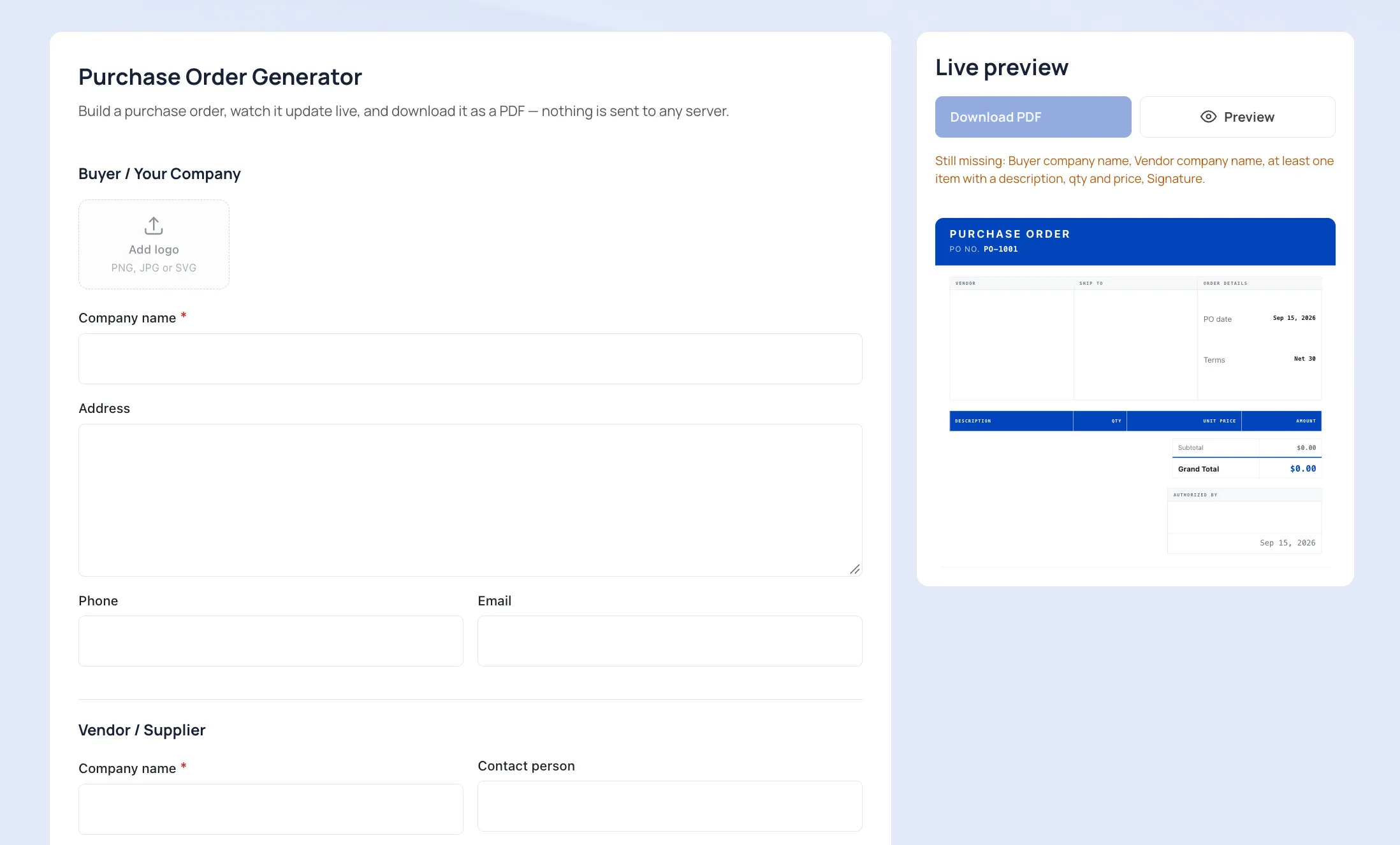
Purchase Order
Create a detailed purchase order to confirm items, pricing, and terms with your vendor.
Open template
Contract Independent
Put together a clear independent contractor agreement covering scope, payment, and terms.
FAQs About Contract Independent
An independent contractor contract is a written agreement between a client or business and a self-employed contractor. It outlines the services being provided, payment terms, project details, responsibilities, and other conditions of the working relationship.
A 1099 independent contractor is generally a self-employed individual who provides services to a business or client rather than working as an employee. The term “1099” refers to the tax forms businesses may use to report certain payments made to independent contractors.
A 1099 contract is an agreement that sets out the terms between a business or client and an independent contractor. It can cover the services provided, payment, project scope, deadlines, and other conditions of the work.
An independent contractor agreement should clearly outline the working relationship between the client and contractor. Depending on the project, an independent contractor contract may include:
Client and contractor information
Business details
Project or job description
Services and deliverables
Pricing and rates
Payment terms
Tax information
Contract start and end dates
Additional terms and conditions
Signatures
Independent contractors are generally self-employed and provide services under a contract, while employees typically work under an employer's direction and are covered by employment and payroll requirements. Worker classification depends on the actual working relationship and applicable laws.
A written contract can clearly document the terms of an independent contractor relationship, including the work, payment, responsibilities, and expectations of both parties. Whether a written agreement is legally required depends on the type of work and applicable law.
Independent contractors may be paid hourly, by project, by milestone, or according to another agreed payment schedule. The payment structure should be clearly stated in the independent contractor contract.
An independent contractor agreement may be legally binding when it meets applicable legal requirements and is properly agreed to by the parties. Requirements can vary by state and by the circumstances of the working relationship.
Yes. An independent contractor contract can be used for construction projects involving builders, tradespeople, subcontractors, and general contractors. The agreement can define the scope of work, pricing, payment terms, and project requirements.
A 1099 contractor is a type of self-employed worker who provides services independently. “Self-employed” is the broader category, while 1099 generally refers to how certain contractor income may be reported for tax purposes.
Independent contractors are generally responsible for handling their own federal, state, and applicable self-employment taxes. Their specific tax obligations depend on their income, business structure, location, and circumstances.
Contract and worker-classification rules can differ between states. An agreement involving a California independent contractor, Texas independent contractor, or Colorado independent contractor may therefore need to account for applicable state requirements.
A contract can contain additional restrictive clauses, but whether a non-compete clause is permitted or enforceable depends on applicable law and the circumstances. State rules can differ significantly.