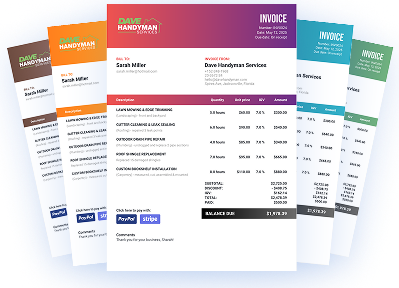
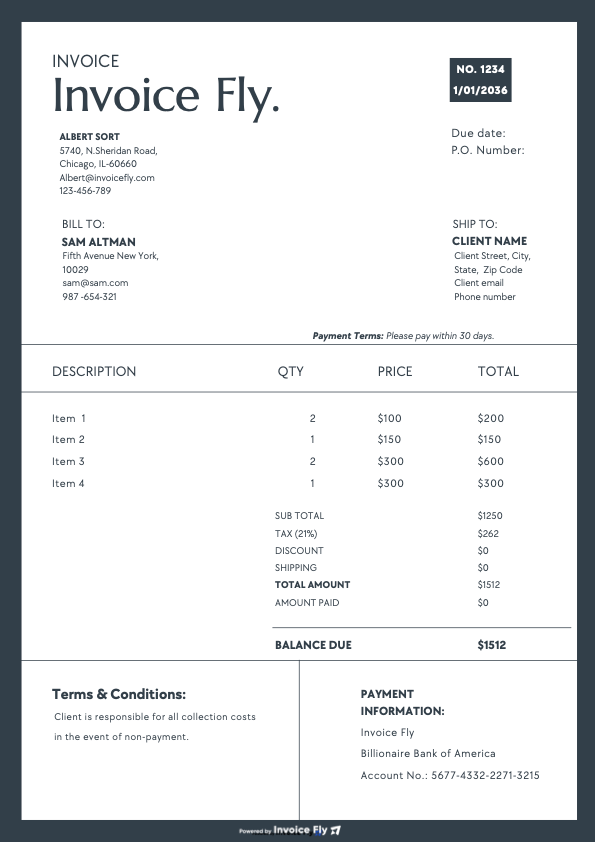
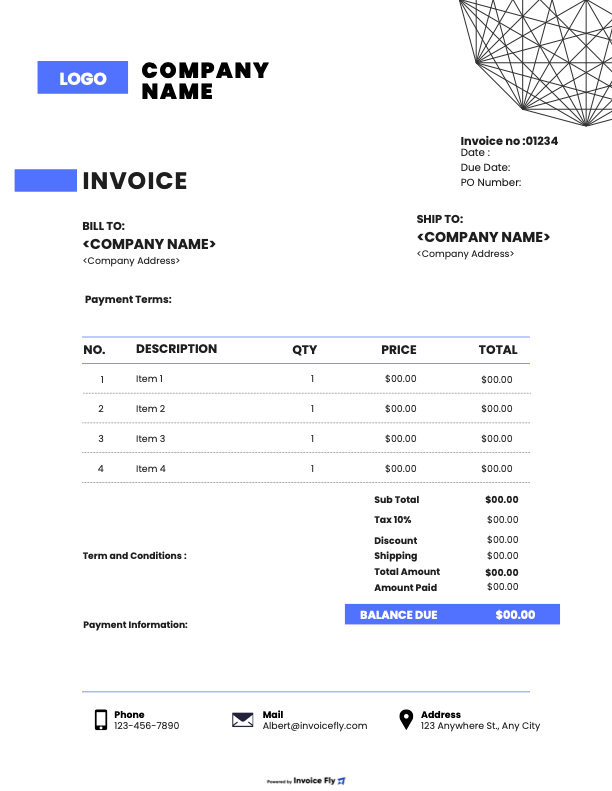
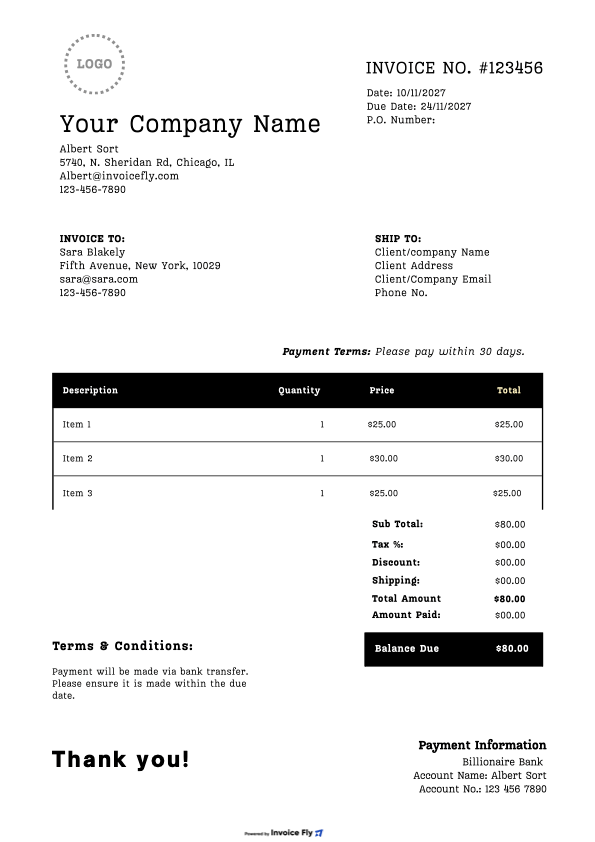
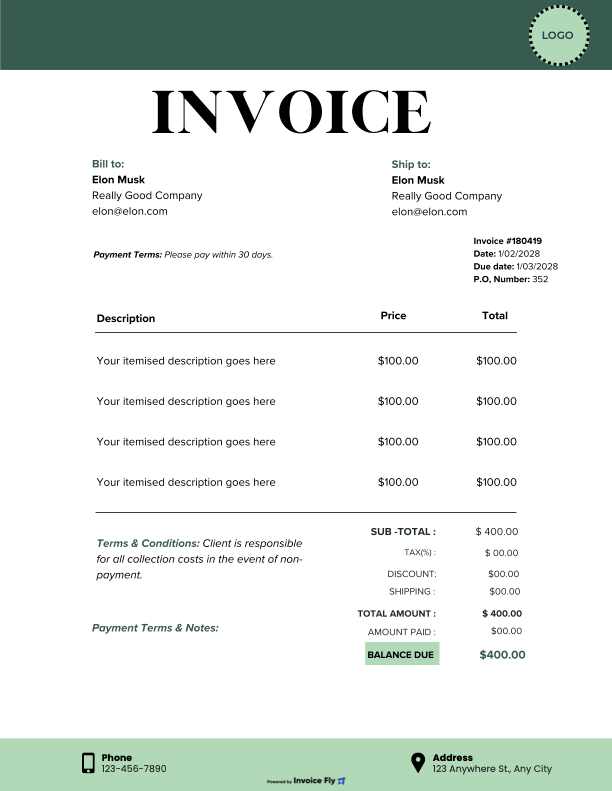
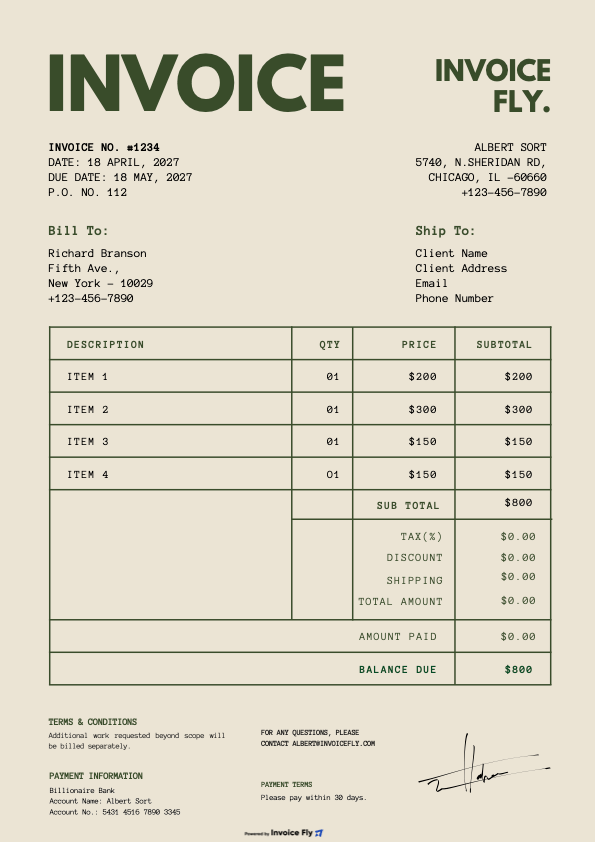
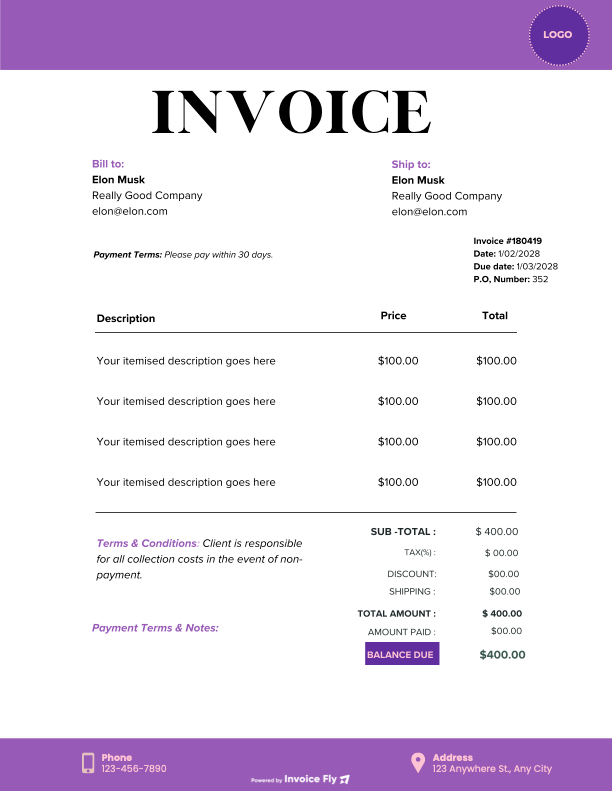
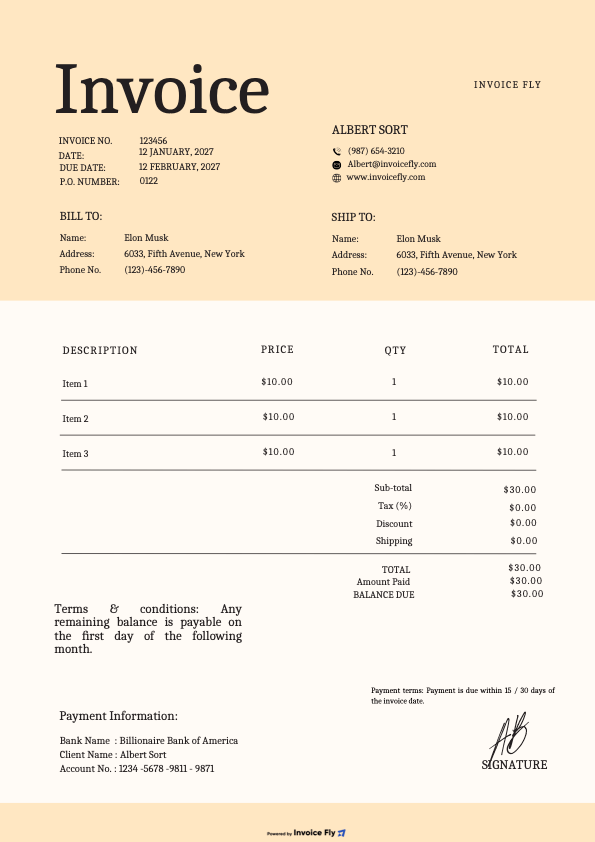
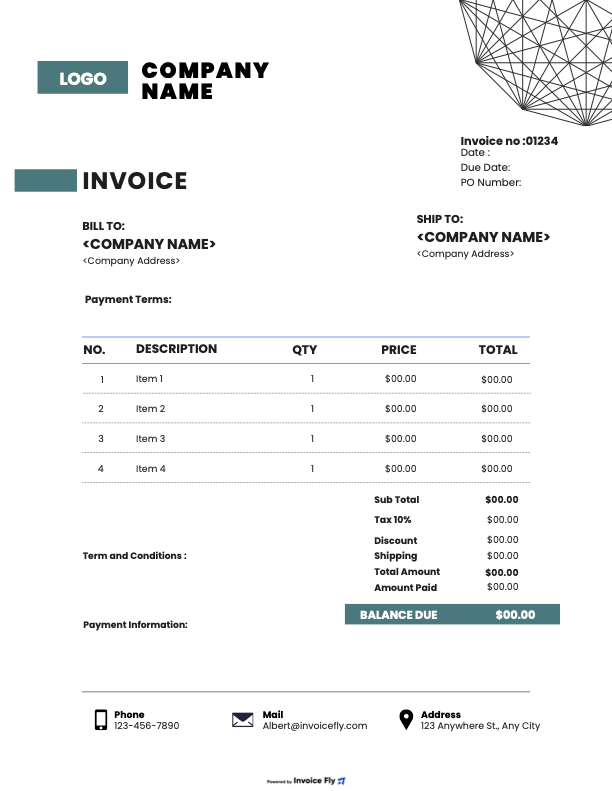
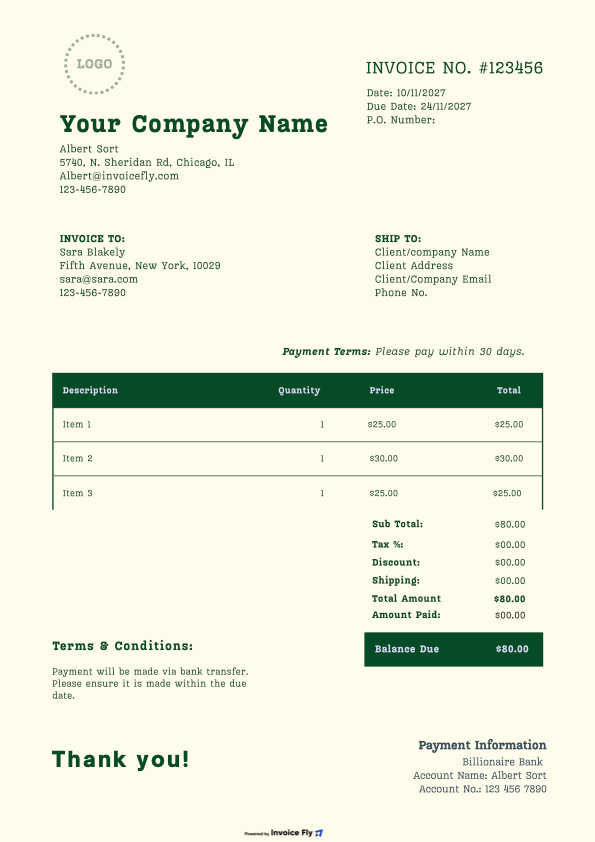
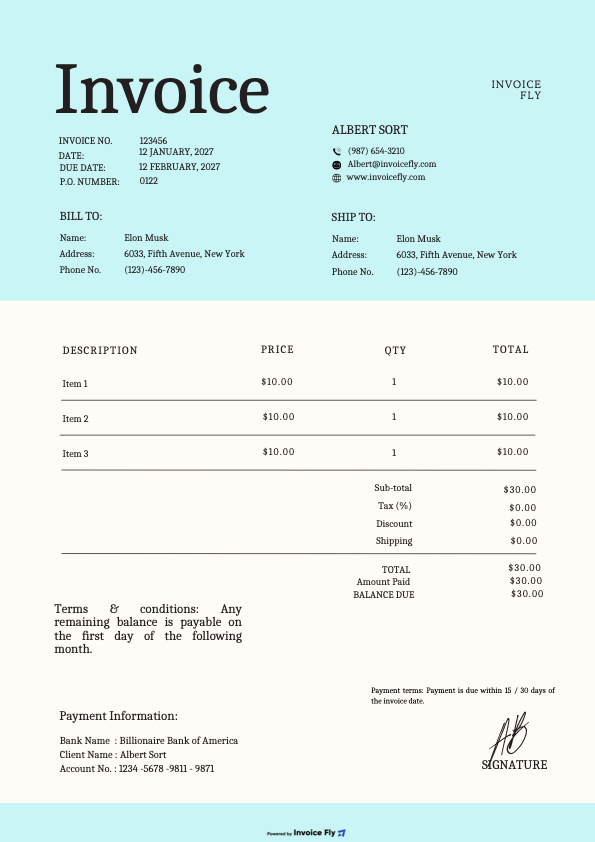
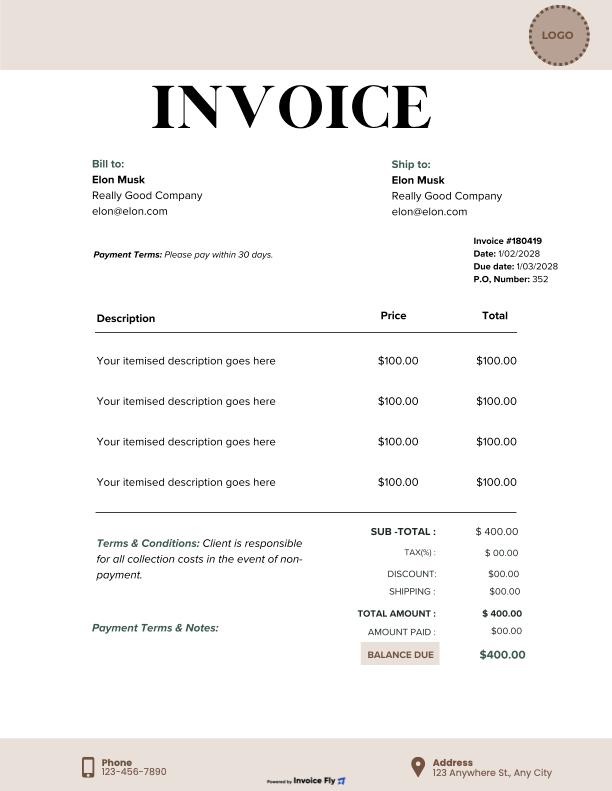
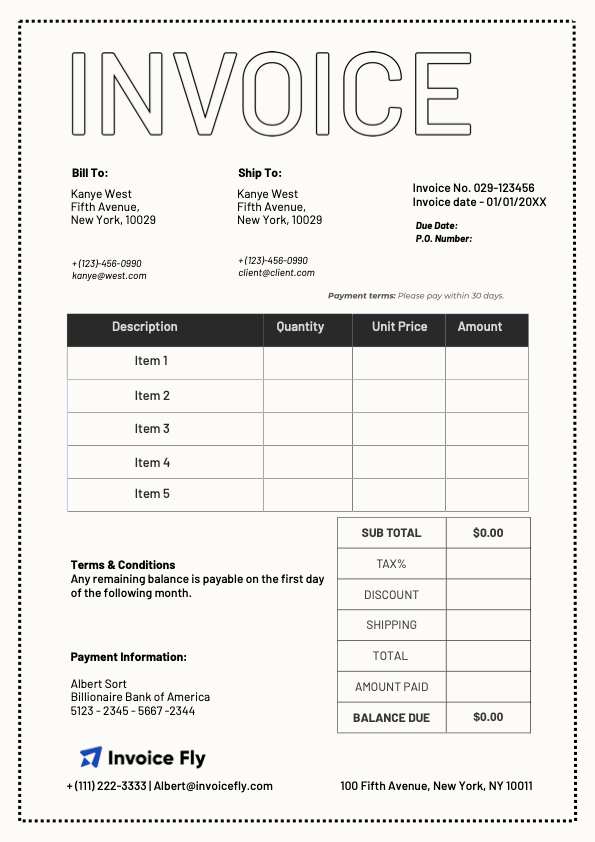
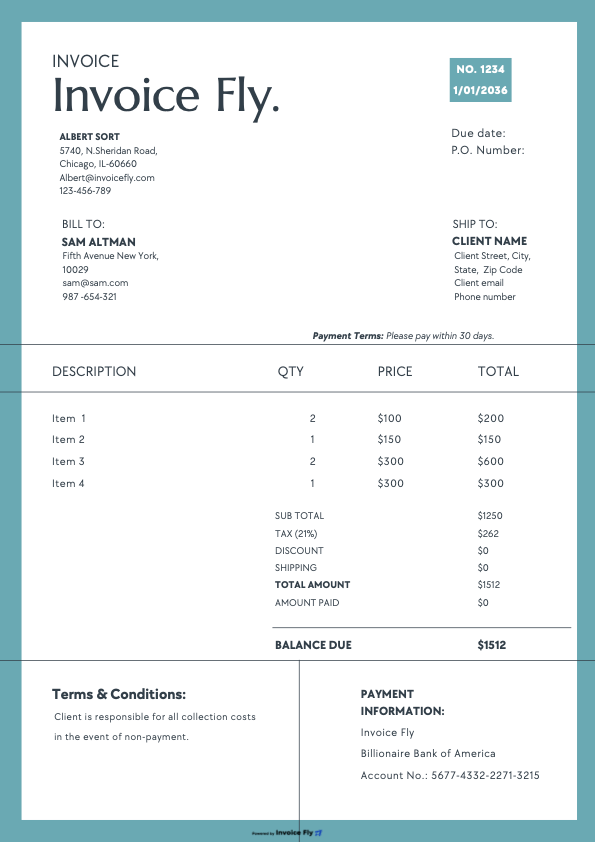
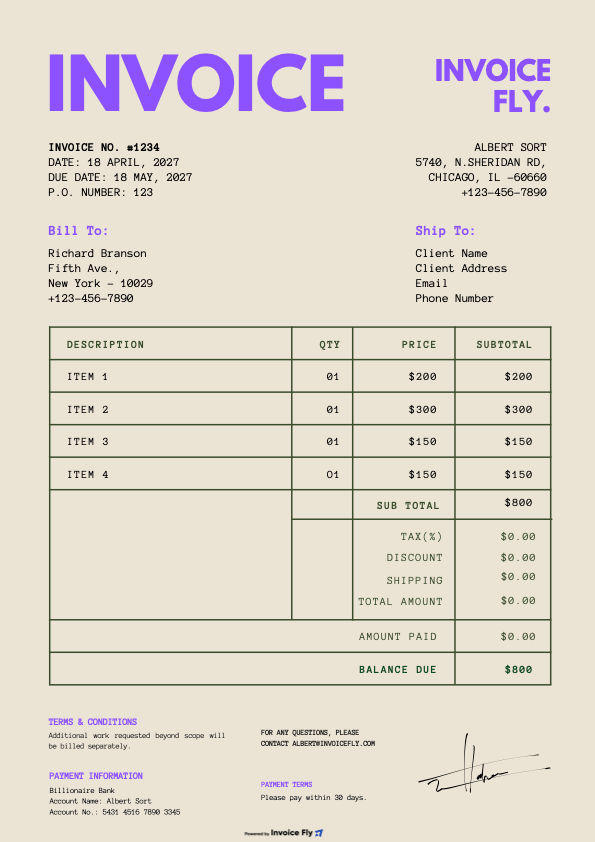
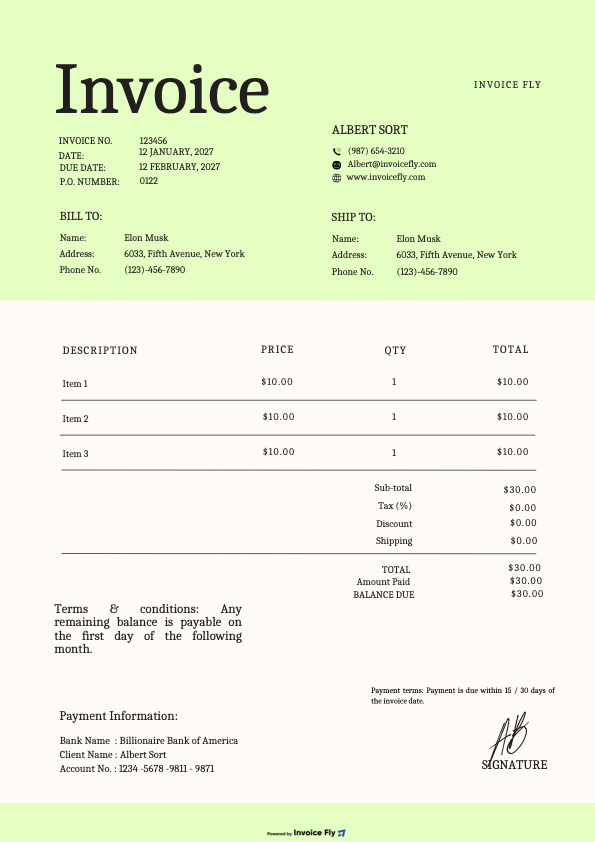
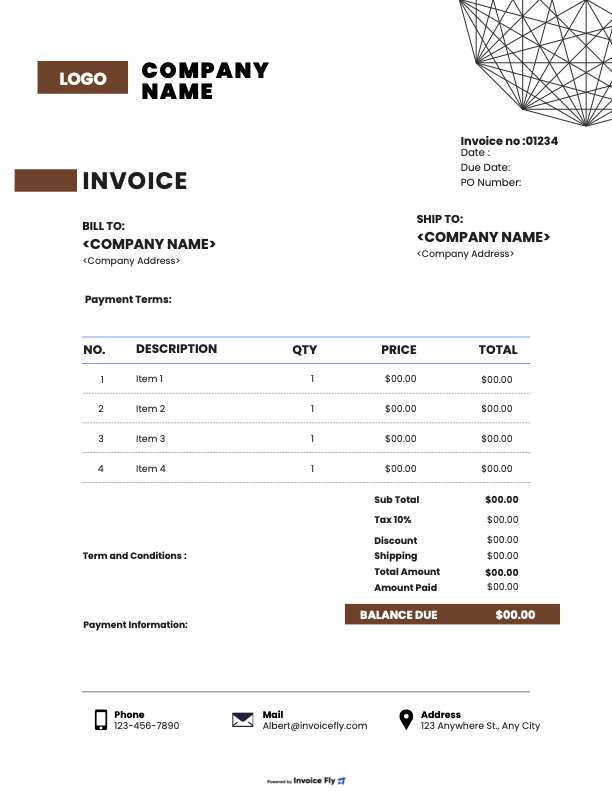
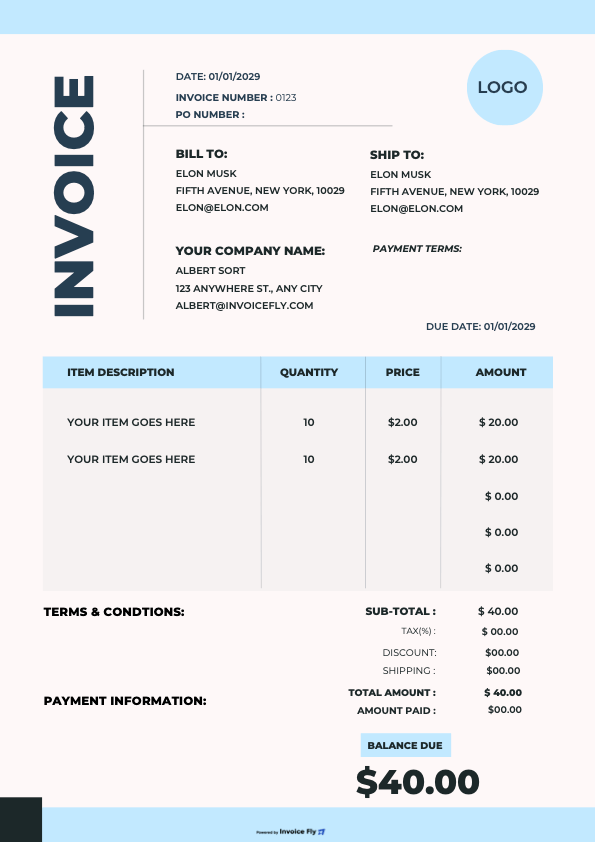
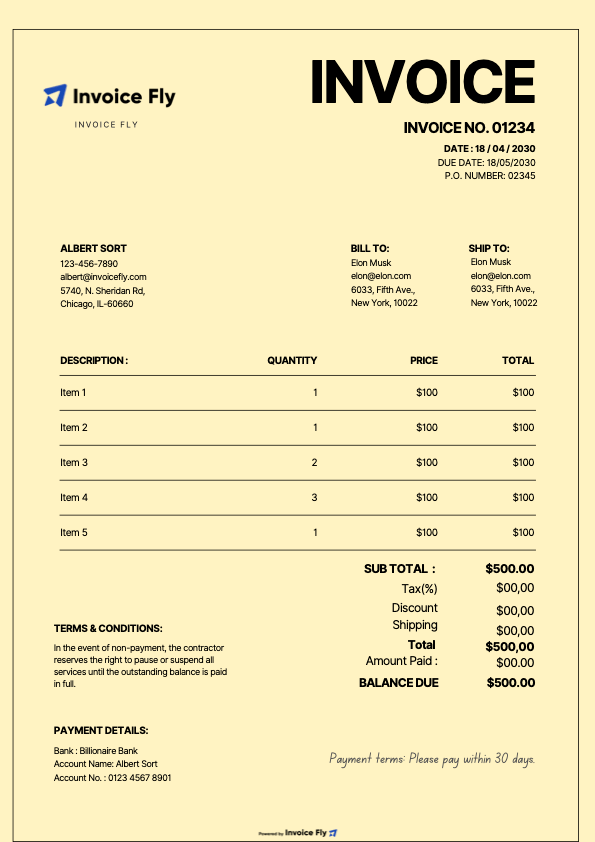
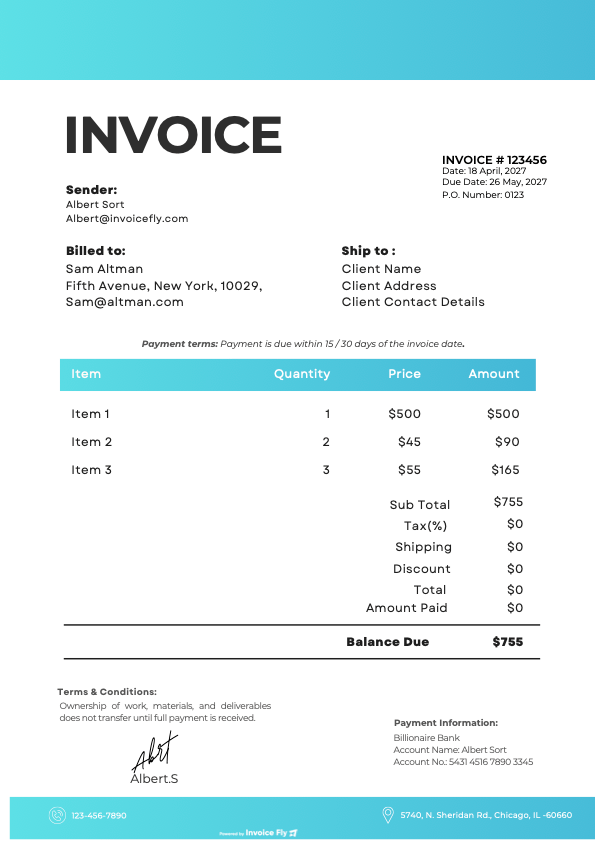
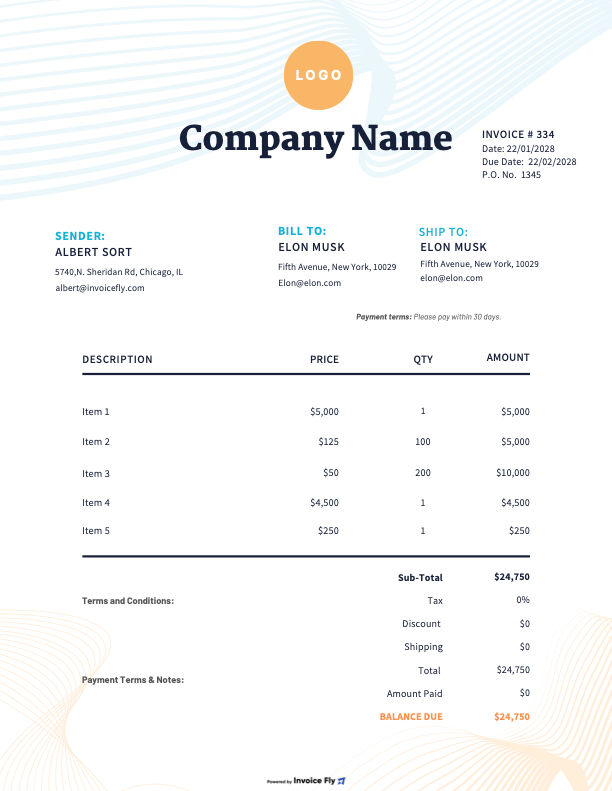

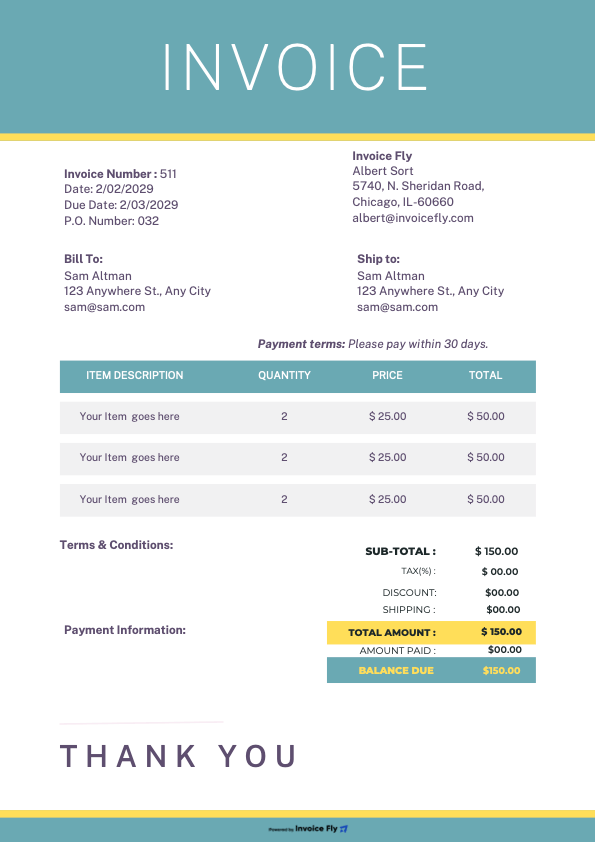
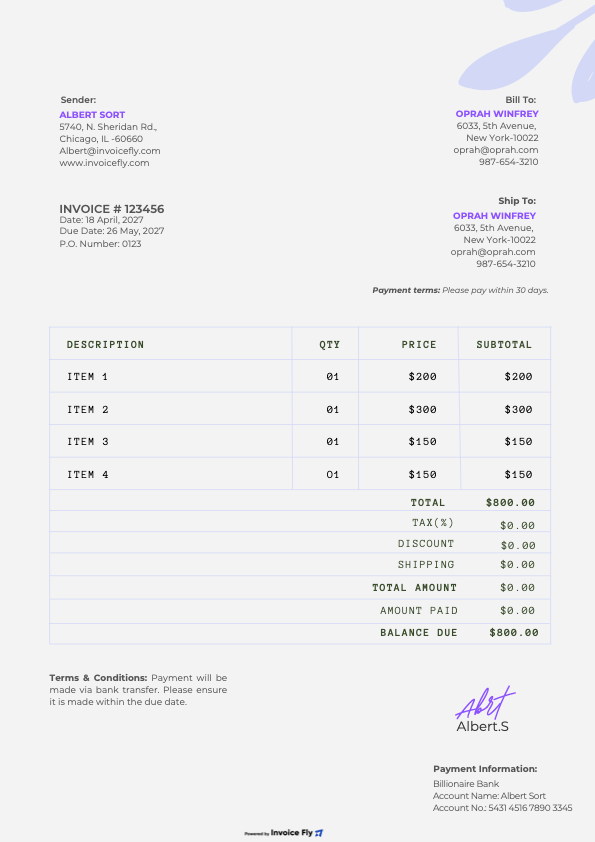
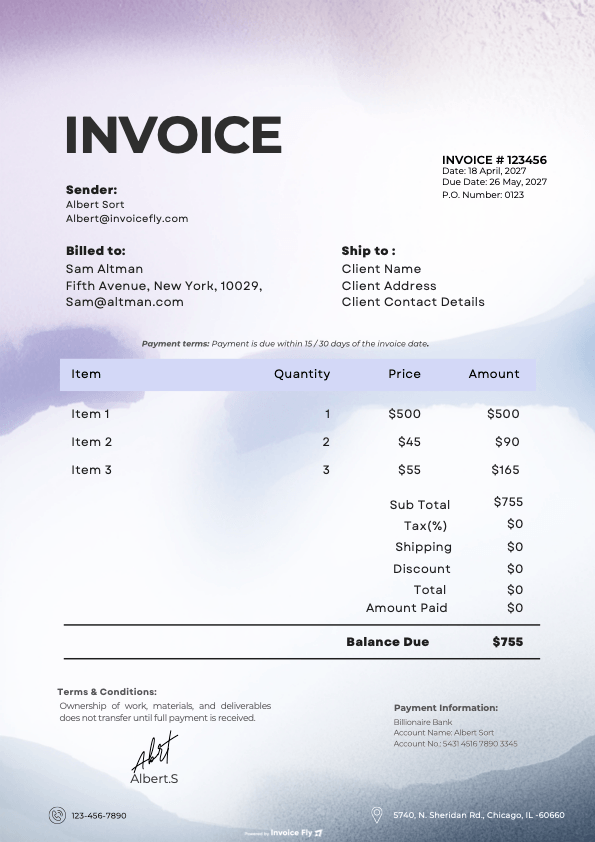
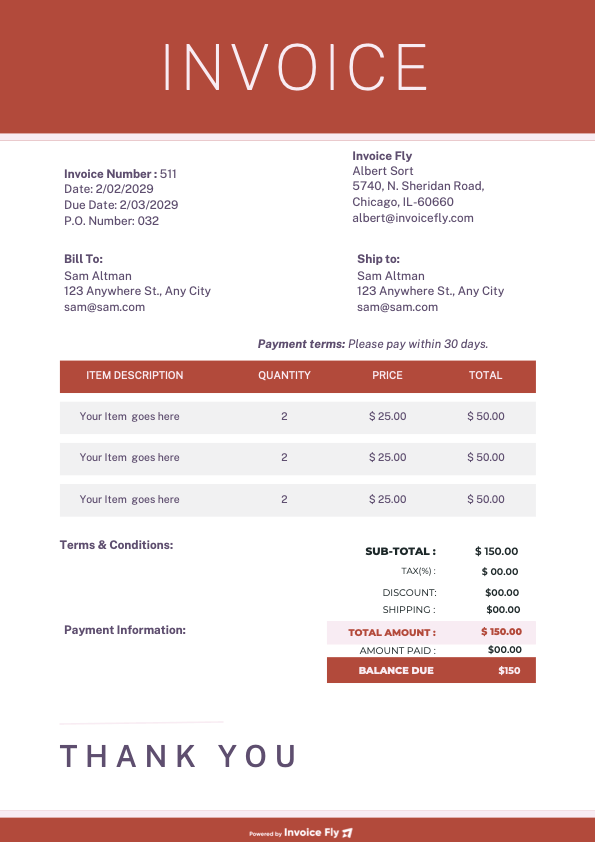
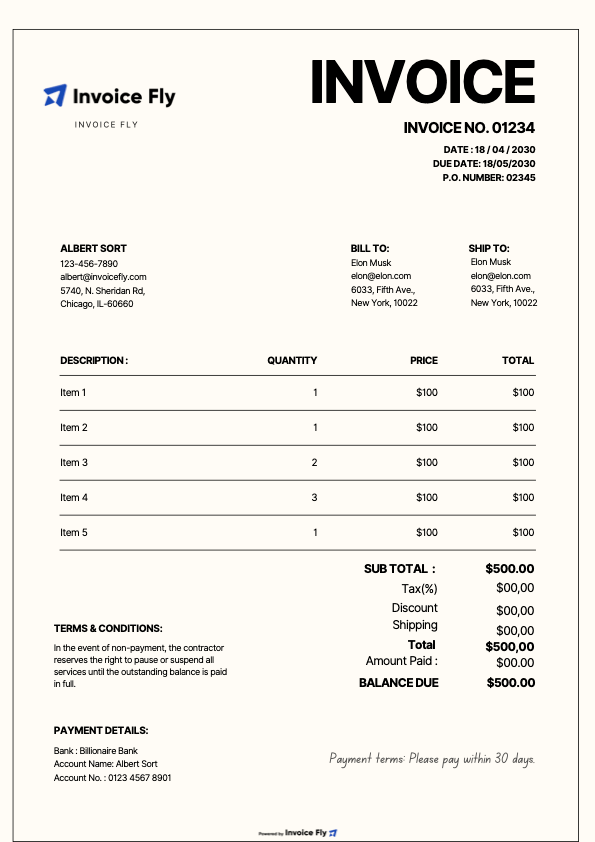
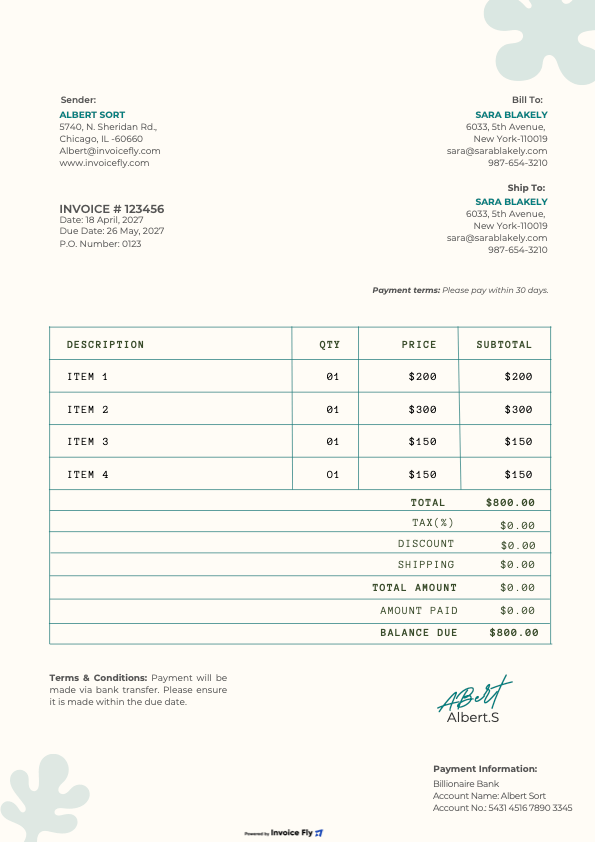
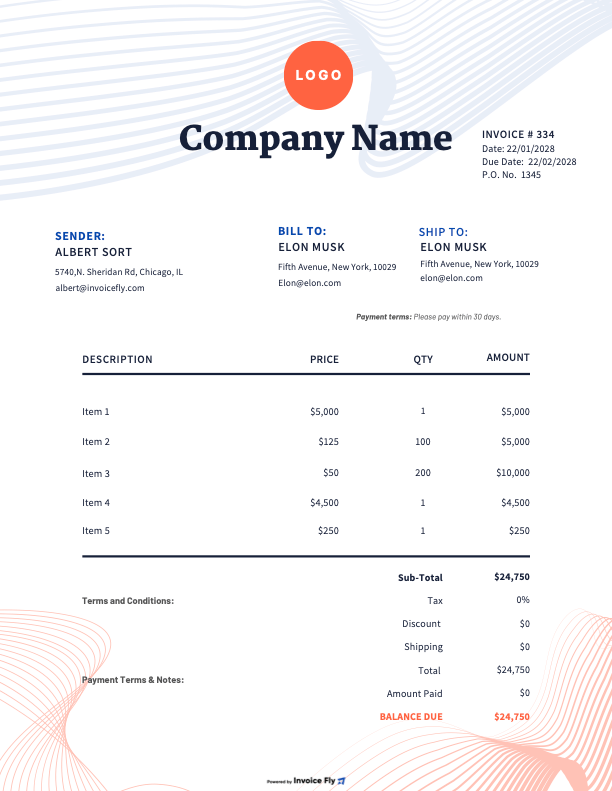
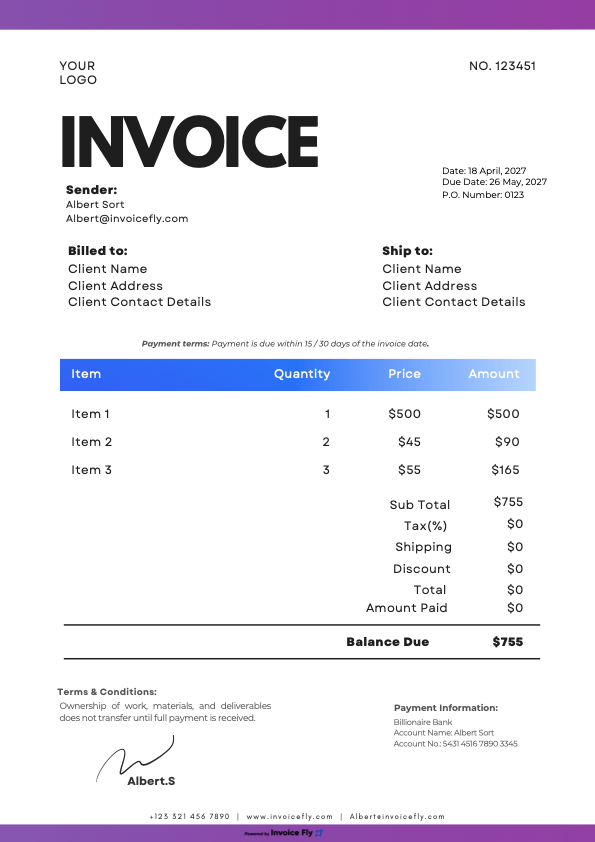

Free Electrical Invoice Template

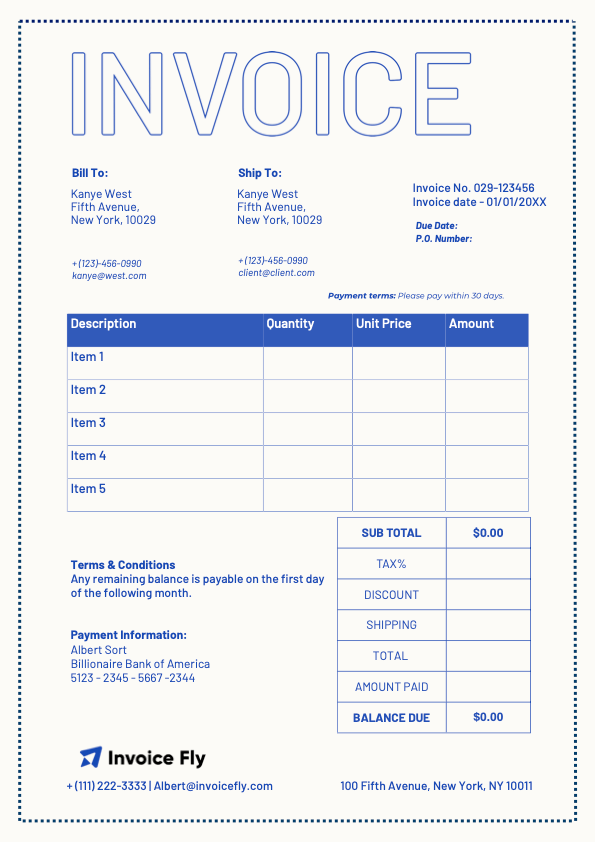
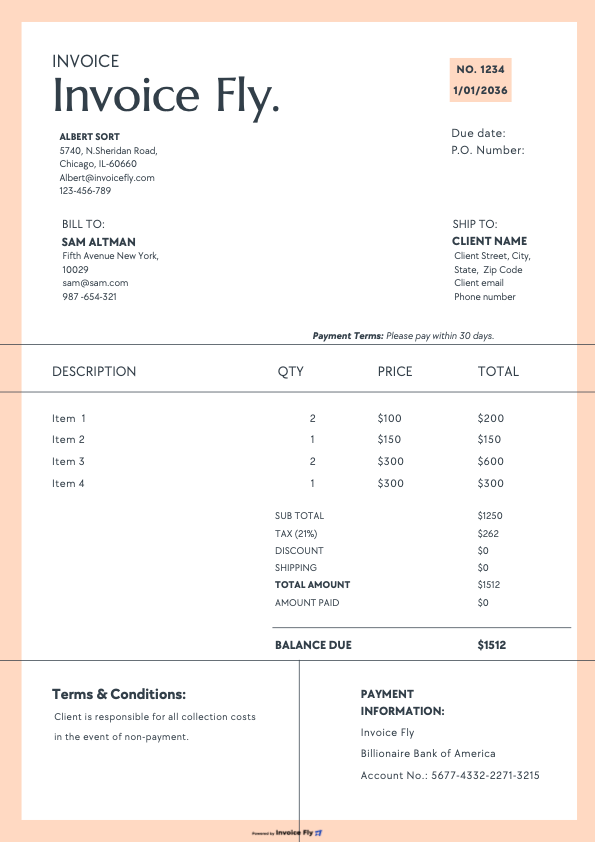
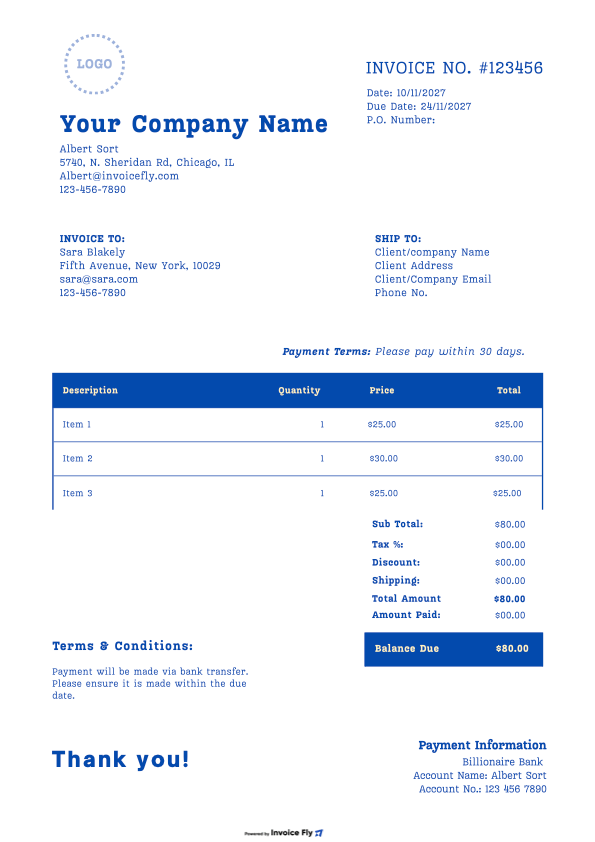
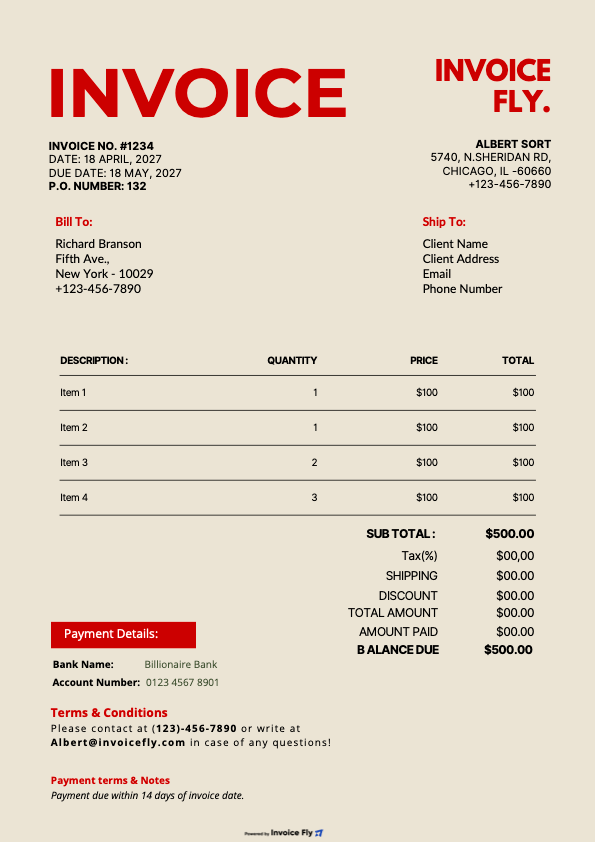
Create professional electrical invoices for installations, repairs, and service calls. Itemize labor, materials, and service charges, then customize and download your electrical invoice template in PDF, Word, Excel, Google Docs, or Google Sheets.

Colors

Styles

Formats

Industry

Electrician kneeling to work on wiring in an electrical switchboard

How to Invoice as an Electrician

Turn completed electrical work into clear invoices and get paid faster with these five simple steps.

In 5 Steps

  1. Record the job details, labor hours, materials used, and travel costs.

  2. Itemize electrical work, labor rates, and parts so every charge is clear.

  3. Include applicable permit fees, inspection costs, and additional charges.

  4. Record any deposit received before ordering materials or starting work.

  5. Deduct deposits, confirm the balance due, and add payment terms and accepted payment methods.

Benefits of Using an Electrical Invoice Template

Make electrical billing simpler with a template designed to keep job costs clear, invoices professional, and payments organized.

Electrician servicing an electrical switchboard while checking a tablet
  • Present a Professional Image

    Add your business details and clearly describe electrical services to build trust with clients.

  • Break Down Every Job Cost

    Itemize labor, electrical supplies, parts, and service charges so clients know what they’re paying for.

  • Save Time on Electrical Invoicing

    Reuse your electrical invoice template for installations, repairs, and service calls instead of starting from scratch.

  • Keep Billing Organized

    Maintain consistent electrical invoices to review completed jobs, record payments, and follow up on outstanding balances.
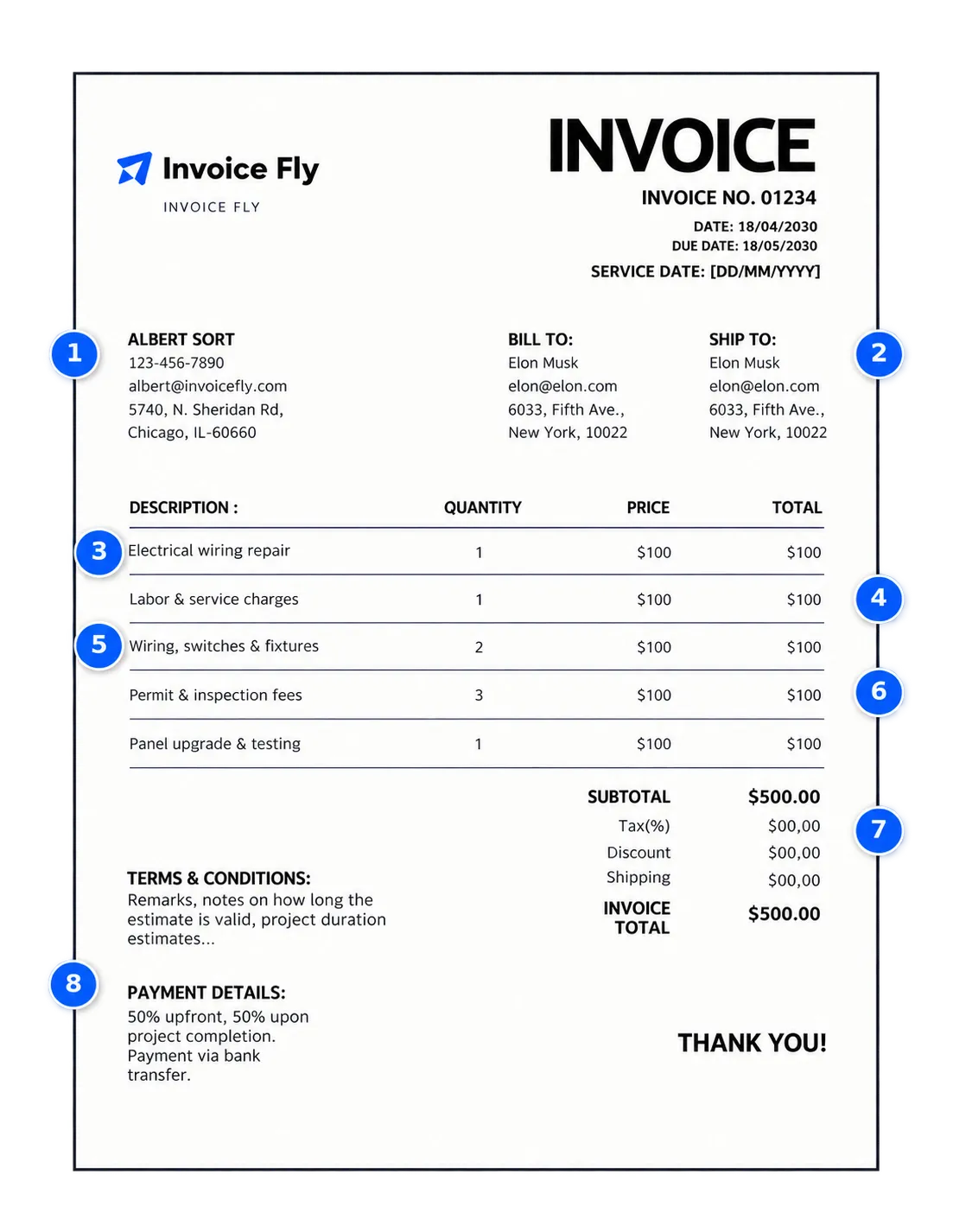
Electrical invoice template with eight numbered elements: 1 electrician and business details, 2 client and job details, 3 description of electrical services, 4 labor and service charges, 5 materials and equipment, 6 permits and additional expenses, 7 subtotal, taxes, and total due, 8 payment terms and balance

What Makes A Great Electrical Invoice Template

An electrical invoice template should clearly outline the work completed, job costs, and payment terms so clients know exactly what they owe.

  1. Electrician and Business Details

    Business name, logo, contact information, address, and applicable license details.

  2. Client and Job Details

    Customer name, contact information, billing address, service location, invoice number, and relevant dates.

  3. Description of Electrical Services

    Details of completed work, such as wiring repairs, panel upgrades, fixture installations, and inspections.

  4. Labor and Service Charges

    Hours worked, hourly or flat rates, overtime, and emergency callout fees.

  5. Materials and Equipment

    Electrical supplies, wiring, switches, fixtures, equipment, quantities, and individual costs.

  6. Permits and Additional Expenses

    Applicable permit fees, inspection charges, travel costs, and other agreed expenses.

  7. Subtotal, Taxes, and Total Due

    Itemized charges, discounts, applicable taxes, and the final amount owed.

  8. Payment Terms and Balance

    Payment due date, accepted payment methods, deposits received, previous payments, and outstanding balance.

Common Electrical Invoicing Mistakes to Avoid

Avoid common electrical invoicing mistakes that can delay payments, confuse clients, and create billing disputes.

MistakeHow to fix it
Missing invoice numbers make electrical invoices harder to track.Assign each electrical invoice a unique, sequential number and record its payment status.
Unclear electrical work descriptions can lead to disputes.Describe each electrical service, repair, or installation in plain language, including relevant exclusions.
Unrecorded deposits can result in an incorrect balance due.Record deposits on your electrical invoice and deduct them from the final amount due.
Incorrect tax calculations can cause billing errors.Check local tax rules and apply taxes to the appropriate items.
Unclear labor and material charges make costs harder to understand.Itemize electrician labor, electrical supplies, parts, and additional service charges.
Late invoice delivery can delay payment.Send your electrical contractor invoice promptly after completing the job, with clear payment terms and accepted payment methods.

Create your first invoice free with our Online Invoice Generator.

Free Invoice Generator
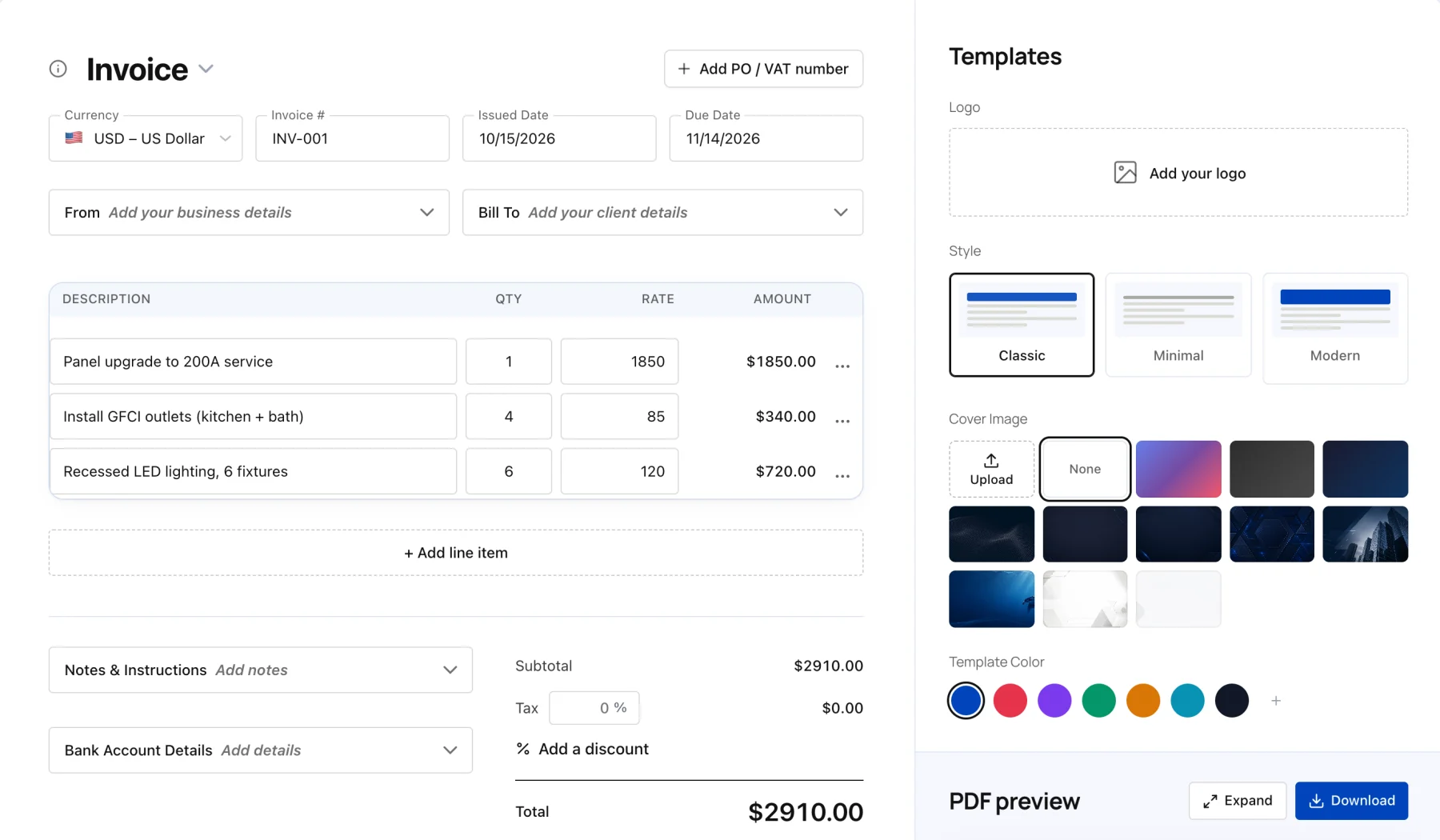

Invoice Fly free online invoice generator with electrical line items, totals and template options

Electrical Invoice FAQs

Find answers to common questions about electrical invoices, including labor costs, materials, permits, and payment terms.

An electrical invoice should include your business and customer details, invoice number, service date, a description of the electrical work, itemized labor and materials, applicable taxes, the total due, and payment terms. Include permit fees or other agreed charges where relevant.

List the trip fee, labor hours and rate, and any parts used as separate line items. This makes your electrical service invoice easier to understand and helps prevent billing disputes.

Example:

  • Trip fee: $45
  • Labor: 1.5 hours × $120/hour = $180
  • GFCI outlet: $24

List the electrical supplies, parts, and equipment used, with quantities and unit prices. If you apply a materials markup, make sure your pricing is consistent with the customer agreement.

Example:

  • 50 ft of 12/2 NM-B cable: $47.50
  • 20A breaker: $14
  • Materials markup (15%): $9.23


You can charge a diagnostic fee for investigating issues such as power outages or faulty circuits. Explain the fee in advance and, if you offer to credit it toward an approved repair, show the credit clearly on the invoice.

Example:

  • Diagnostic fee: 1 hour × $120/hour = $120

  • Credit toward approved repair: −$120

Clearly itemize the emergency callout fee, minimum billable hours, overtime rate, and any parts or additional charges. Tell customers about these rates before work begins whenever possible.

Example:

  • Emergency minimum: 2 hours × $150/hour = $300

  • Ladder fee: $25

  • Contactor: $39

List permit fees, inspection charges, and administrative labor separately on your electrical contractor invoice. Check local requirements and your customer agreement to confirm which fees apply and how they should be billed.

Example:

  • Permit fee: $165

  • Administrative labor: 0.5 hours × $110/hour = $55

  • Inspection recheck trip: $45

Break your electrical contractor invoice into agreed project milestones, such as rough-in, trim and finish, and final testing. If your contract includes retainage, show the withheld amount separately and follow the agreed payment schedule.

Example:

  • Rough-in milestone: 40% of contract = $8,000

  • Retainage (10%): −$800

Invoice Fly app

Get Started for Free

Create professional electrical invoices, itemize your services, and keep your billing organized.