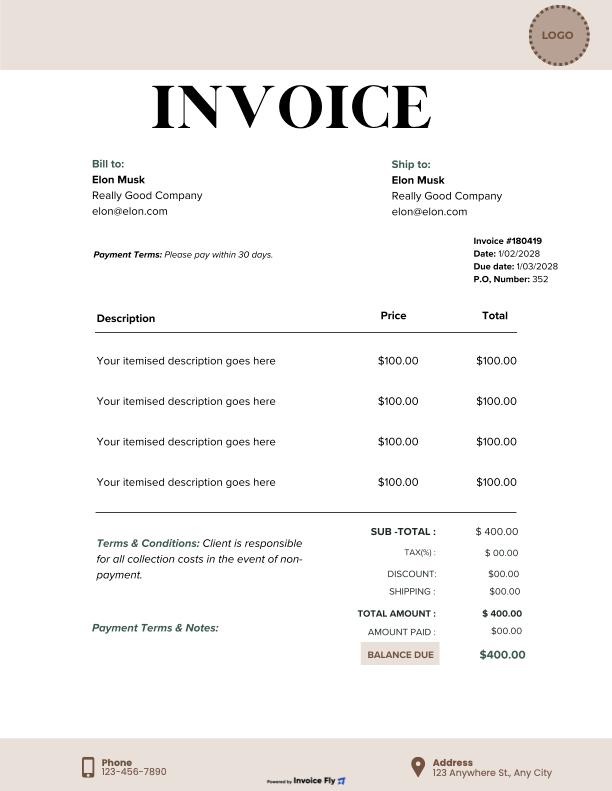
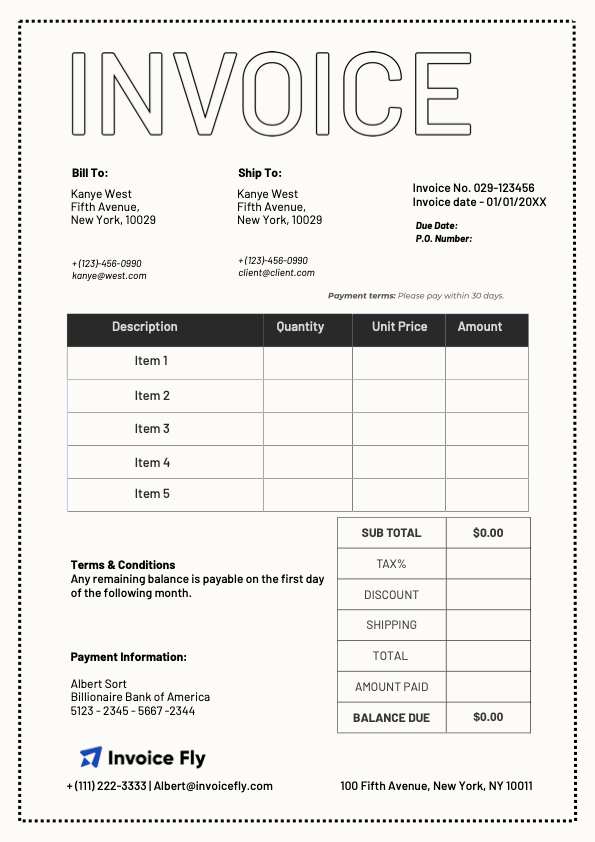
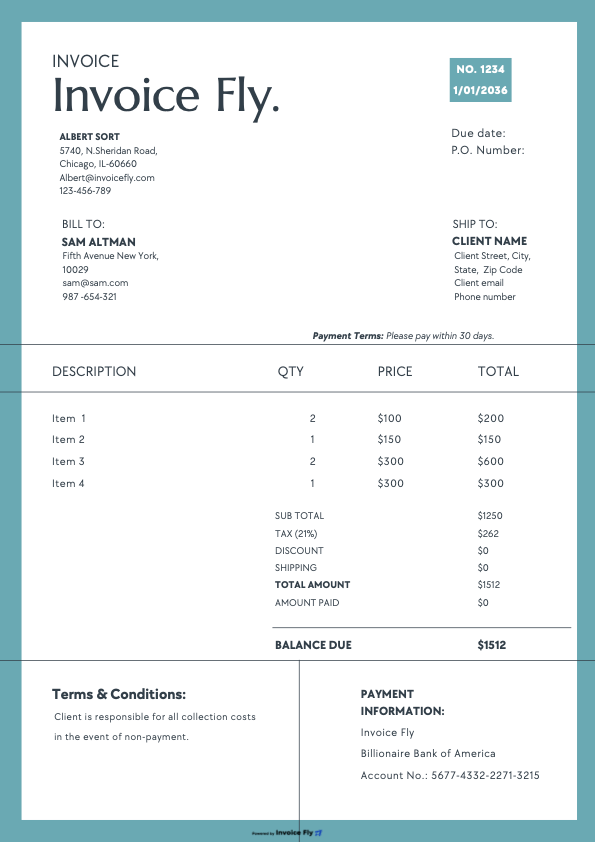
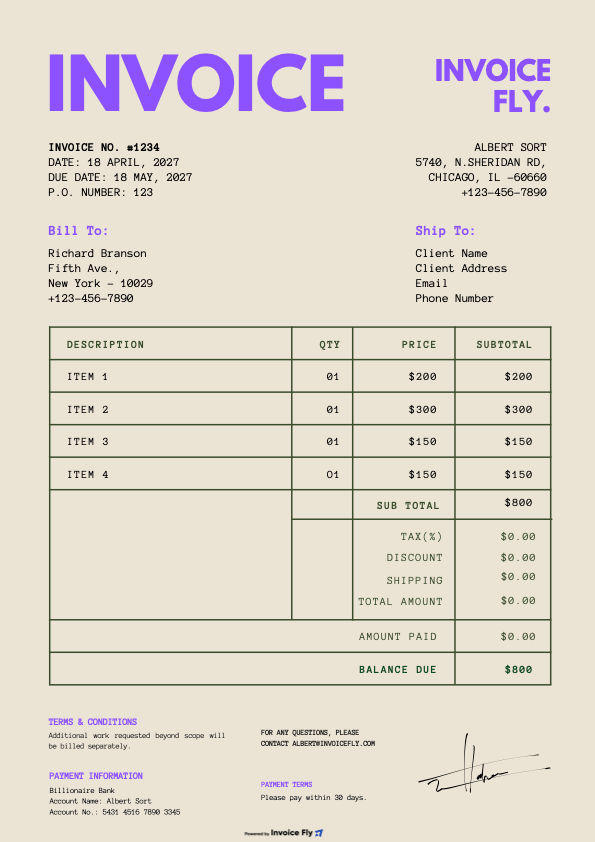
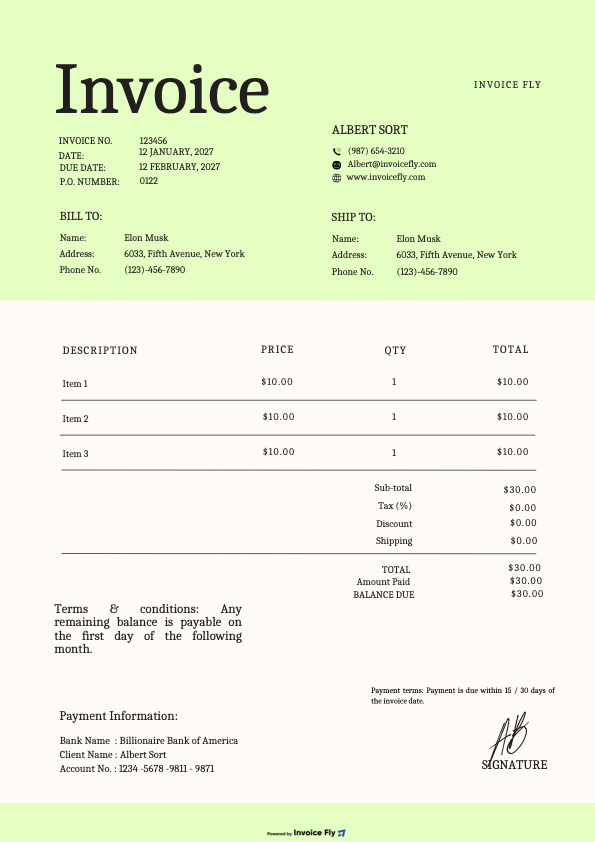
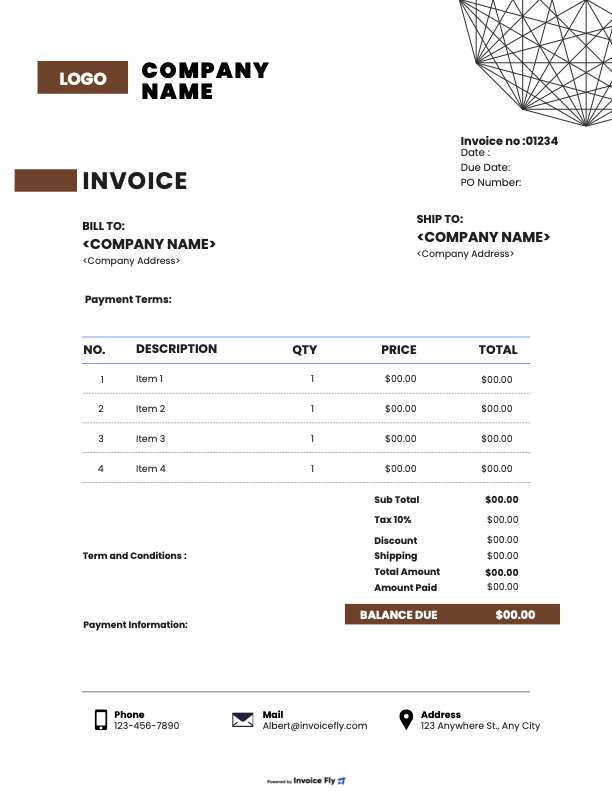
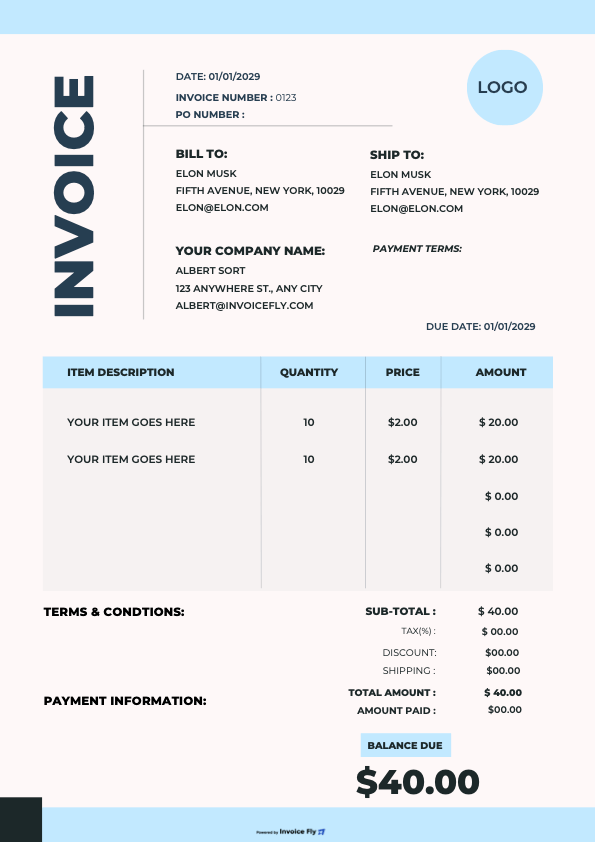
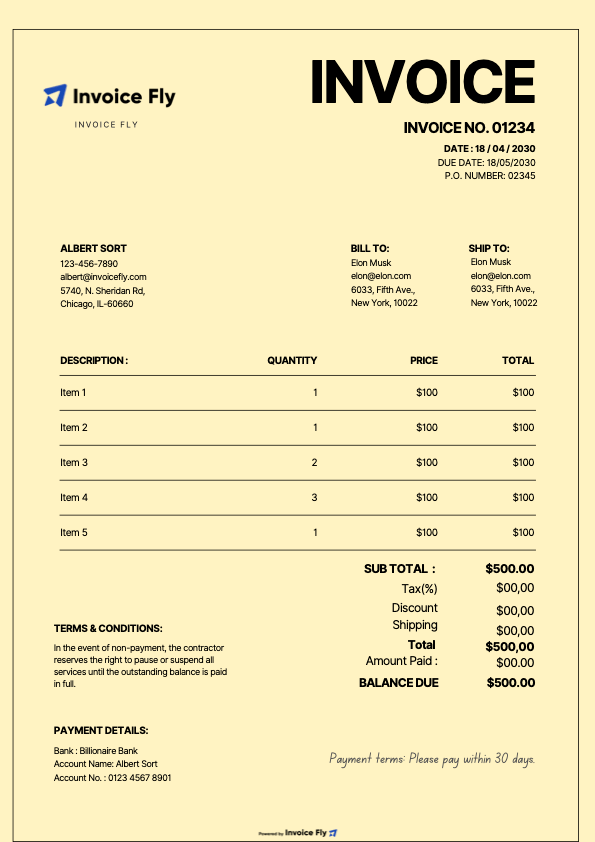
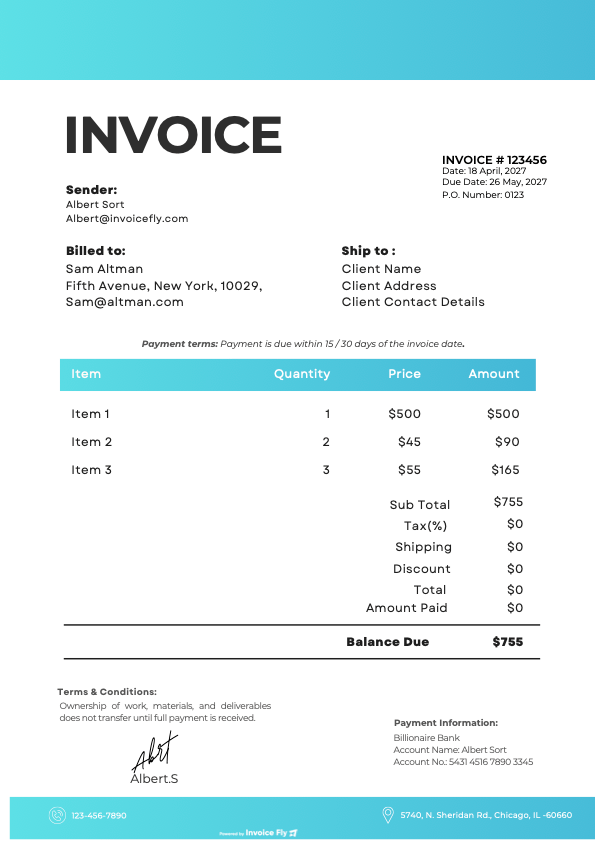
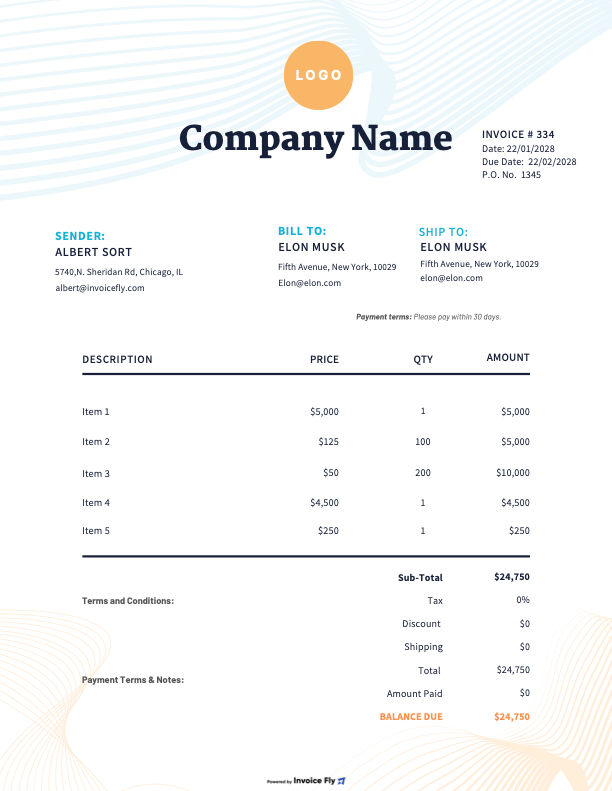
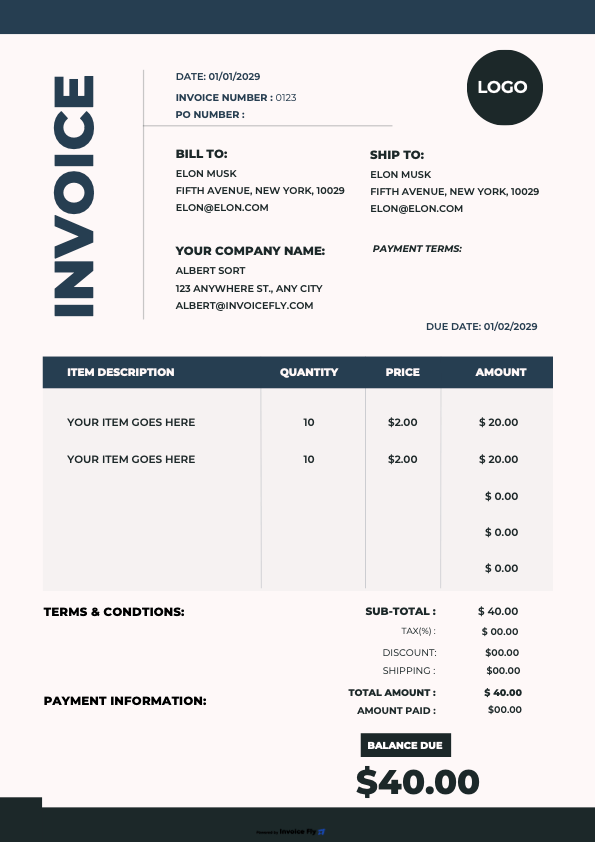
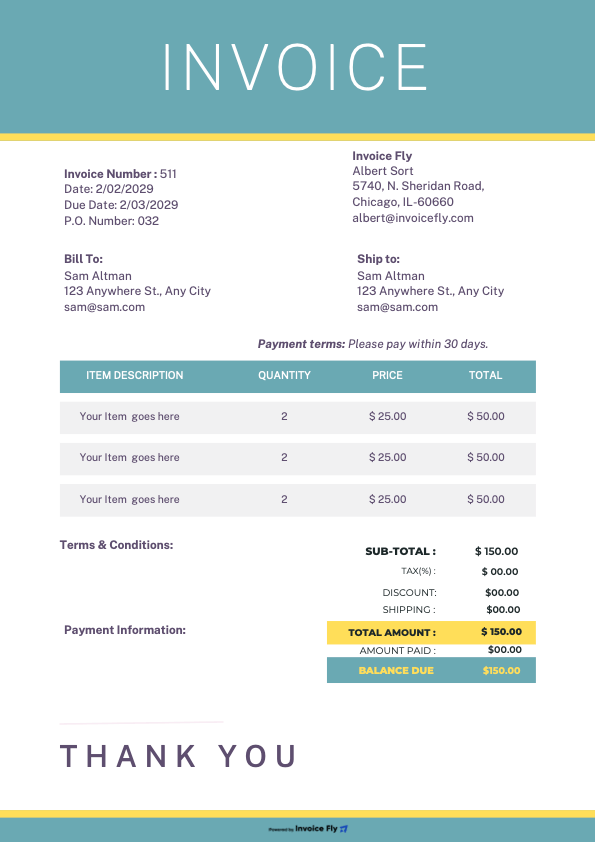
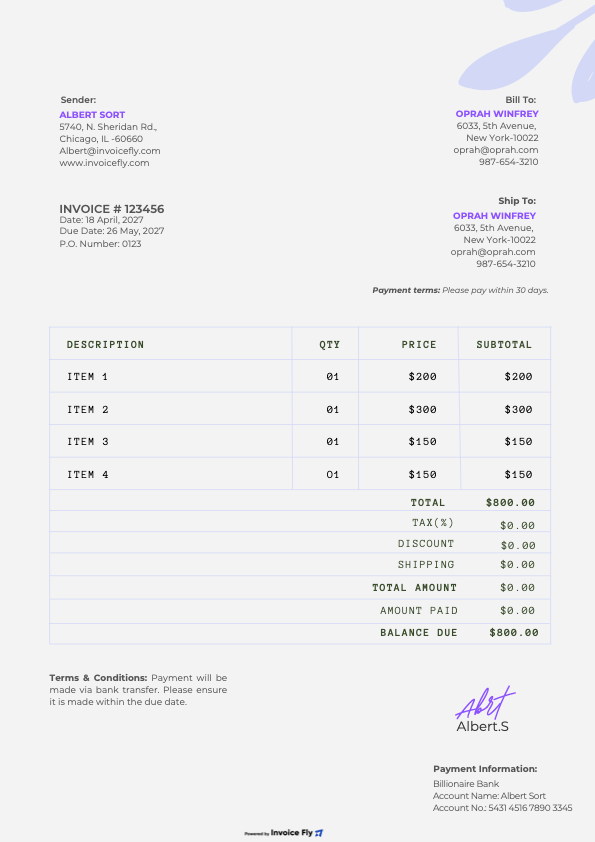
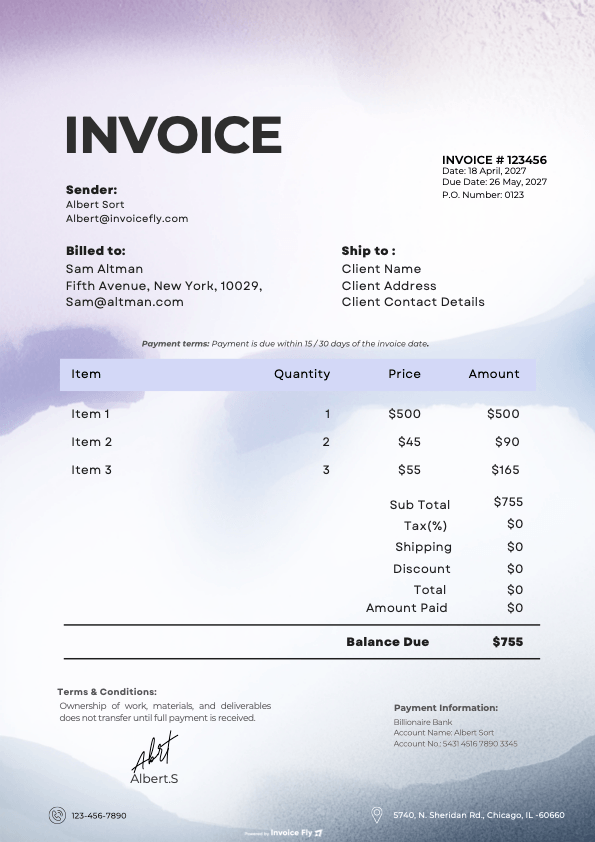
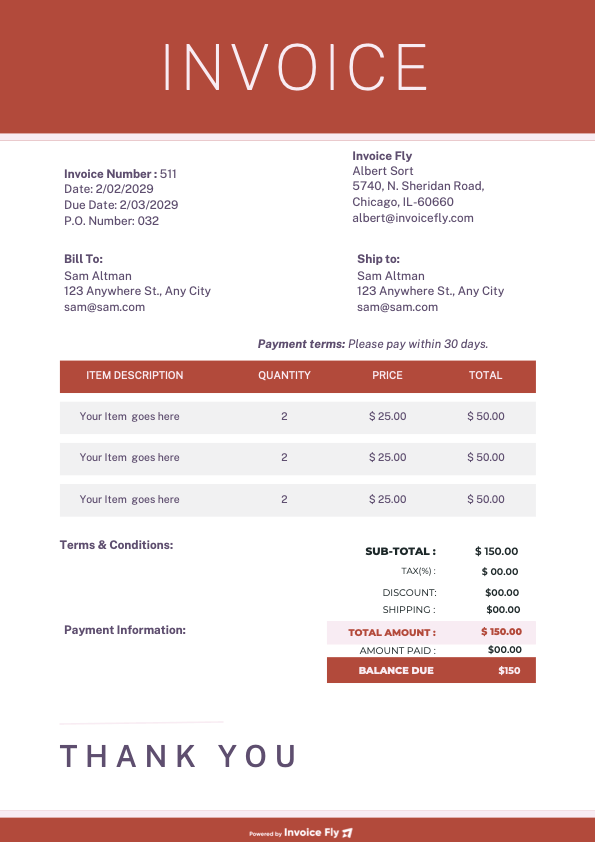
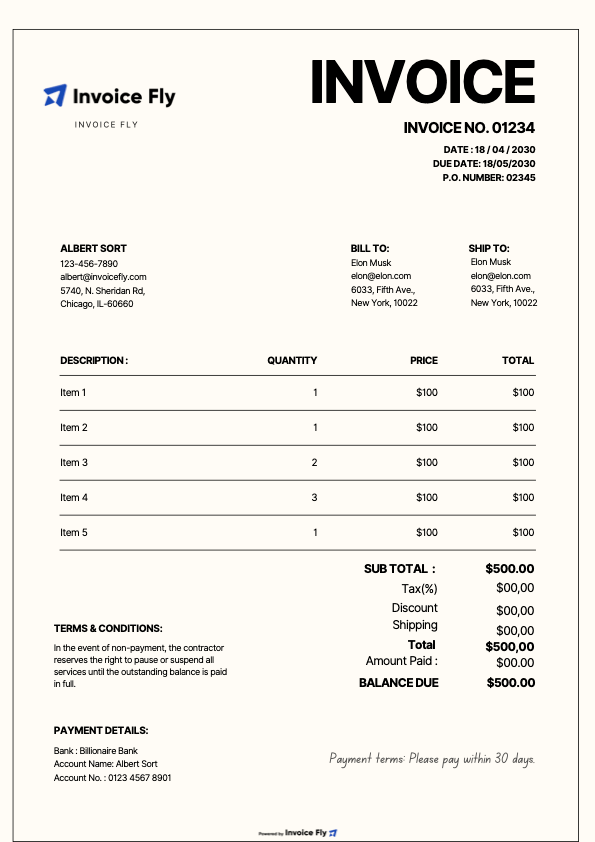
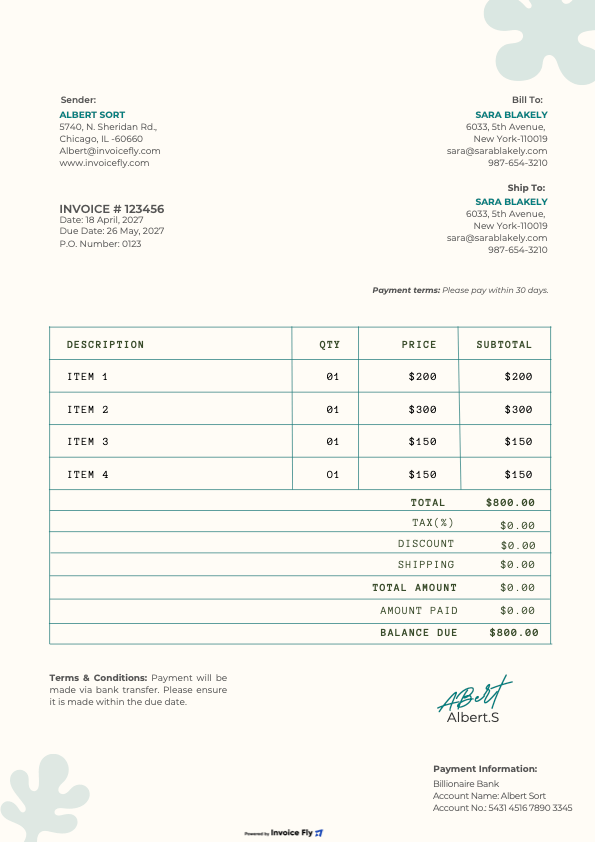
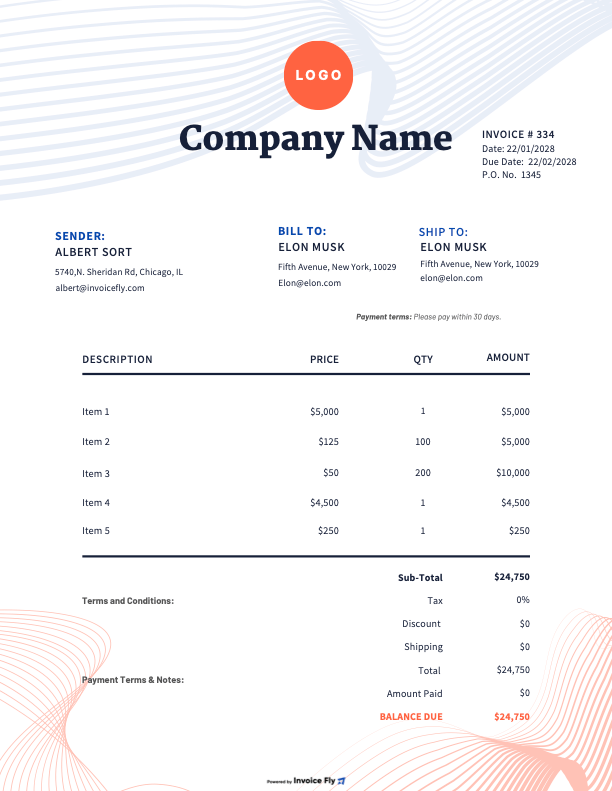
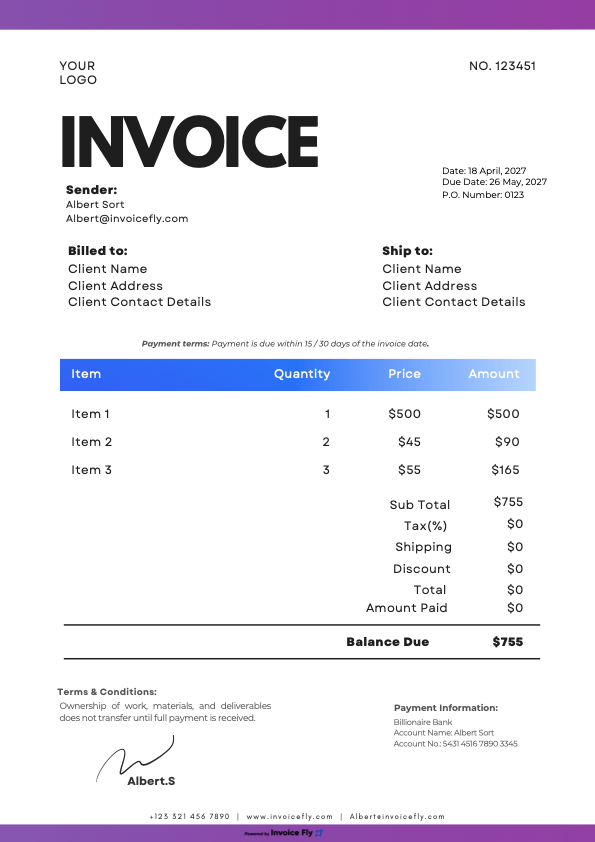
Free Catering Invoice Templates

Last updated:

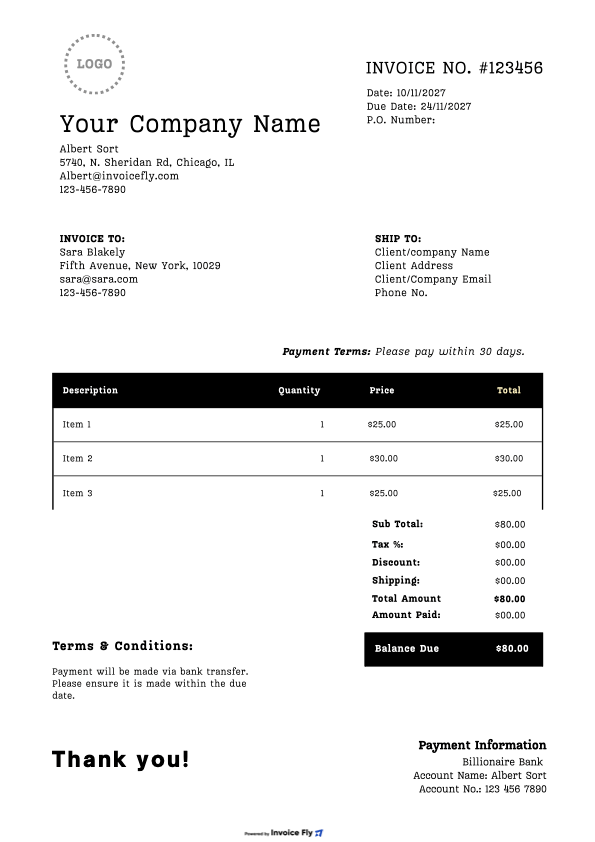
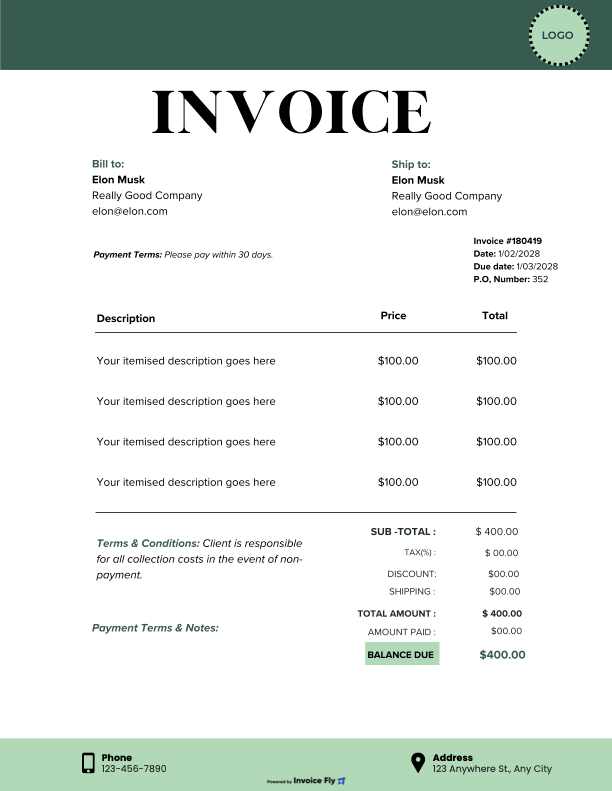
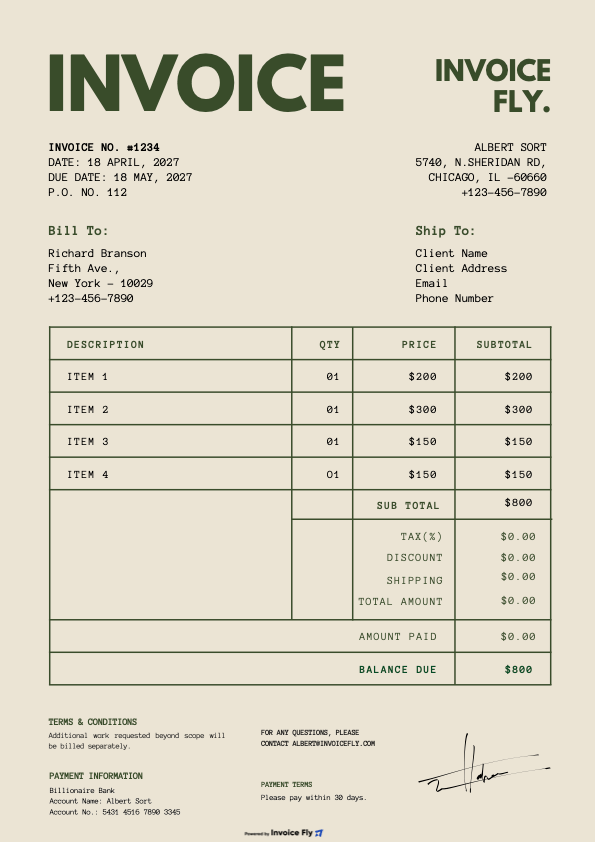
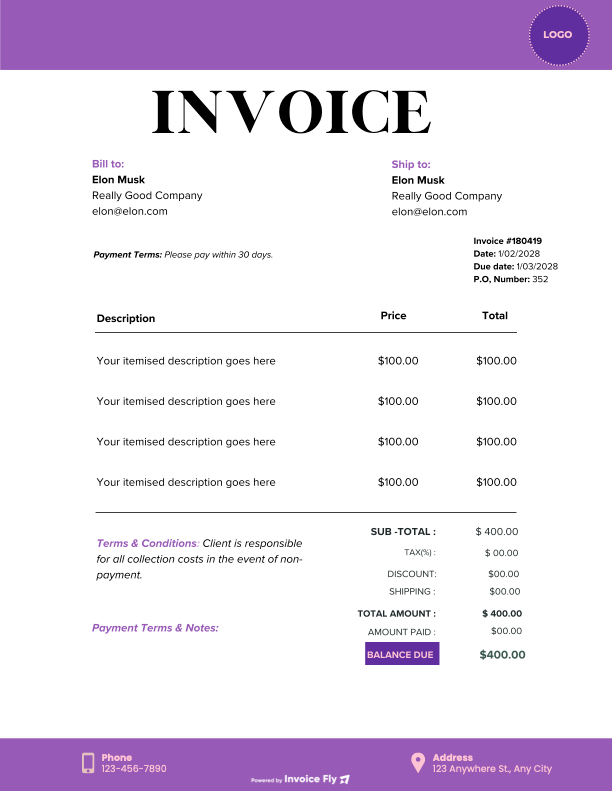
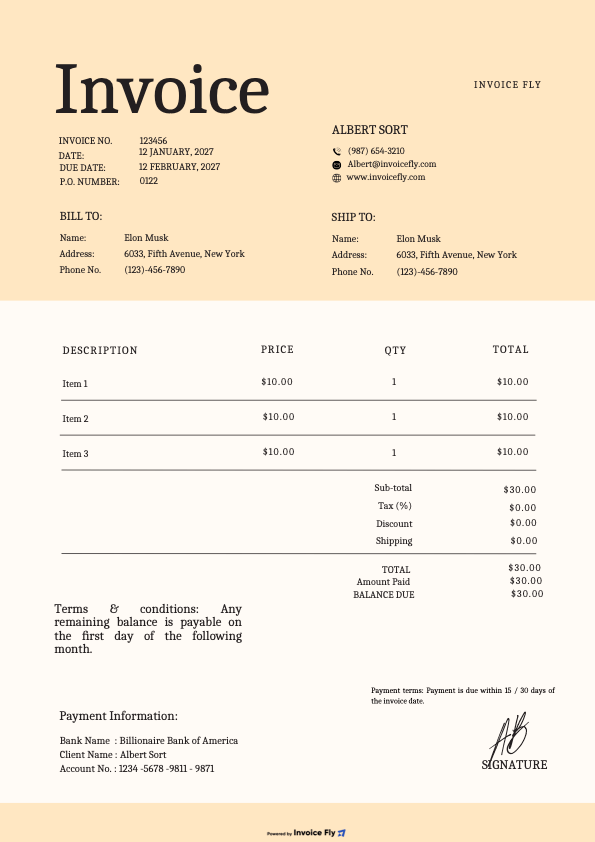
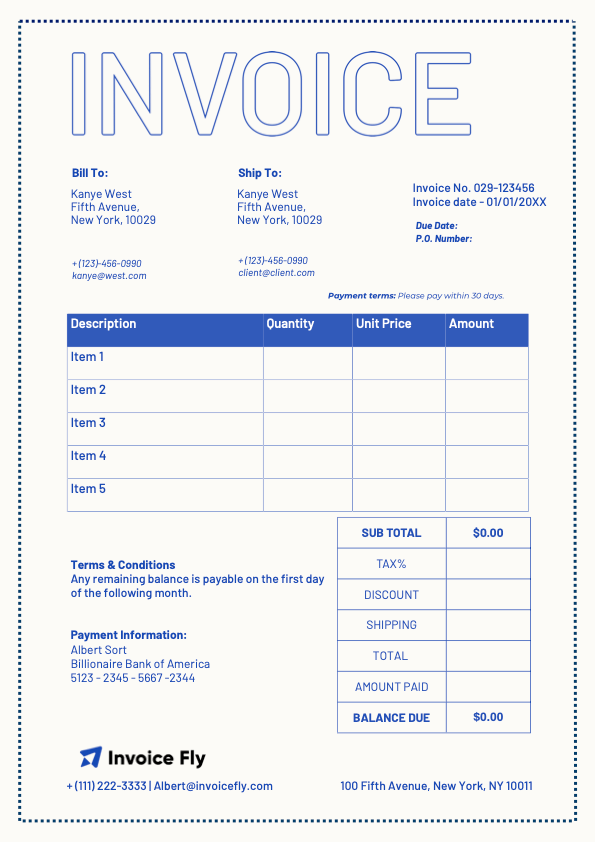
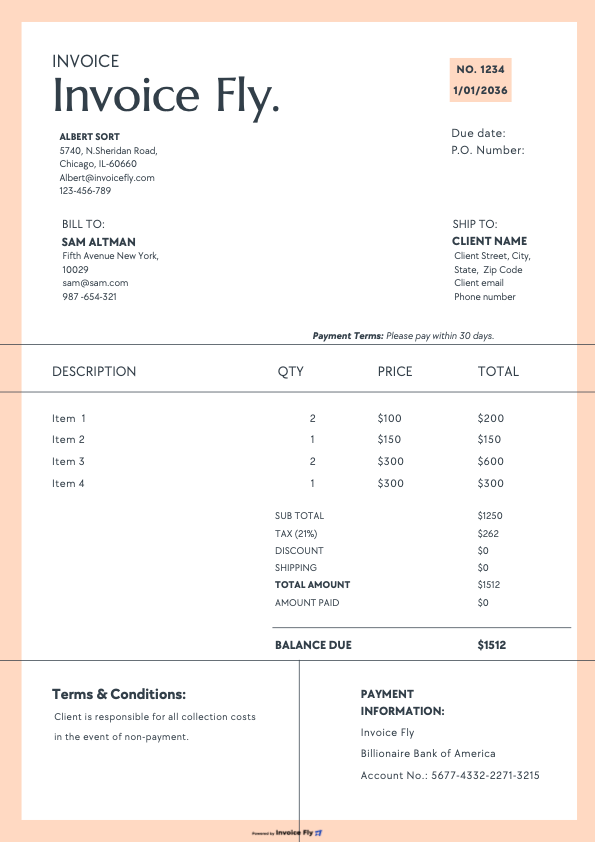
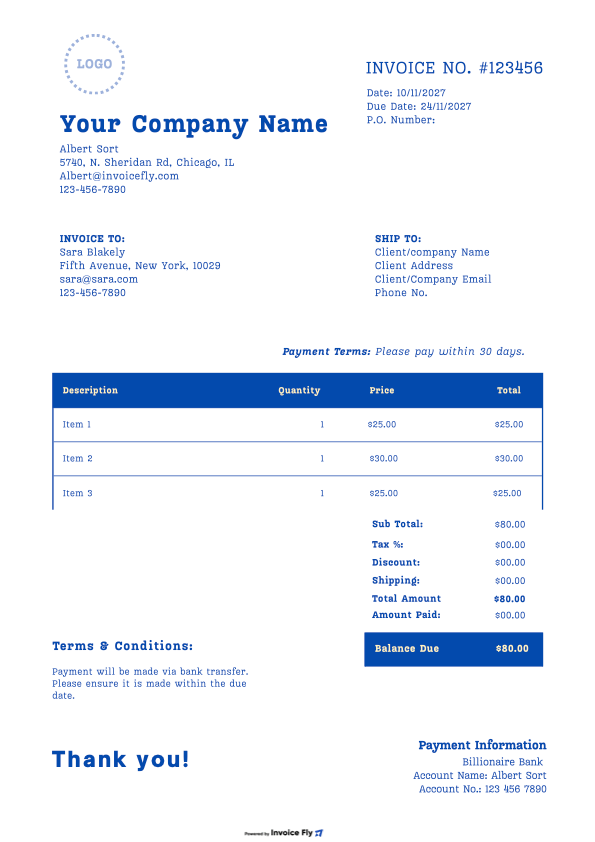
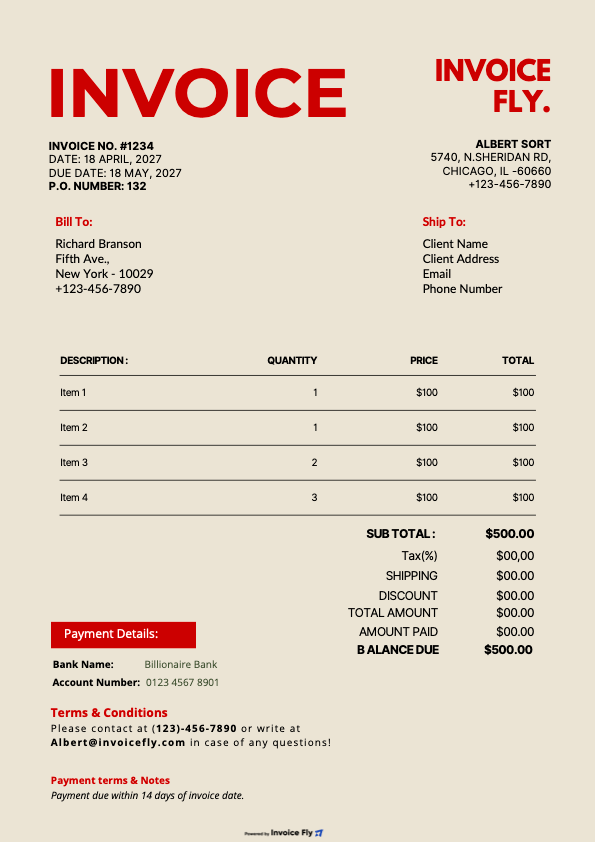
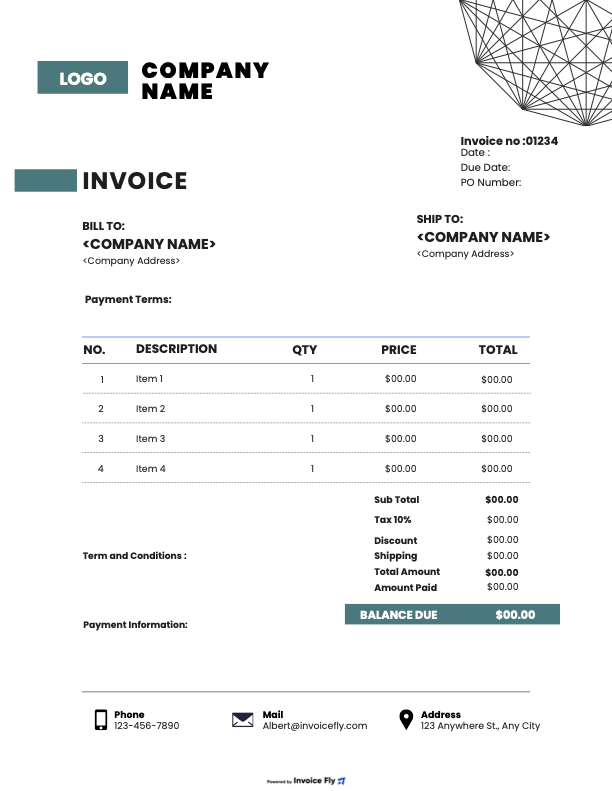
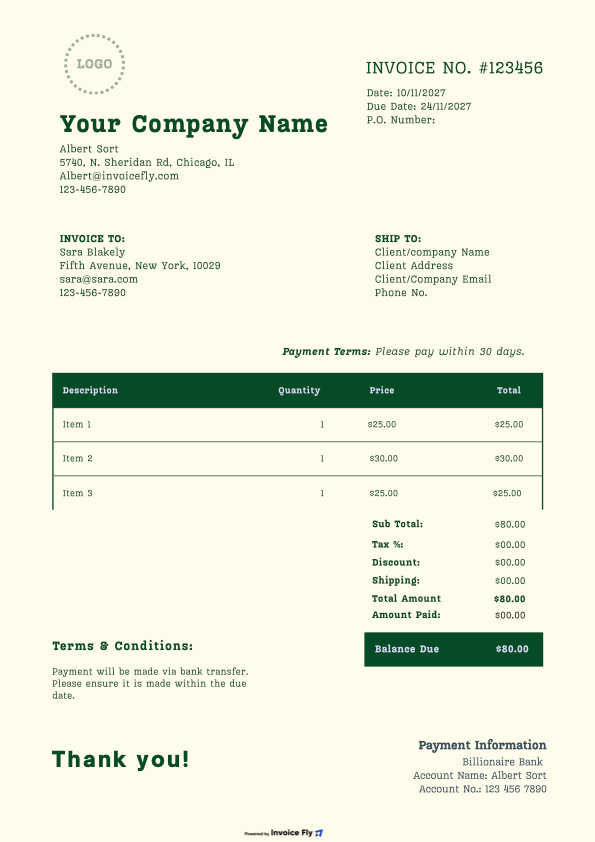
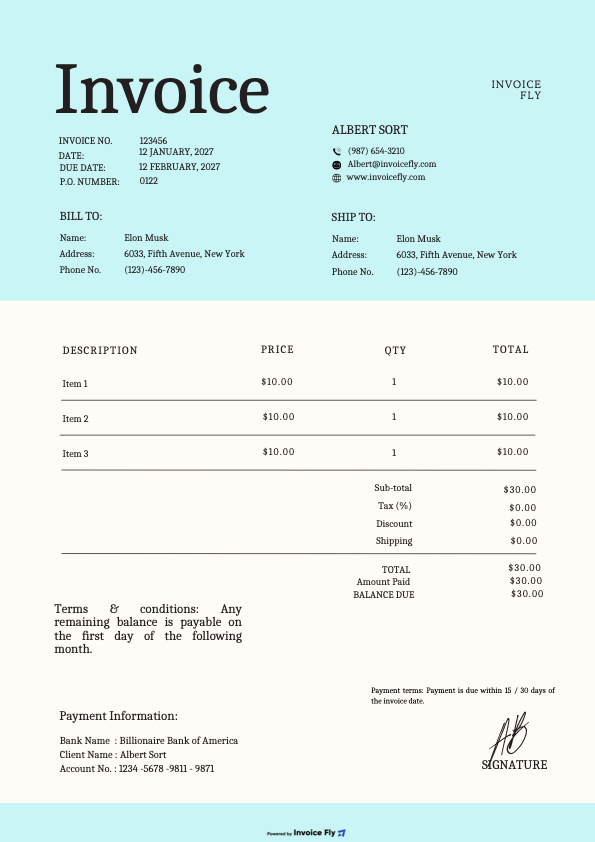
Invoice Fly’s free catering invoice templates help you bill clients for food, beverages, event catering, and additional services. Add menu items, guest counts, food costs, labor, and delivery charges to create clear, itemized catering invoices. Customize your template and download it in Word, Excel, PDF, Google Docs, or Google Sheets.

Colors

Styles

Formats

Industry

Caterer in a white shirt and apron garnishing bruschetta on a serving tray at an event buffet table

How to Invoice as a Caterer

  1. Agree on the event scope, pricing, and payment terms with your customer.

  2. Send a catering quote and request a booking deposit.

  3. Confirm the booking and set a deadline for final changes.

  4. Keep track of approved changes and additional charges during the event.

  5. Send the final invoice, deduct the deposit, and set a payment due date.

Benefits of Using Invoice Fly’s Free Catering Invoice Templates

Simplify event billing with a ready-made catering invoice template. Organize menu costs, staff charges, equipment rentals, and additional services in one clear document. Spend less time preparing invoices and give customers a better understanding of what they’re paying for.

Chef in black gloves and a striped apron plating canapés at an outdoor catered event while staff serve in the background
  • Reduce Billing Errors

    List food, beverages, labor, rentals, and service charges separately. Keep every catering expense visible and reduce the chances of leaving out an item when preparing your invoice.

  • Make Invoices Easier for Clients to Review

    Break down your catering services, guest quantities, and individual costs so customers can check their order and understand the final amount due.

  • Price Different Catering Services

    Charge per guest, per menu item, or by package. Customize your catering invoice format to cover different menus, event sizes, staffing requirements, and additional services.

  • Give Your Catering Invoices a Professional Look

    Add your business logo, contact details, and branding to create consistent catering invoices for weddings, corporate events, private parties, and other bookings.

  • Edit and Download in Your Preferred Format

    Download your catering invoice template in Word, Excel, or PDF, or customize it in Google Docs or Google Sheets. Choose the format that works for you and prepare an invoice for your next event.

Sample invoice for catering service

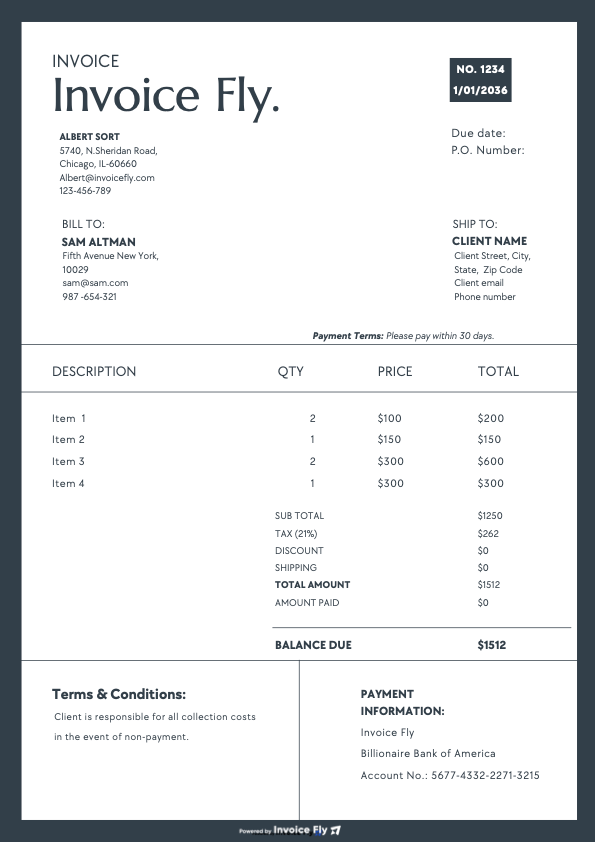
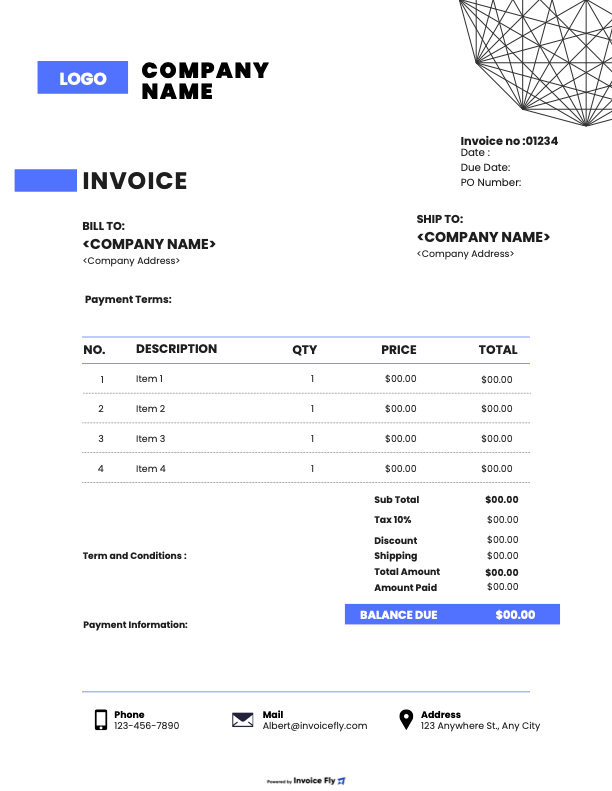
Catering invoice templates include the essential details you need to bill customers for food, beverages, staffing, and event services. Use this catering invoice format to organize every charge and give customers a clear breakdown of their event costs.

  1. Business and Client Information

    Add your catering business name, logo, address, and contact details, along with your customer’s name and billing information. For corporate events, include the company name and booking contact.

  2. Invoice Number and Dates

    Include a unique invoice number, issue date, and payment due date to identify each catering invoice and keep your billing records organized.

  3. Event Details

    Record the event date, venue, event type, and guest count so customers can see which booking the catering invoice covers.

  4. Food and Beverage Menu

    List menu items, food and drinks, quantities, and prices. Include per-person or per-item rates, catering packages, and any relevant dietary notes.

  5. Staffing and Labor Charges

    Break down charges for chefs, servers, bartenders, and other event staff. Include hourly rates, estimated hours, overtime, or flat service fees.

  6. Equipment, Rentals, and Additional Services

    List rental items such as tables, chairs, linens, glassware, and tents. Include delivery, setup, and cleanup charges to account for all event services.

  7. Taxes, Charges, and Invoice Total

    Show the subtotal, applicable sales tax, service charges, gratuity, total amount, deposits already paid, and remaining balance. Keep each charge clear so customers understand the final catering bill.

  8. Payment Terms and Instructions

    Include payment due dates, accepted payment methods, and any applicable late payment terms. Explain how customers can pay and when the remaining balance is due.

Catering invoice template with eight numbered elements: 1 business and client information, 2 invoice number and dates, 3 event details, 4 food and beverage menu, 5 staffing and labor charges, 6 equipment, rentals, and additional services, 7 taxes, charges, and invoice total, 8 payment terms and instructions

What Do Caterers Usually Charge For?

A catering invoice can include food, beverages, staff, equipment, and additional event services. Use this breakdown to itemize your charges and give customers a clear picture of their total catering costs.

Charge or serviceHow to calculateHow to show it on the invoice
Food and menu packagesNumber of guests × price per personBuffet package – 75 guests × per-person rate
Beverages and drinksNumber of drinks or guests × unit priceBeverage package – quantity × price
Staff and laborNumber of staff × hours × hourly rateServing staff – 4 people × 6 hours
Menu planning and preparationHours worked or flat service feeCustom menu planning and tasting
Delivery, setup, and cleanupFlat fee, distance, or hours workedFood delivery and event setup
Equipment and rentalsNumber of items × rental rateTable, chair, and linen rentals
Disposable suppliesNumber of sets or packs × unit pricePlates, cups, napkins, and cutlery
Service charges and gratuityAgreed percentage or fixed amountService charge and gratuity listed separately

Common Catering Invoice Mistakes

Small invoicing mistakes can lead to billing disputes, delayed payments, and confusion after an event. Use these tips to keep your catering invoices accurate, easy to understand, and ready for payment.

Common mistakeHow to fix it
Combining food, labor, and rental costs into one total makes expenses difficult to review.List each charge separately with its quantity and price.
Forgetting to account for the booking deposit can leave customers overcharged.Show the deposit as a previous payment and subtract it from the final balance.
Applying sales tax incorrectly can lead to billing errors.Check state and local tax rules and apply the correct rate to taxable items and services.
Combining service fees and gratuity can confuse customers.List each charge separately and explain whether gratuity is included or optional.
Missing details on a catering service invoice can delay corporate payments.Include the necessary business and invoice details, and provide permits or proof of insurance when requested.
Leaving staff hours and overtime rates unclear can lead to payment disputes.State the included hours and additional hourly rate in your booking terms.

Create your first invoice free with our Online Invoice Generator.

Free Invoice Generator
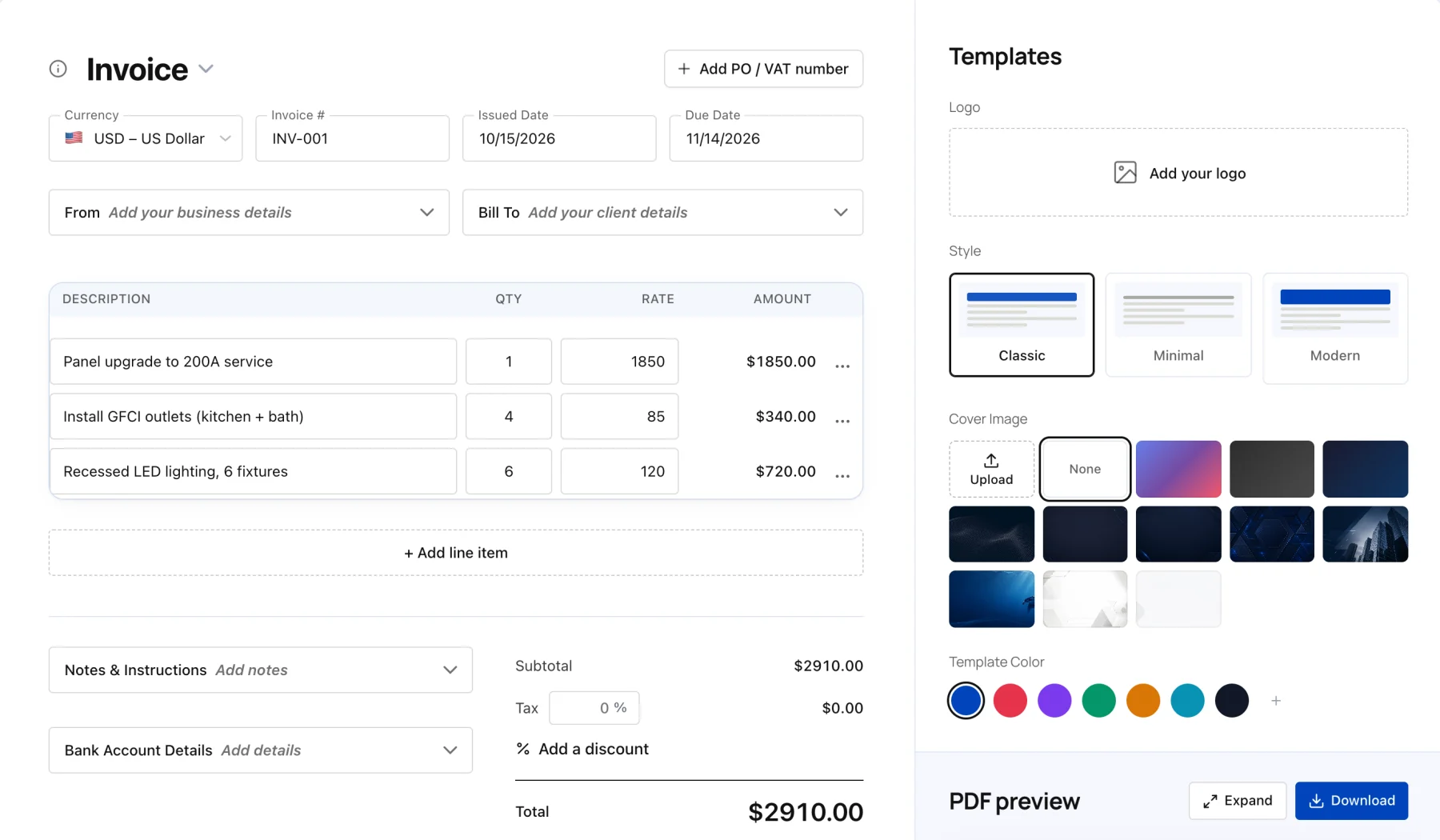

Invoice Fly free online invoice generator with line items, totals and template options

FAQs About Catering Invoice Templates

Yes! Invoice Fly offers free catering invoice templates that you can customize for different events, menus, and customer requirements. Add your business information, client details, guest count, food and beverage charges, staffing costs, rentals, and payment terms to create a professional catering invoice.

You can choose from available formats such as Word, Excel, PDF, Google Docs, and Google Sheets, depending on the template. Whether you need a simple catering bill format for a private party or a detailed catering service invoice template for a corporate event, start with a ready-made design instead of creating one from scratch.

A catering bill template should show customers exactly what they're paying for, from the food and drinks to staffing and additional event expenses. A well-organized catering invoice format typically includes:

  • Business and customer details: Catering company name, contact information, billing address, and client details.

  • Event information: Event date, venue, event type, and confirmed guest count.

  • Food and beverages: Menu packages, individual dishes, drinks, quantities, and per-person prices.

  • Staffing: Chef, server, and bartender hours, along with their hourly rates.

  • Rentals and additional services: Tables, chairs, linens, equipment, delivery, setup, and cleanup.

  • Payment summary: Subtotal, applicable sales tax, discounts, deposit paid, and remaining balance.

For example, your invoice might list a dinner package for 80 guests, a separate beverage package, three servers for five hours, and equipment rentals. Itemizing these charges gives customers a clear breakdown instead of presenting everything as one catering bill total.

Start with an editable catering invoice template from Invoice Fly and add the details customers need to review and pay their bills. Include your business name and logo, invoice number, issue date, payment due date, customer information, and event details.

Next, organize your charges into clear sections for food, beverages, per-person packages, staffing, equipment rentals, delivery, and other catering services. Add quantities and individual rates so customers can check the costs, then include applicable sales tax, deposits, discounts, and the final balance due. Before sending your catering invoice, double-check the guest count, payment terms, and event information to make sure everything is accurate.

You can start with a free, editable estimate or quote template from Invoice Fly and customize it for your catering business. A catering quote should outline the proposed menu, estimated guest count, food and beverage prices, staffing, equipment rentals, delivery fees, and any additional services included in the package.

It's also helpful to state how long the quote is valid, when the final guest count is due, and whether a booking deposit is required. This gives customers a clear understanding of the expected catering costs before they commit. Once the customer approves the quote and the event takes place, you can use a catering invoice template to bill for the agreed services and any approved changes.

Set a minimum guaranteed guest count and agree on a deadline for customers to confirm their final numbers. Your catering agreement should explain how additional guests will be charged and whether reductions after the deadline will still be billed at the guaranteed minimum.

For example, you could list a dinner package for 100 guaranteed guests at $42 per person, then add eight additional guests at an agreed rate if the final count increases to 108. Show the original guest count, updated count, per-person rate, and additional amount separately on your catering invoice. This makes changes easier to track and helps prevent disagreements about the final event bill.

Your catering invoice should show staffing costs separately, including the type of staff, number of people, hours worked, and applicable hourly rates. Include chefs, servers, bartenders, and event assistants as individual line items where possible, especially when different roles have different rates or working hours.

List the service charge separately from labor and explain what it covers, such as event coordination or general service costs. Make it clear whether the service charge is included in the quoted price and whether it is a gratuity. For example, an invoice might show four servers working six hours at an agreed hourly rate, followed by a separate service charge. Invoice Fly's catering invoice template helps you organize these costs so customers can understand each part of the bill.

Start by listing food and beverages separately from labor, delivery, equipment rentals, and other services on your catering invoice. This makes it easier to identify which charges may be subject to sales tax and calculate the tax on the correct amount.

However, don't assume that all food is taxable or that labor and rentals are always exempt. Sales tax rules for catering vary by state and can depend on the type of food, how it is served, and the services included in the transaction. Check your state and local tax requirements, apply the appropriate rates, and show the taxable amounts and sales tax separately where required. Keeping itemized records also makes it easier to review your catering costs and billing calculations.

You can charge a separate tasting fee to cover menu preparation, ingredients, and the time spent preparing samples for potential customers. Before the tasting, explain the fee, what it includes, how many people it covers, and whether the amount will be credited toward the final event bill if the customer books your catering services.

For example, you could create an invoice line for a menu tasting for two guests at an agreed flat fee. Once the customer confirms the booking and meets your credit conditions, add the tasting credit as a deduction on their final catering invoice. Show both the original fee and the credit separately so customers can follow how the final balance was calculated.

List third-party rentals as separate line items on your catering invoice instead of combining them with your food or staffing charges. Include the item description, quantity, rental rate, and any agreed markup or handling fee. Common examples include tables, chairs, linens, glassware, plates, cutlery, and serving equipment.

You should also account for delivery, pickup, setup, and any damage or loss charges that apply to the rental agreement. For example, you could list 100 rented dinner chairs, their individual rental price, and a separately disclosed handling fee. Keeping these expenses visible helps customers understand the full cost of event rentals and gives you a clearer record of what needs to be paid to third-party suppliers.

Choose a pricing method that matches the type of bar service you're providing. You can charge a fixed price per guest for an open bar package, bill drinks based on actual consumption, or set individual prices for bottles and beverages. Include bartender hours, mixers, ice, glassware, and other bar-related supplies as separate charges when they aren't included in the package.

If customers are supplying their own alcohol, check whether the venue allows it and whether corkage fees apply. State the corkage price per bottle or another agreed unit, and clarify whether glassware, setup, and bartender services are included. For example, your catering invoice could show an open bar package for a set number of guests alongside separate bartender labor charges. Clear pricing helps customers understand what's included before the event and avoids unexpected charges afterward.

Make Running Your Catering Business Easier with Invoice Fly Academy

From preparing estimates to managing invoices and getting paid, running a catering business comes with plenty of moving parts. Explore Invoice Fly Academy for practical guides, invoicing tips, and business advice to help you manage customer payments, organize your billing, and keep your business running smoothly.

Invoice Fly app

Get Your Catering Invoices Ready for Free in Minutes