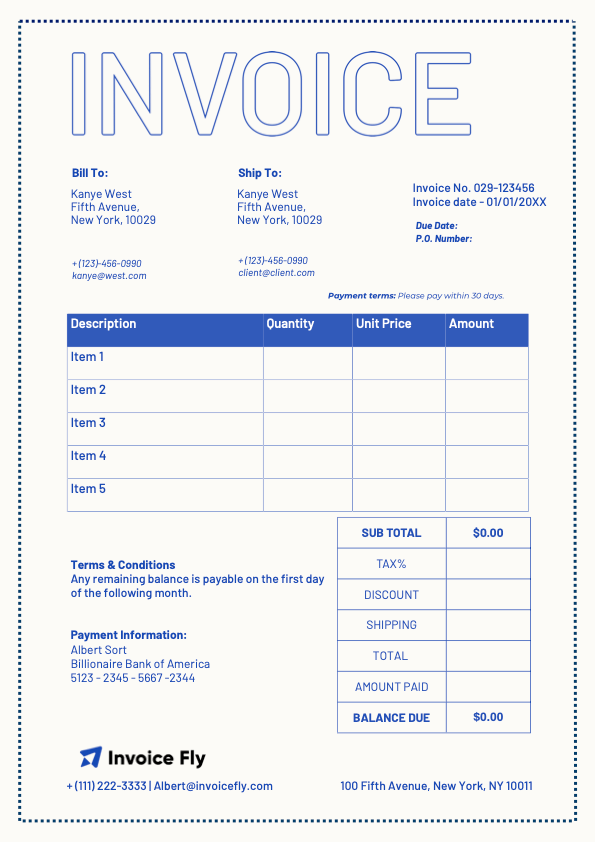
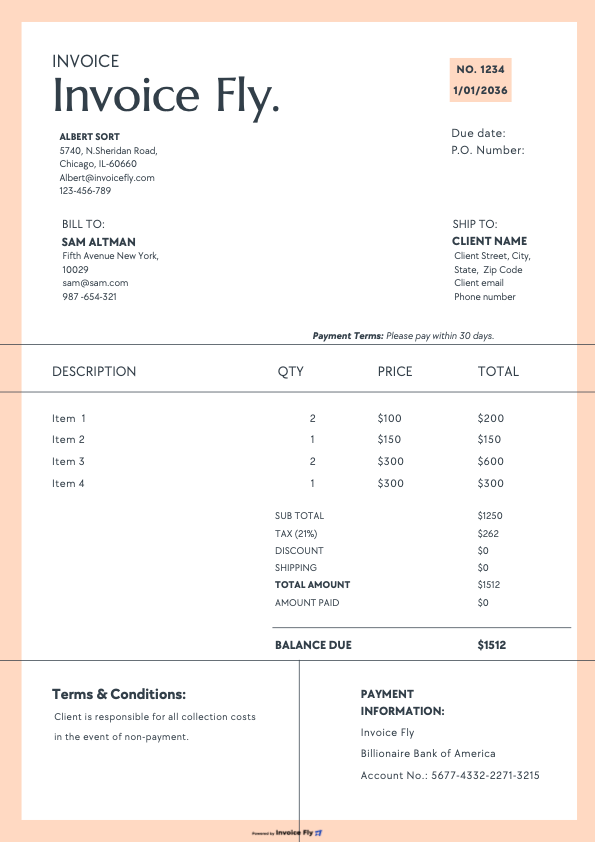
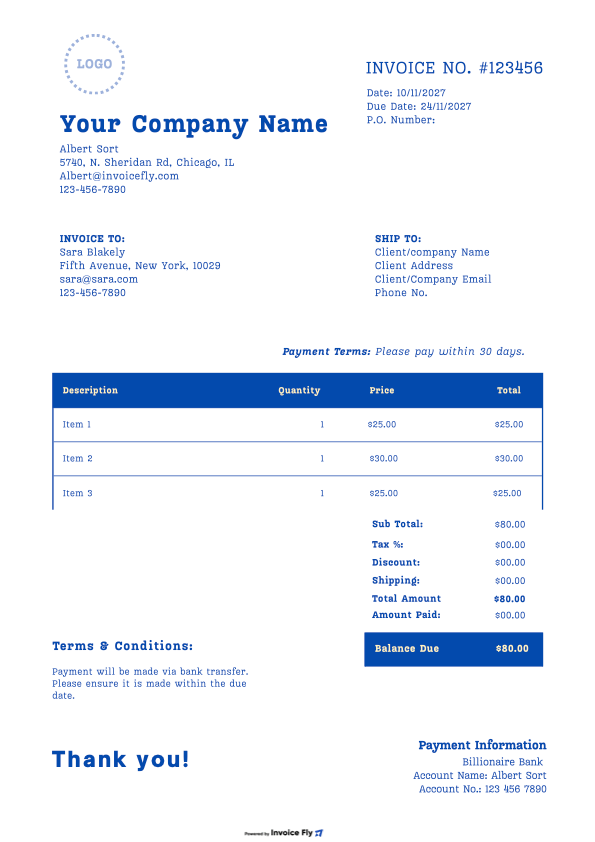
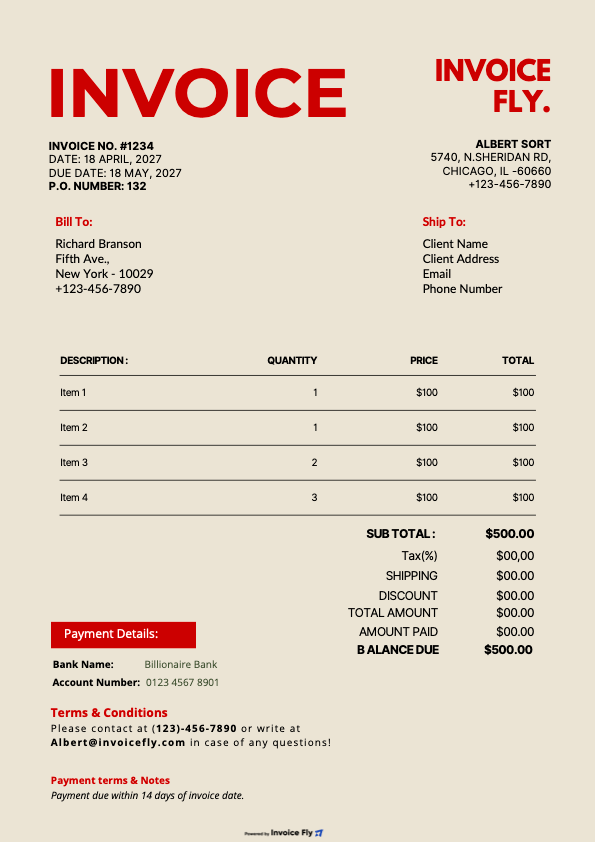
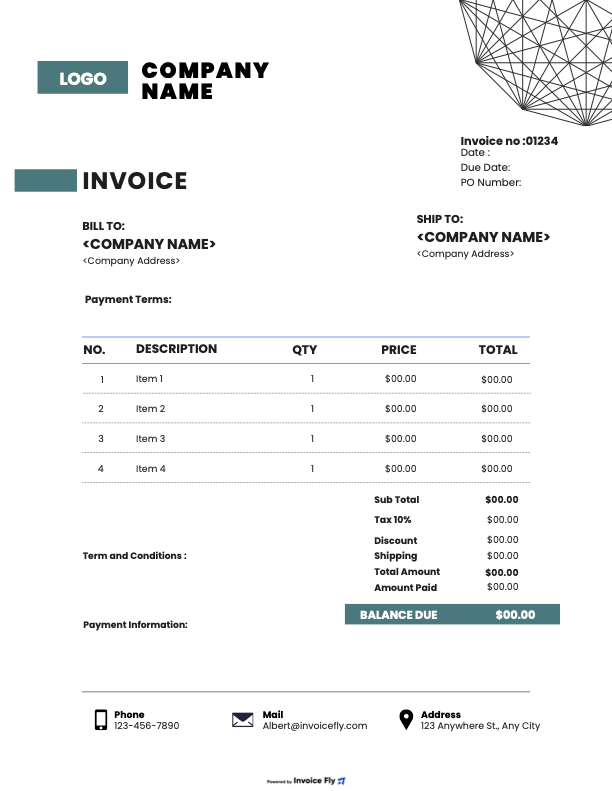
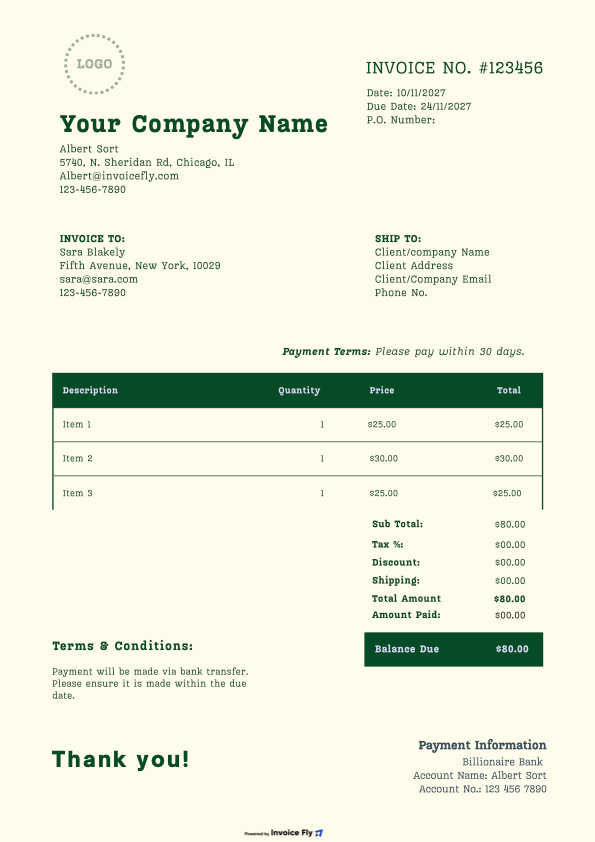
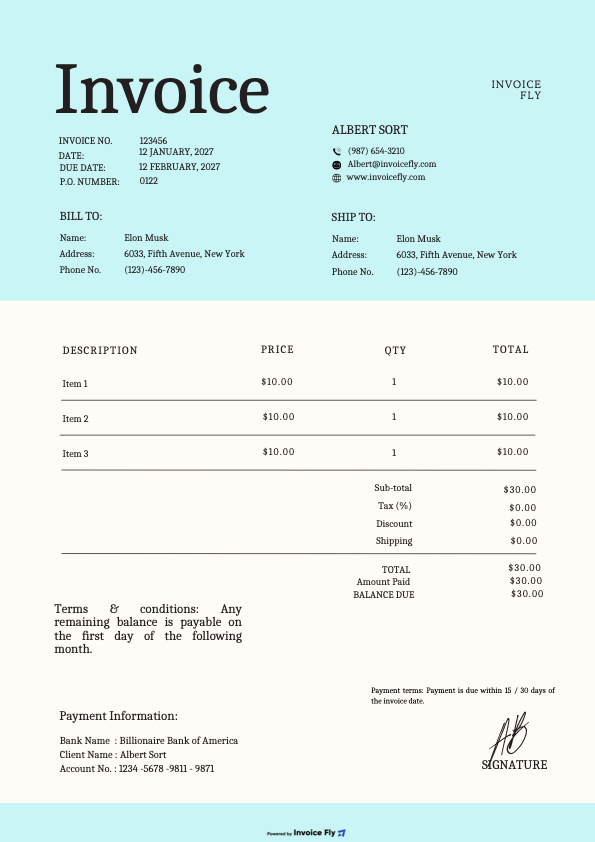
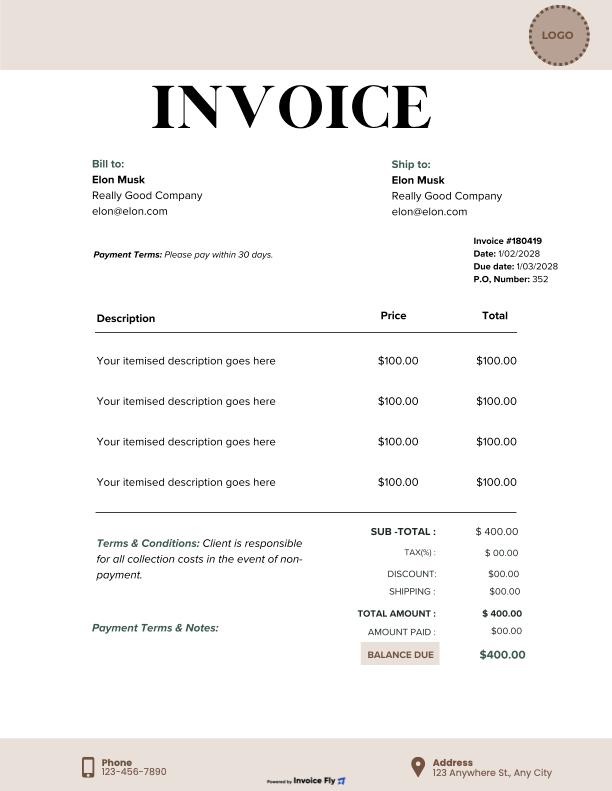
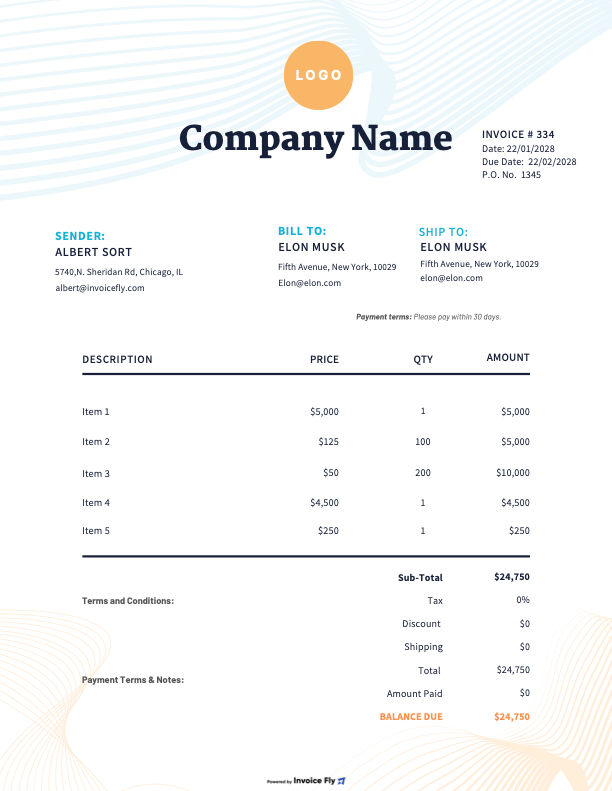
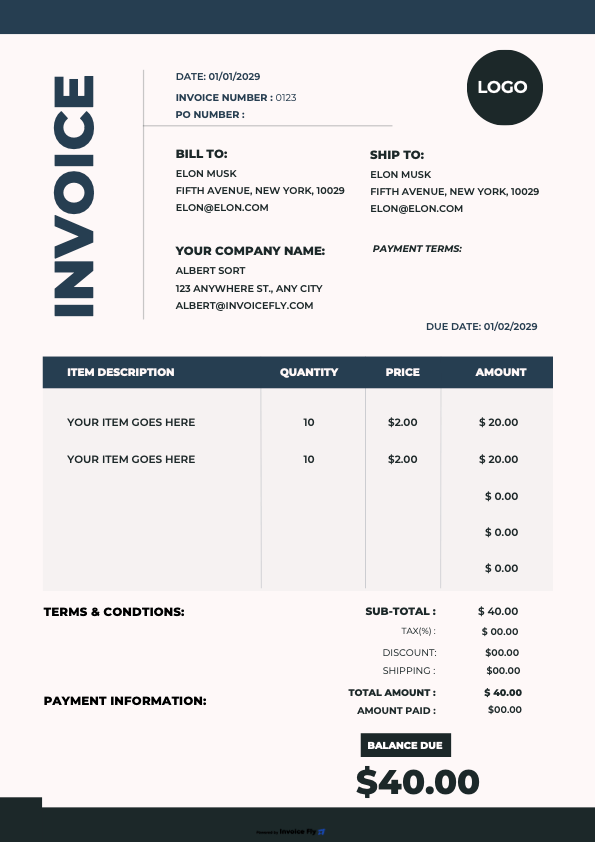
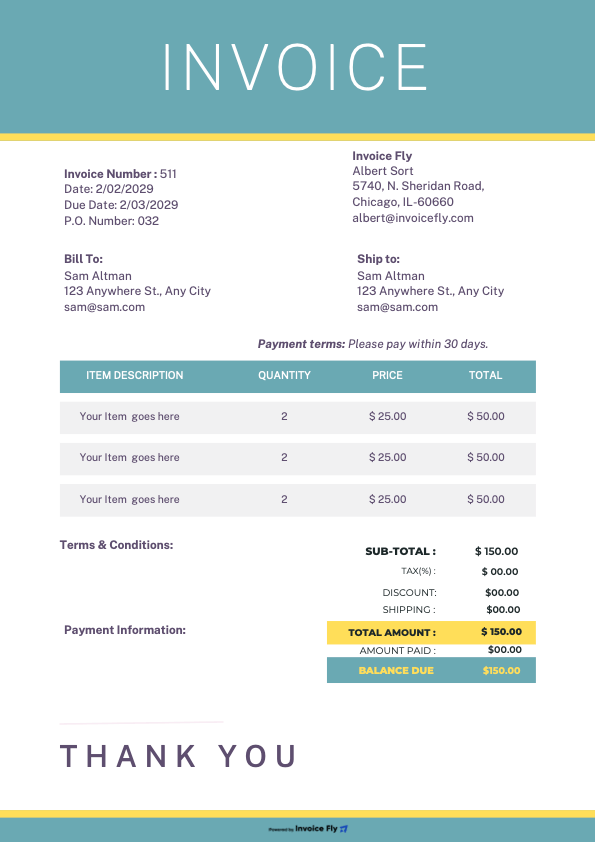
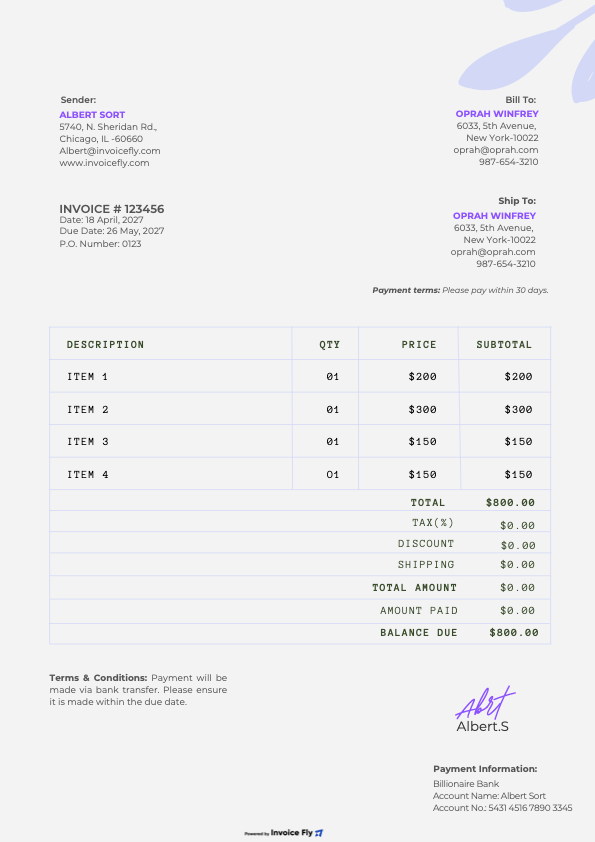
Free Painting Invoice Templates

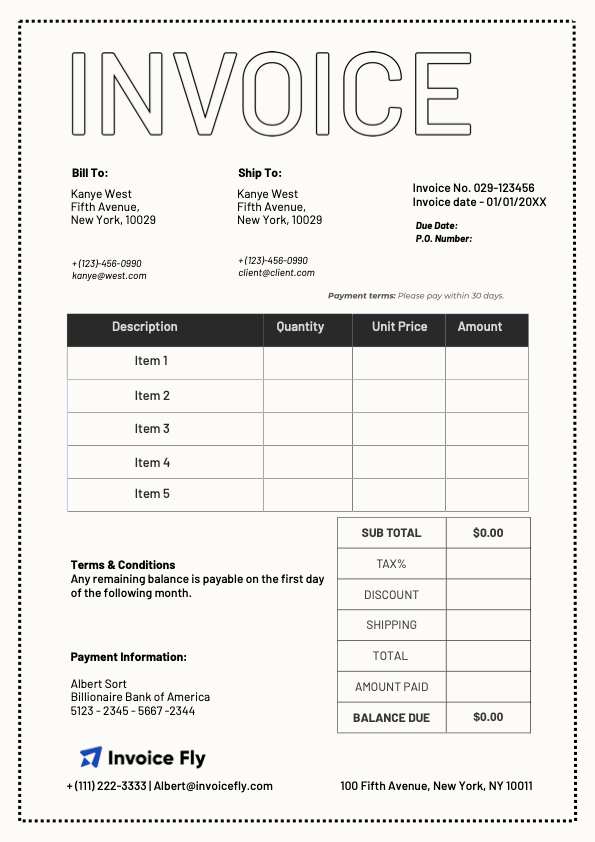
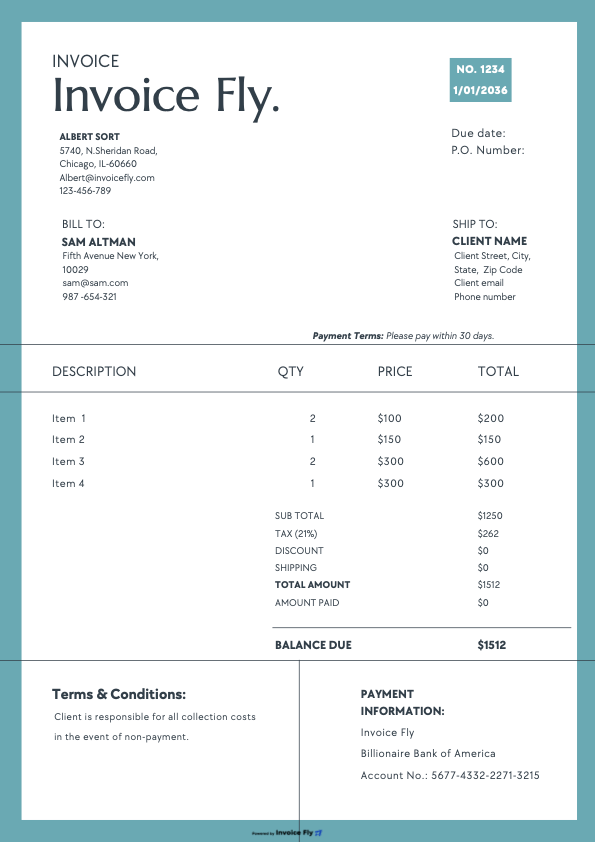
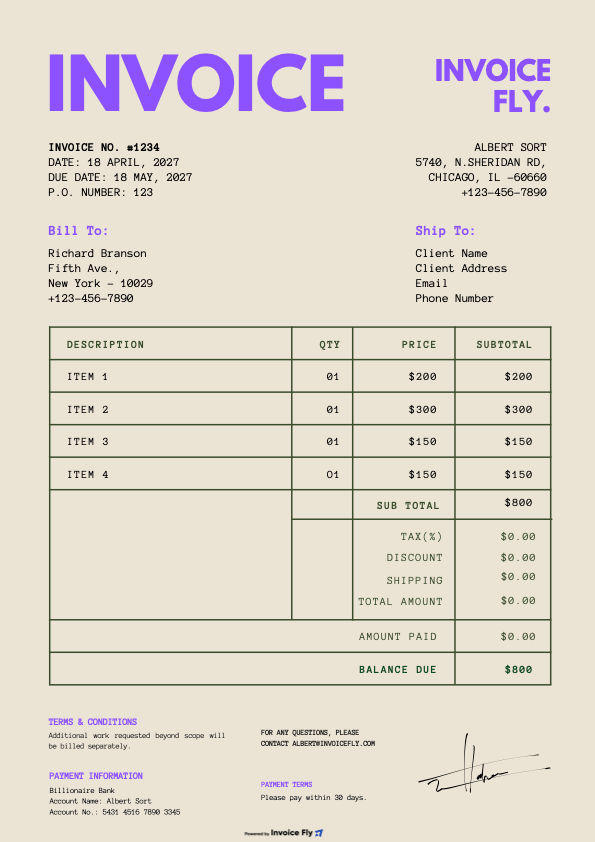
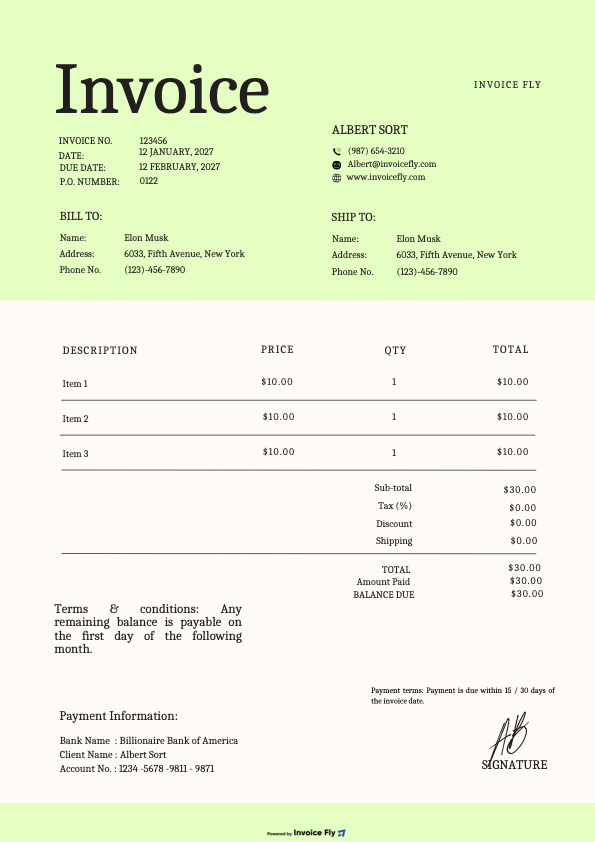
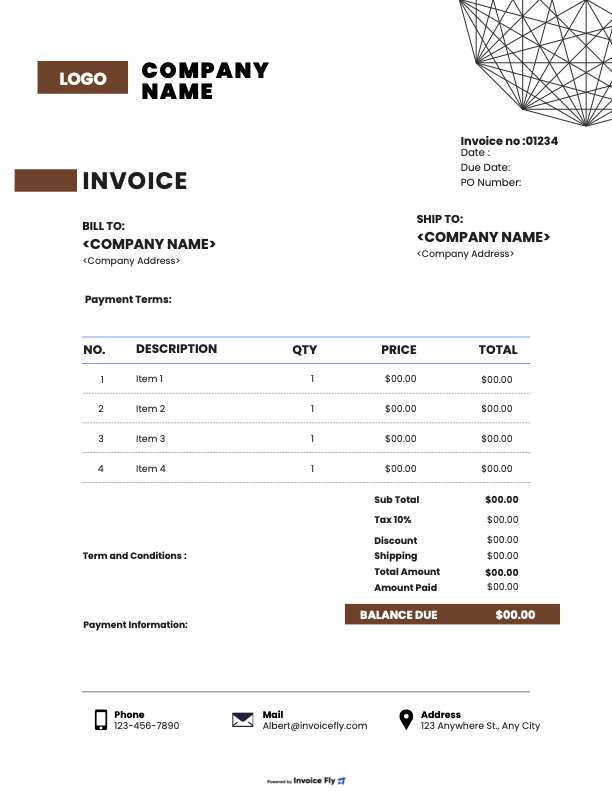
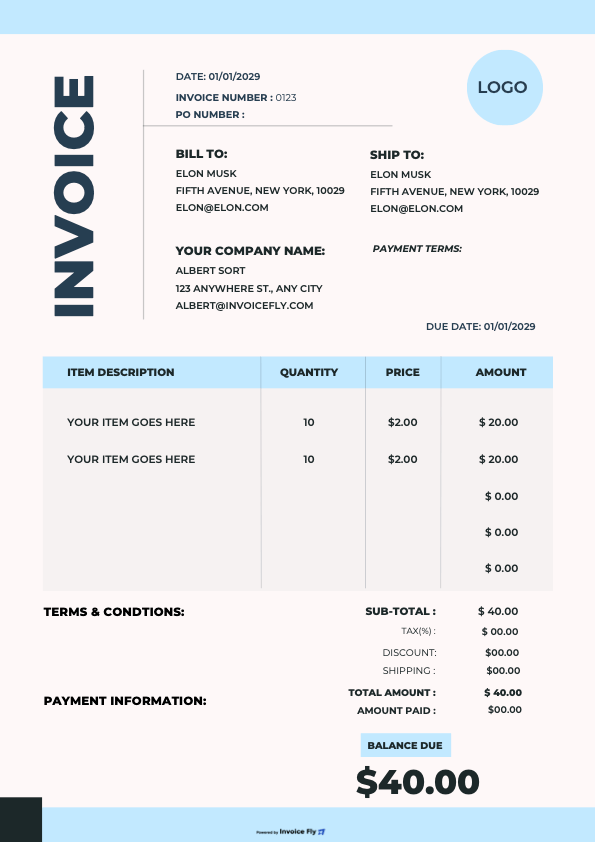
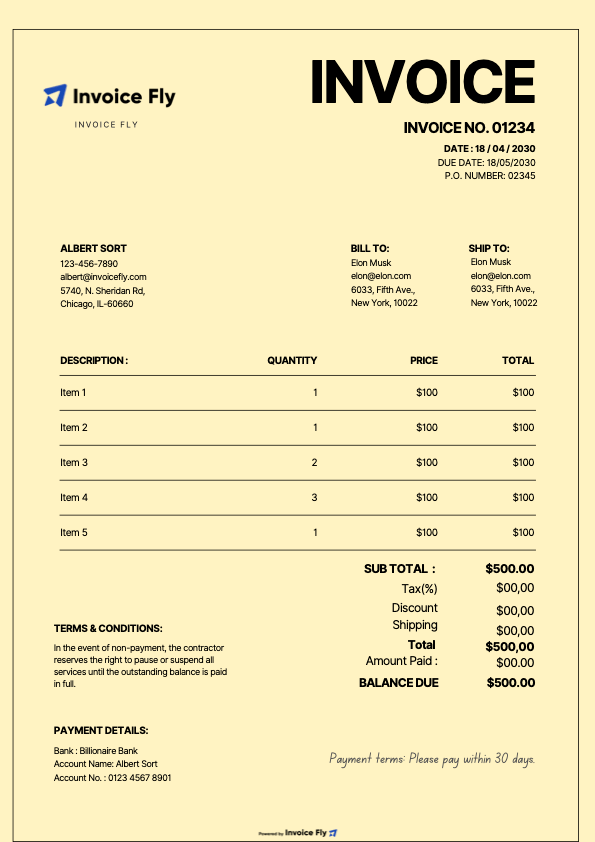
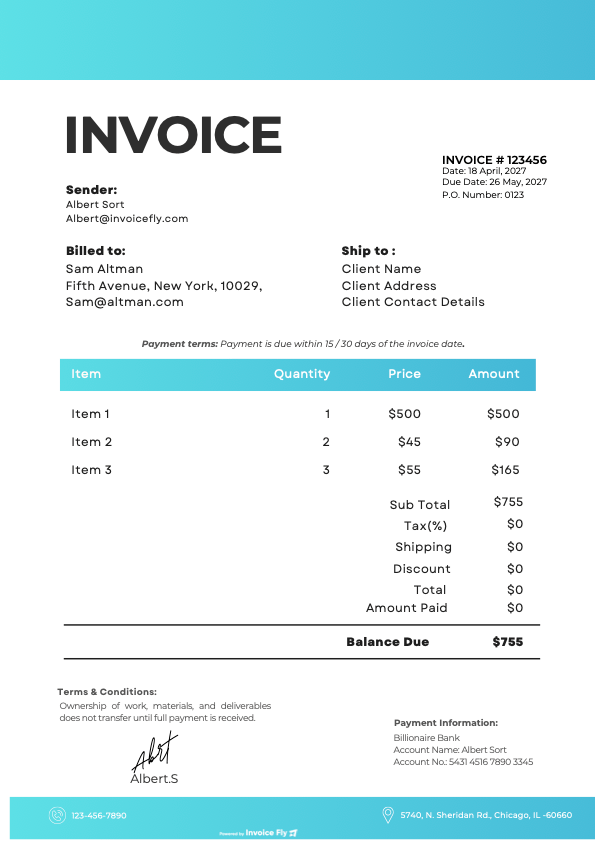
Create free painting invoices with Invoice Fly. Add labor, paint, materials, and service costs to calculate totals and bill clients. Customize your painting invoice template in Word, Excel, Google Docs, or Google Sheets, or download it as a PDF.

Colors

Styles

Formats

Industry

Benefits of Using a Painting Invoice Template

As a painting contractor, using a painting invoice template can help you maintain accurate records, build client trust, and simplify your billing process.

Painter in white overalls rolling sage green paint onto an interior wall, with a ladder and covered furniture behind him
  • Accuracy and Consistency

    A painting invoice template ensures that labor, paint, materials, and other charges are documented consistently. This helps reduce billing errors and ensures clients receive a clear breakdown of costs.

  • Professionalism

    A well-organized painting invoice presents your services and pricing clearly. This builds client confidence, strengthens your business reputation, and helps clients understand exactly what they’re paying for.

  • Time-Saving

    Preformatted fields make it easier to create painting invoices without starting from scratch for every job. Spend less time on paperwork and more time completing painting projects.

  • Organized Financial Records

    Keep track of invoice numbers, payment due dates, and outstanding balances. Organized records make it easier to monitor payments and manage your painting business finances.

What Should Be Included in a Painting Invoice?

A painting invoice template helps you document completed work, itemize costs, and show clients exactly what they owe. Include these essential details to create a professional painting invoice and keep your billing organized.

  1. Painter and Client Information

    Include your painting business name, logo, phone number, email, and the client’s name and billing address so both parties are clearly identified.

  2. Invoice Number and Dates

    Add a unique invoice number, invoice date, and payment due date to track each painting job and keep your records organized.

  3. Painting Services, Labor, and Material Costs

    Describe the work completed, such as interior painting, exterior painting, or trim painting. Itemize labor charges, paint, primer, and other supplies with quantities and prices so clients can see how the total is calculated.

  4. Additional Charges and Taxes

    List extra costs for surface preparation, equipment rental, or other services, along with applicable taxes, to give clients a complete breakdown of the charges.

  5. Subtotal and Total Amount Due

    Show the subtotal, taxes, deposits or previous payments, and remaining balance so clients know exactly how much they owe.

  6. Payment Terms and Methods

    State when payment is due and list accepted payment methods, such as bank transfer, card, or cash, to make it easier for clients to pay.

  7. Notes and Service Terms

    Include relevant job details, warranty information, or agreed service terms to clarify what was completed and help prevent misunderstandings.
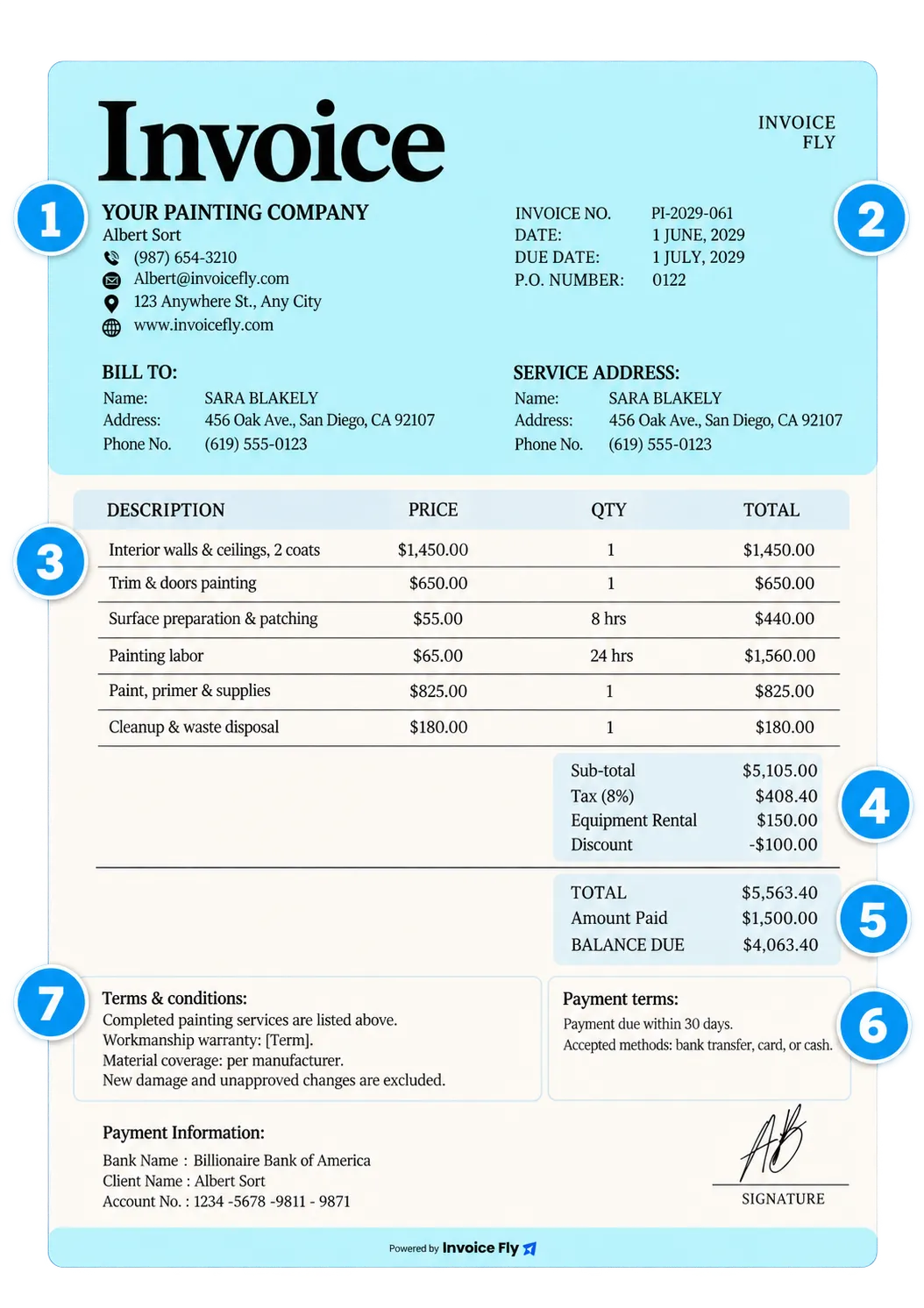
Painting invoice template with seven numbered elements: 1 painter and client information, 2 invoice number and dates, 3 painting services, labor, and material costs, 4 additional charges and taxes, 5 subtotal and total amount due, 6 payment terms and methods, 7 notes and service terms

Common Mistakes That Cost Painters Money on Estimates

Small estimating mistakes can eat into your profits. Avoid these common pitfalls when preparing a painting estimate.

Common mistakeHow to avoid it
Underestimating Preparation TimeSanding, scraping, patching, and priming can take up a significant share of the job. If you estimate 20 hours of prep but the work takes 30, you lose 10 hours of billable labor.Inspect every surface before setting your price.
Forgetting to Price Trim and Doors SeparatelyTrim, baseboards, window frames, and doors require detailed work that can take longer than painting walls. For example, a home with 15 interior doors, crown molding, and baseboards may need dozens of additional labor hours.List trim and door painting as separate line items in your estimate.
Overlooking Multiple Paint ColorsDifferent colors can mean extra masking, cutting in, and cleanup. A project with five wall colors may require more labor than one using a single color.Account for each color zone when calculating your price.
Choosing Paint Without Considering CoverageLower-cost paint may require additional coats or more frequent touch-ups, increasing labor and material costs.Compare coverage, durability, and price before recommending a product, and include the expected number of coats in your painting estimate.
Forgetting Touch-Ups and CleanupFinal touch-ups, cleanup, and a return visit can add time to a painting job.Include these tasks in your labor calculation and clarify whether a follow-up visit is included in the quoted price.

Tip: Use Invoice Fly’s free painting estimate template to itemize labor, paint, preparation, and additional services. A clear cost breakdown helps you set realistic prices and avoid overlooking expenses.

Create your first invoice free with our Online Invoice Generator.

Free Invoice Generator
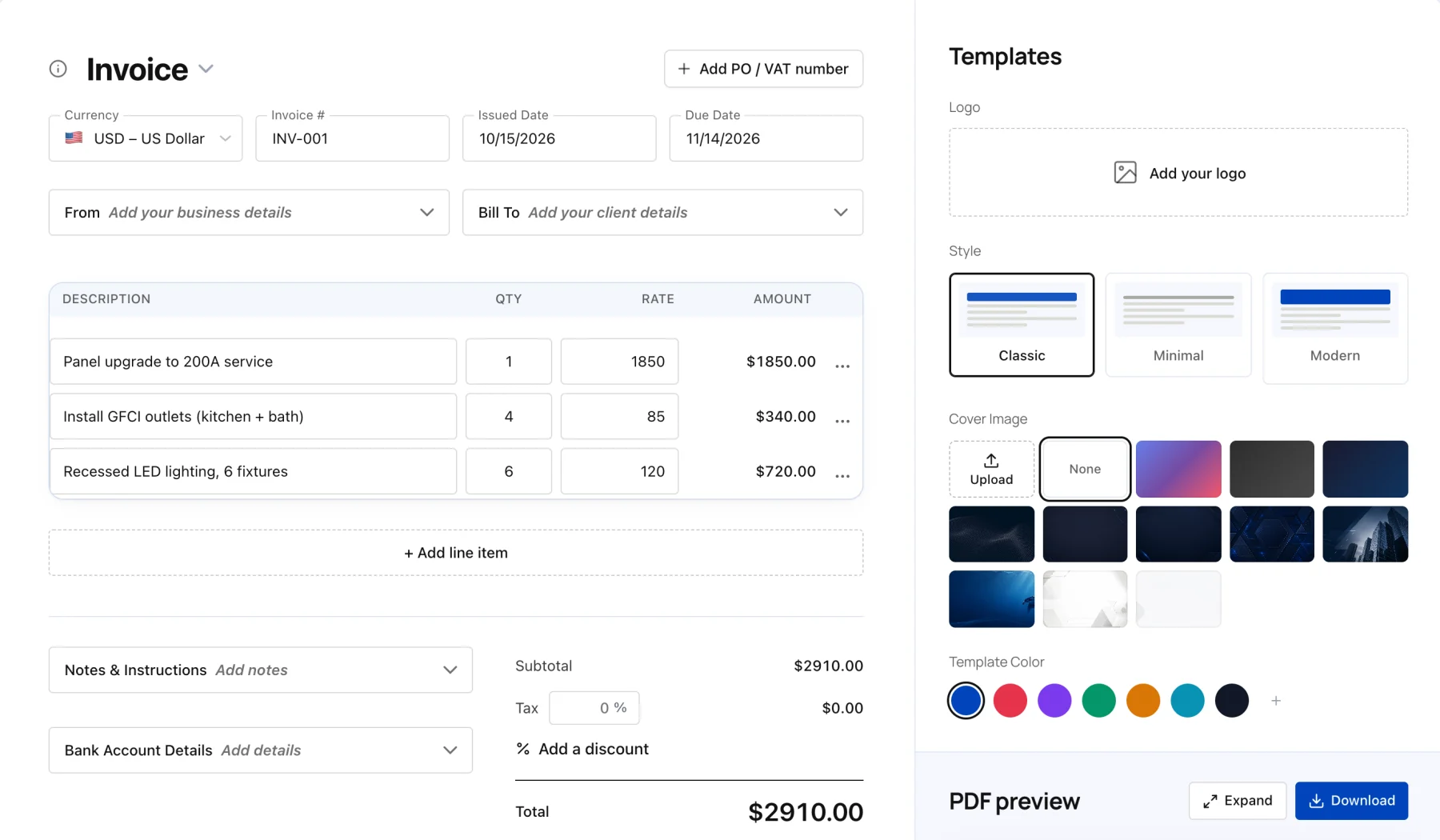

Invoice Fly free online invoice generator with line items, totals and template options

Frequently Asked Questions About Painting Invoices

You can send a painting invoice by email or mail, depending on your client’s preference. Include the invoice number, completed painting services, total amount due, and payment deadline. Before sending, double-check the client’s contact details and make sure the invoice is clear and accurate.

Send a painting invoice when a job is complete, unless you’ve agreed on a deposit or progress payments. For larger residential or commercial painting projects, you can invoice at agreed milestones to collect payments throughout the job. Make sure your payment schedule is clear from the beginning.

A painting invoice should include your business and client details, invoice number, issue date, and payment due date. List the painting services completed, labor charges, paint and material costs, additional fees, applicable taxes, total amount due, and accepted payment methods.

Start with a painting invoice template and add your business logo, contact information, and brand colors. Customize the service descriptions, labor and material charges, payment terms, and any notes relevant to the job. Invoice Fly’s painting invoice templates let you personalize your invoice for your painting business.

You can create a painting invoice using Invoice Fly’s free painting invoice templates or free invoice generator. Add your business details, itemize the completed painting work, enter your costs, and review the total before sending the invoice to your client.

Invoice Fly’s painting invoice templates are available in Word, Excel, Google Docs, Google Sheets, and PDF. Choose a format that suits your workflow, customize the details, and download or share your invoice with your client.

Yes, itemizing paint, primer, supplies, and labor helps clients understand how the invoice total is calculated. Include quantities and prices where appropriate, along with any additional charges or taxes. A clear breakdown helps prevent confusion and makes your painting invoice easier to review.

Yes, if your agreement allows deposits or progress payments. For larger painting projects, you can invoice at agreed milestones, such as after preparation or completion of a specific phase. Clearly state what each payment covers and keep track of the remaining balance. If you need to quote the job before work begins, use Invoice Fly’s free estimate templates.

Add the charges for painting labor, paint, materials, and any additional services. Include applicable taxes, then subtract deposits or previous payments to determine the remaining balance. Check your quantities and rates before sending the invoice to avoid billing errors. Invoice Fly’s free invoice generator helps you enter your charges and calculate invoice totals.

A painting estimate outlines the expected cost before work begins, while a painting invoice requests payment for completed work or an agreed payment milestone. If the final scope or cost changes, communicate those changes to the client and document any approved additional work before issuing the final invoice. Learn more about the difference between an invoice and a bill.

Invoice Fly app

Get Started for Free

Create your painting invoice in minutes with Invoice Fly.