- Home
- »
- Free Resources for Small Businesses
- »
- Free Templates
- »
- Free Estimate Templates
- »
- Painting Estimate Template
Free Painting Estimate Templates
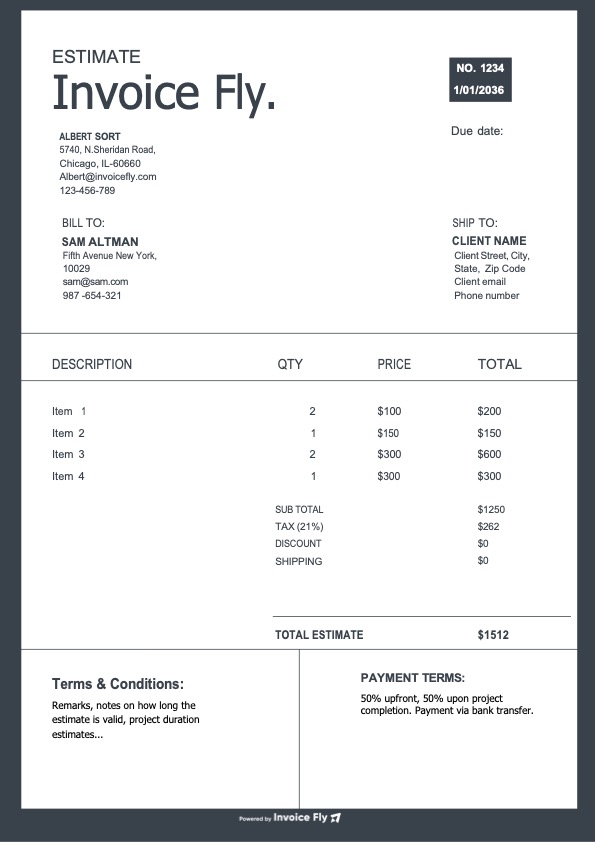
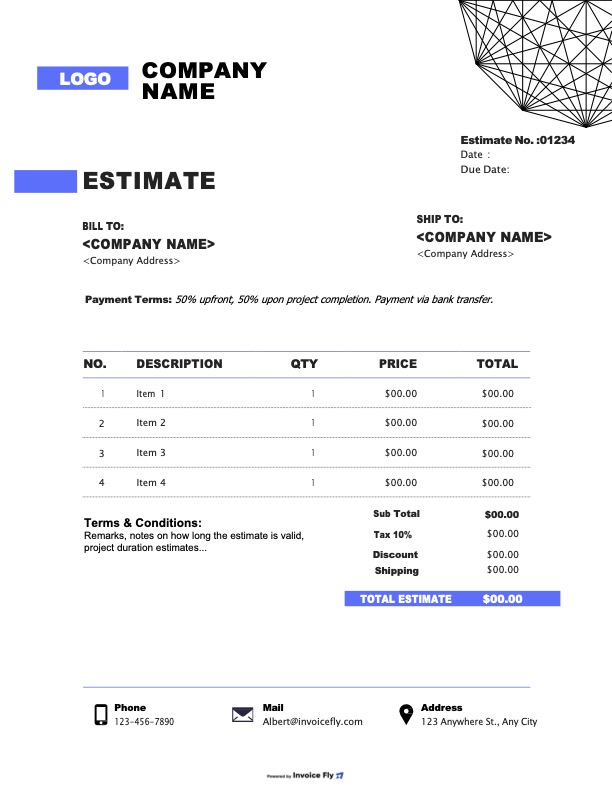
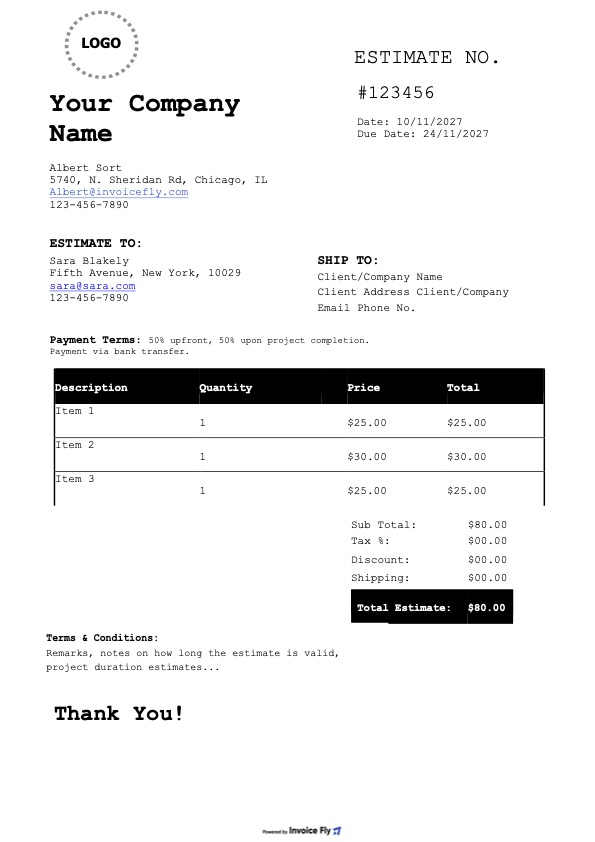
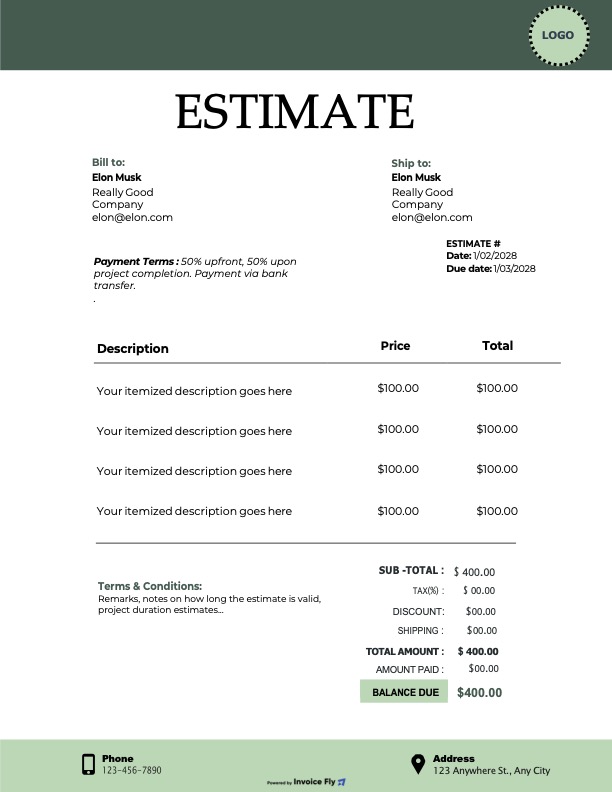
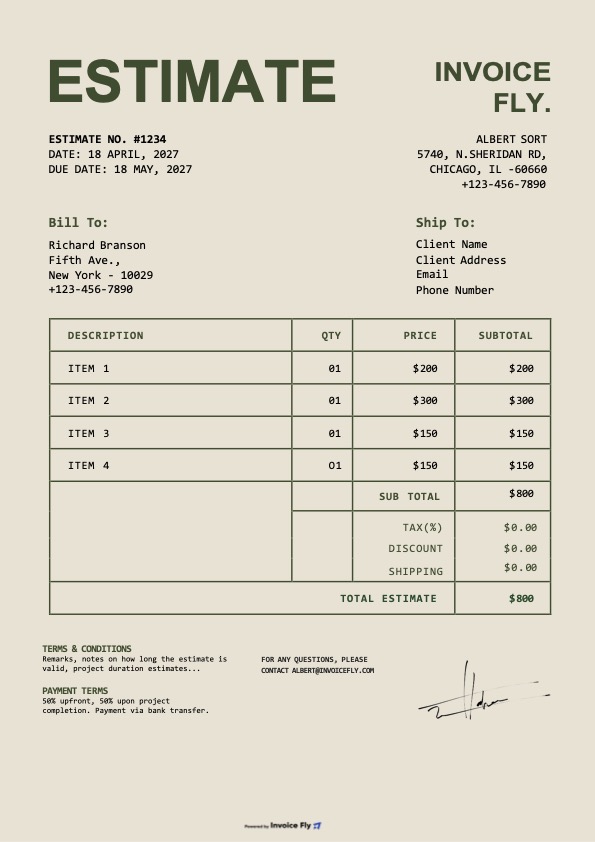
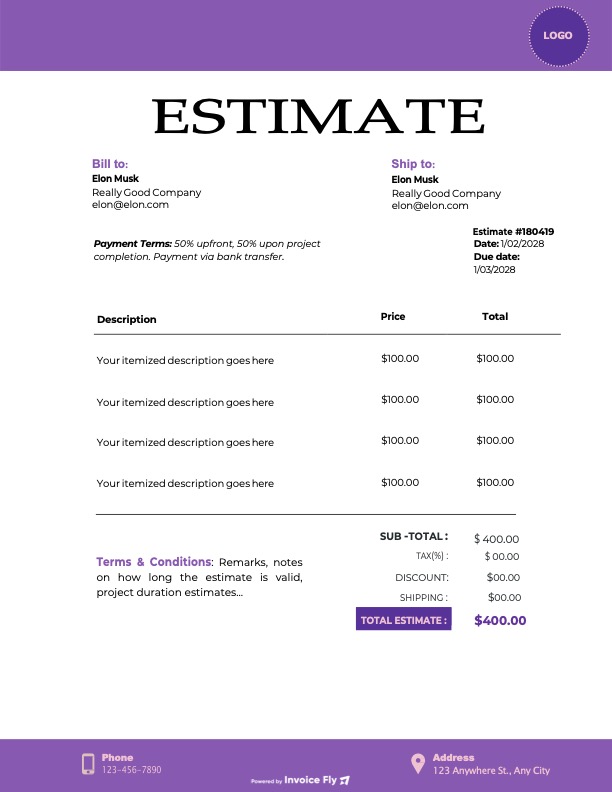
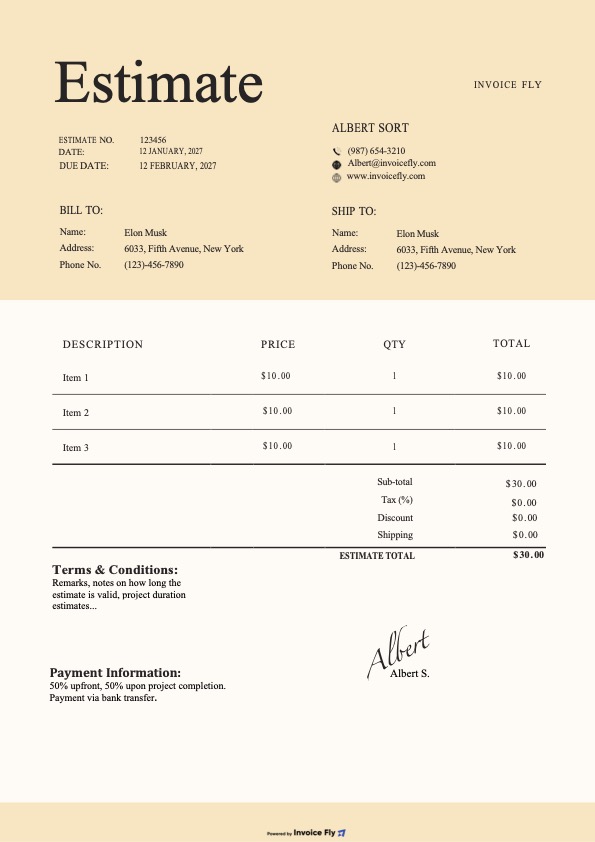
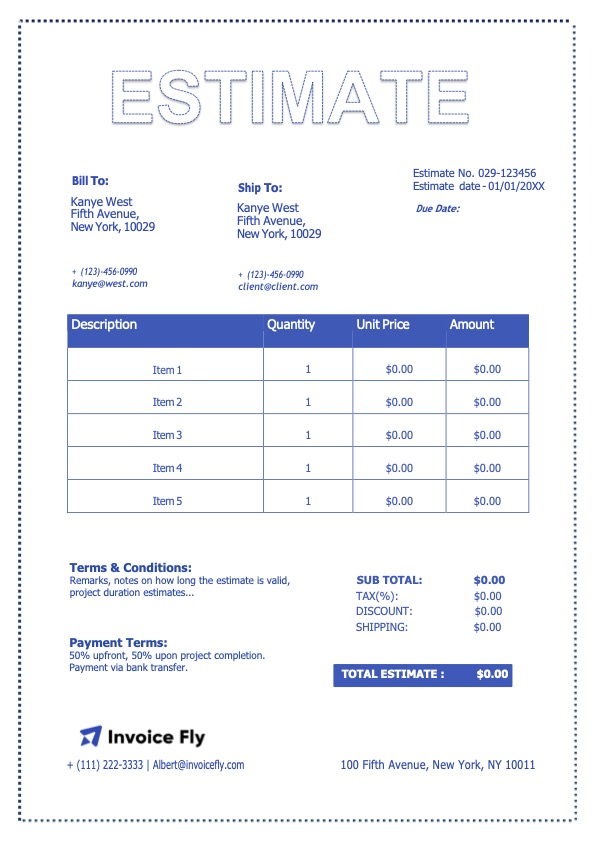
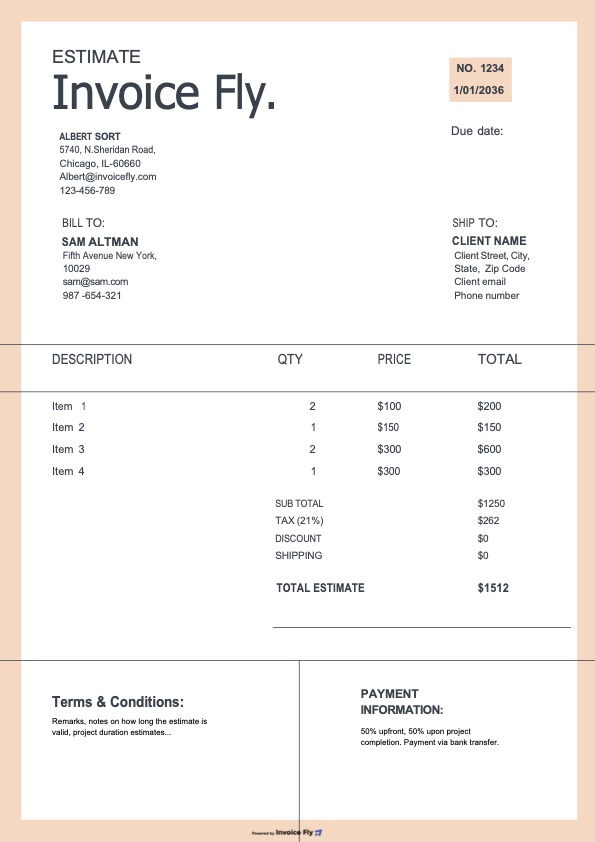
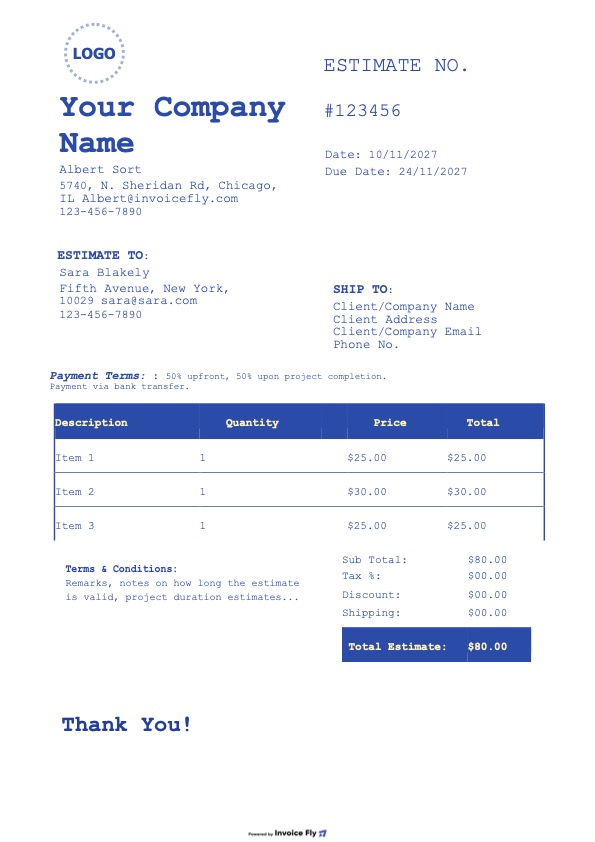
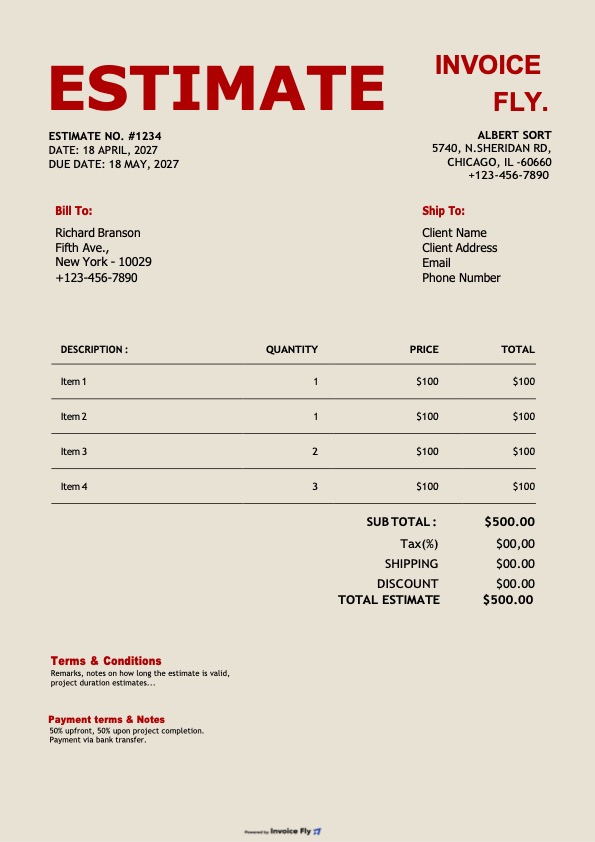
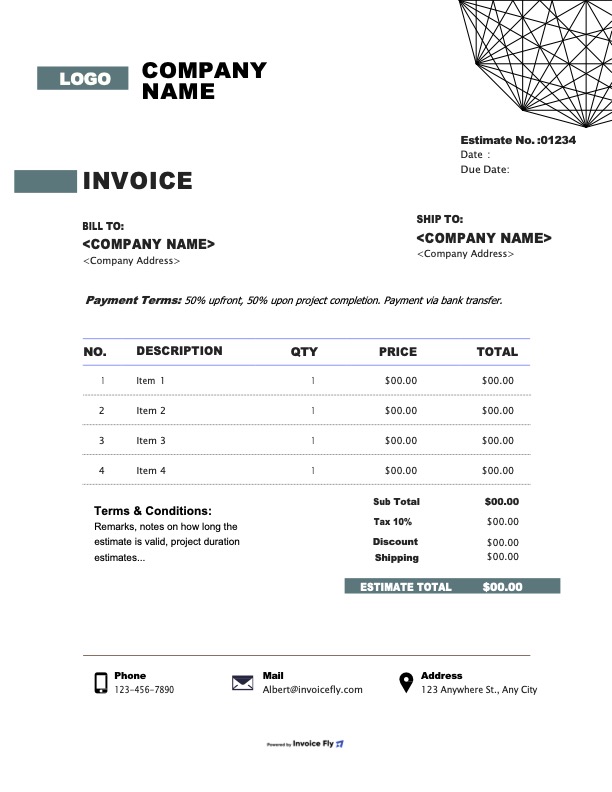
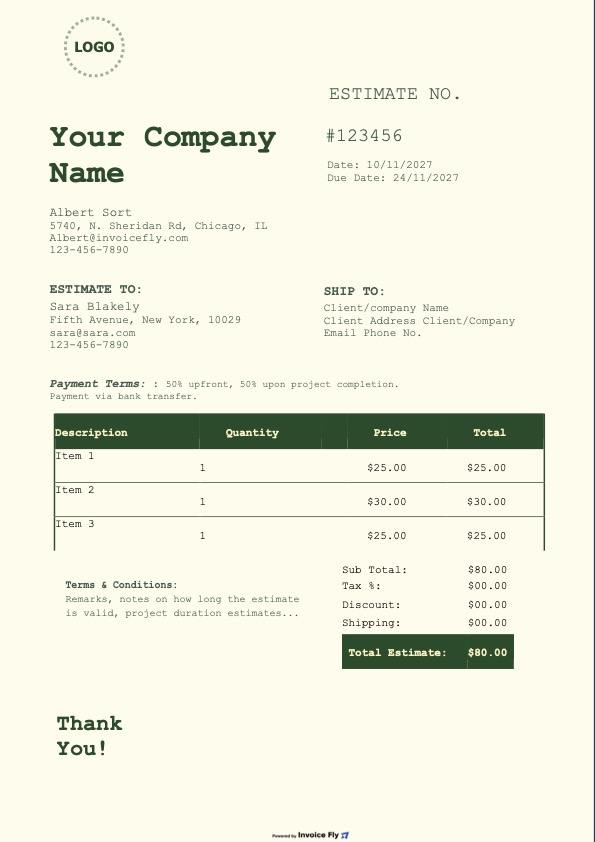
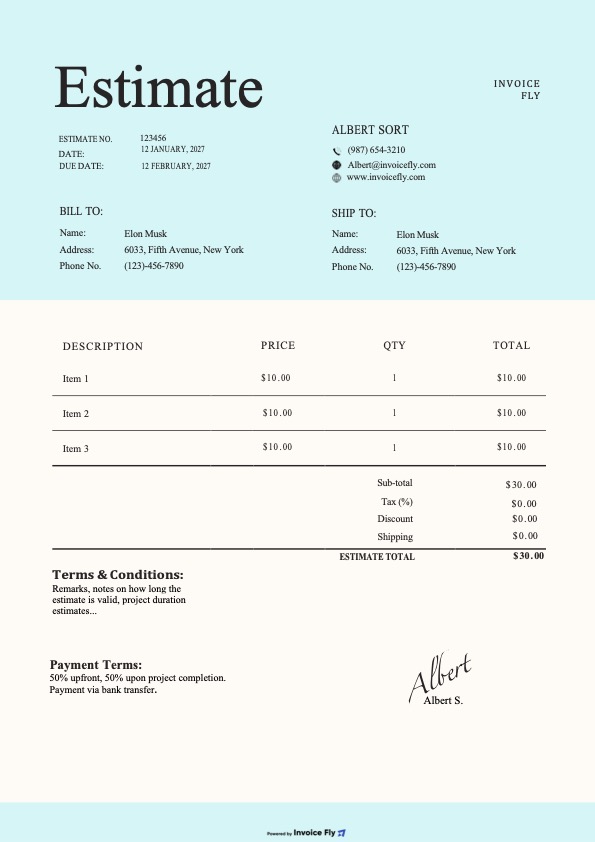
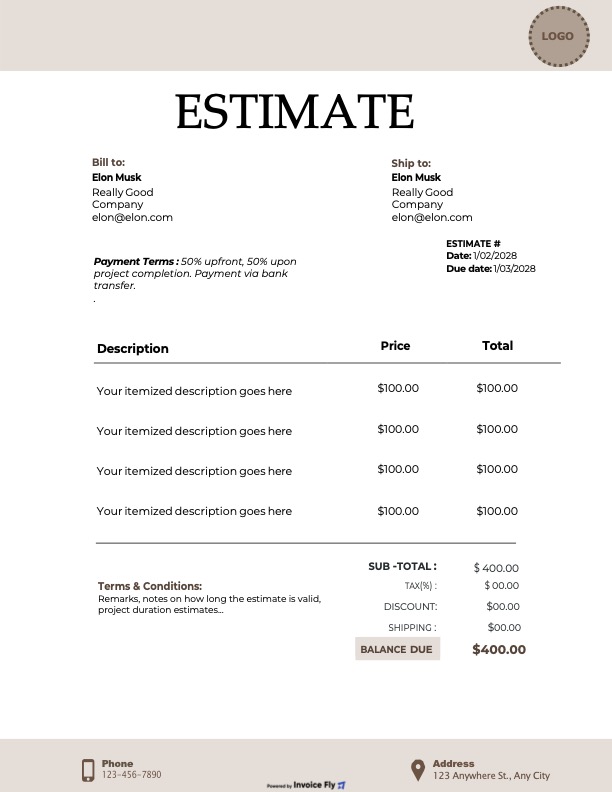
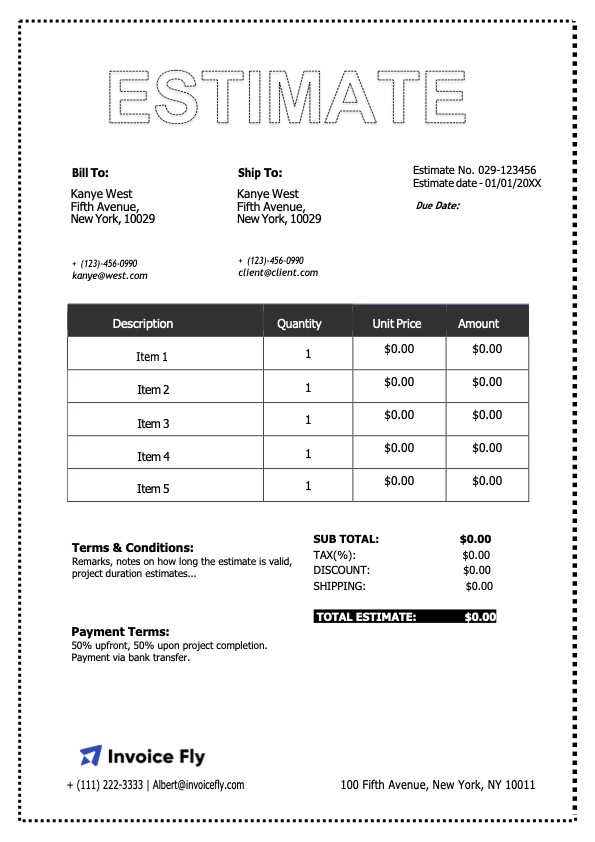
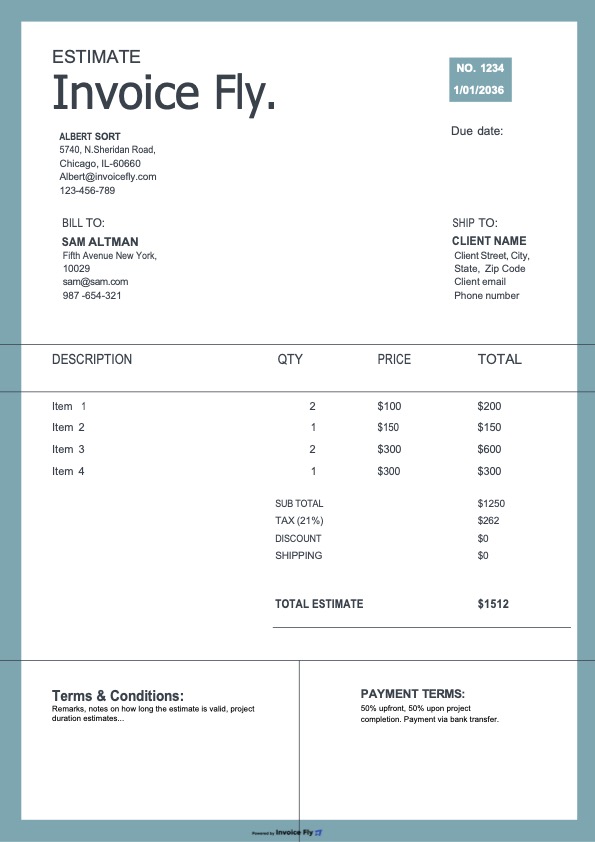
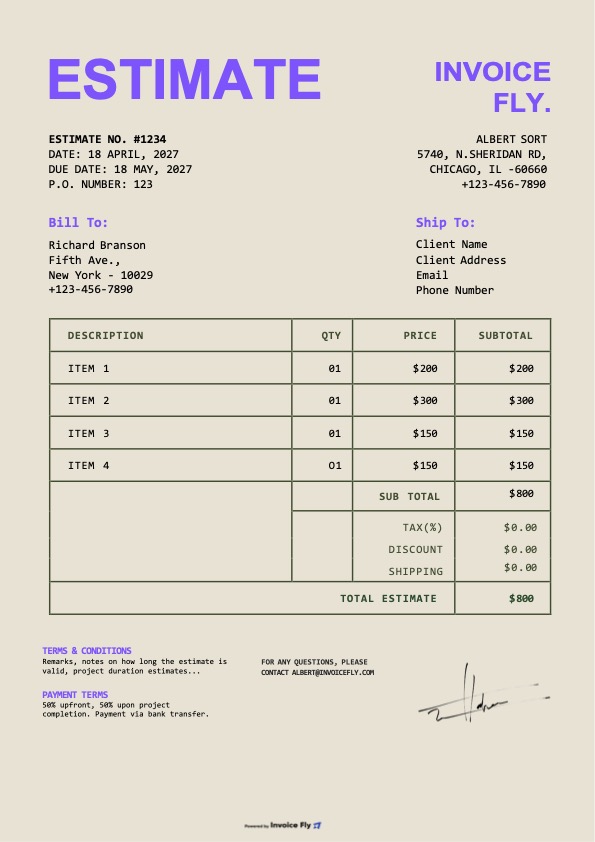
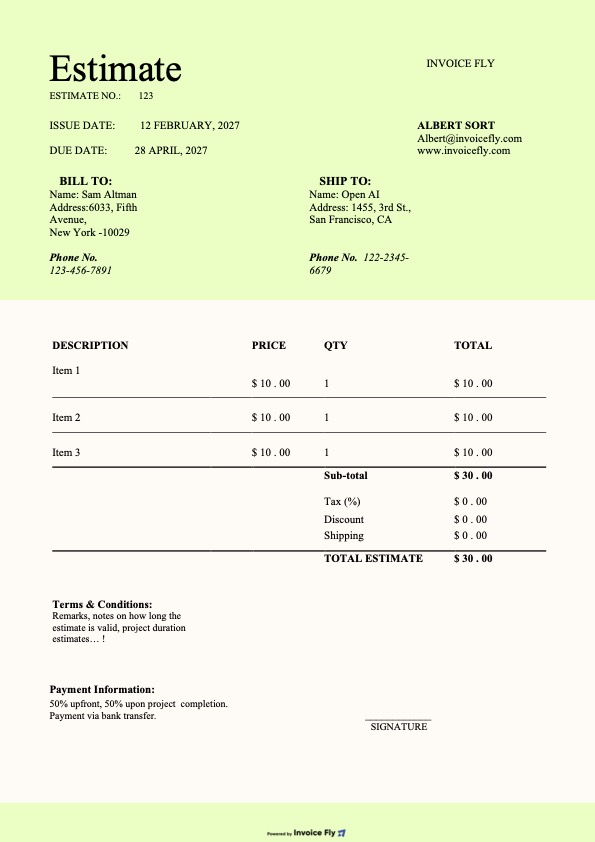
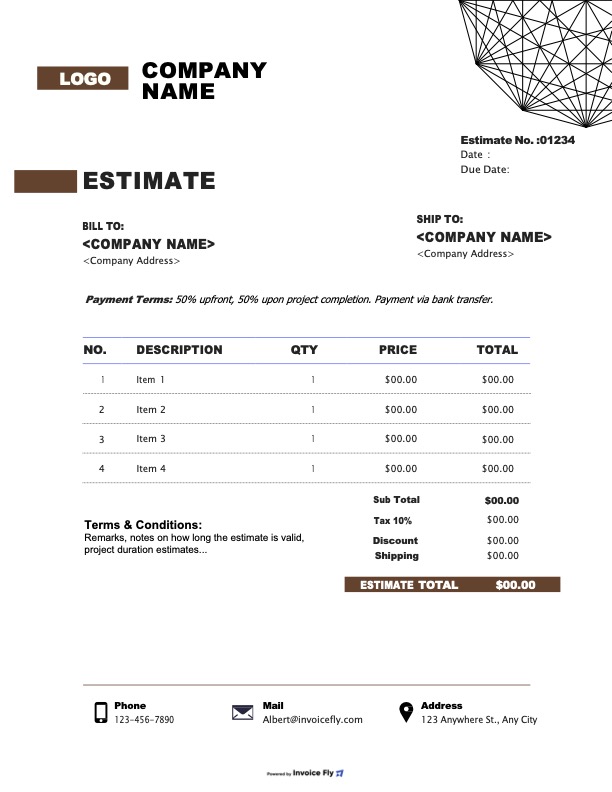
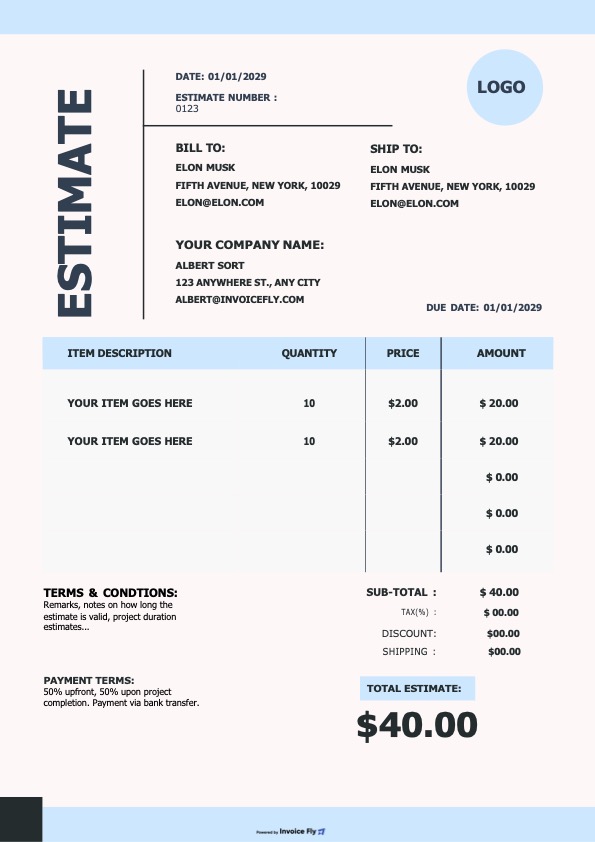
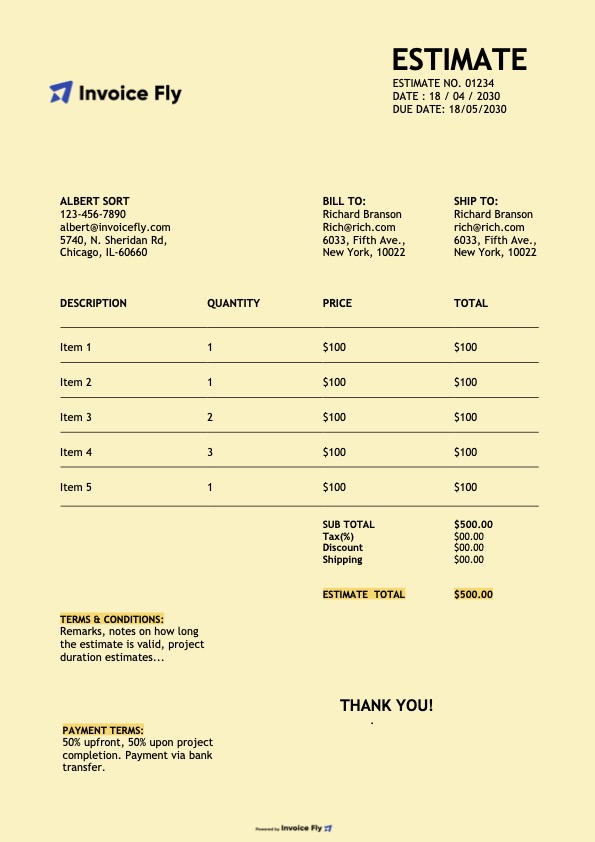
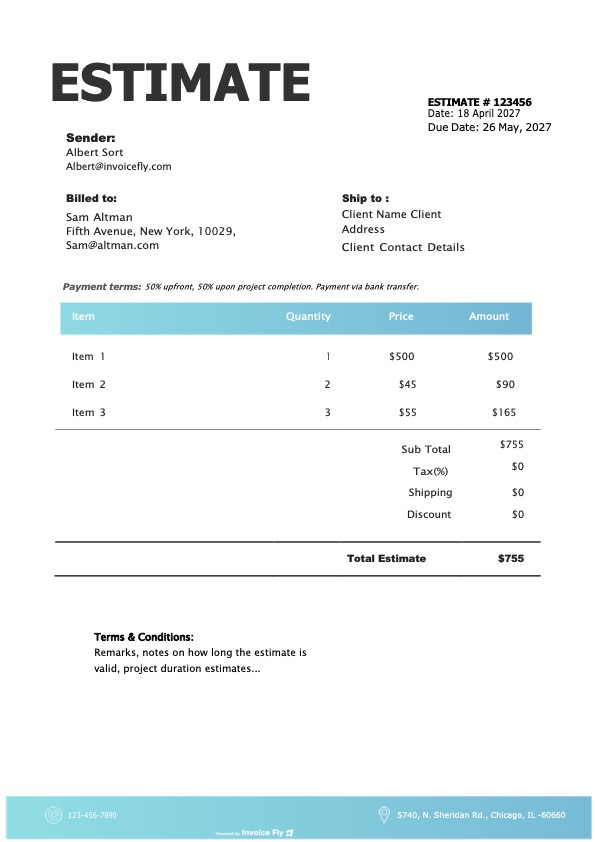
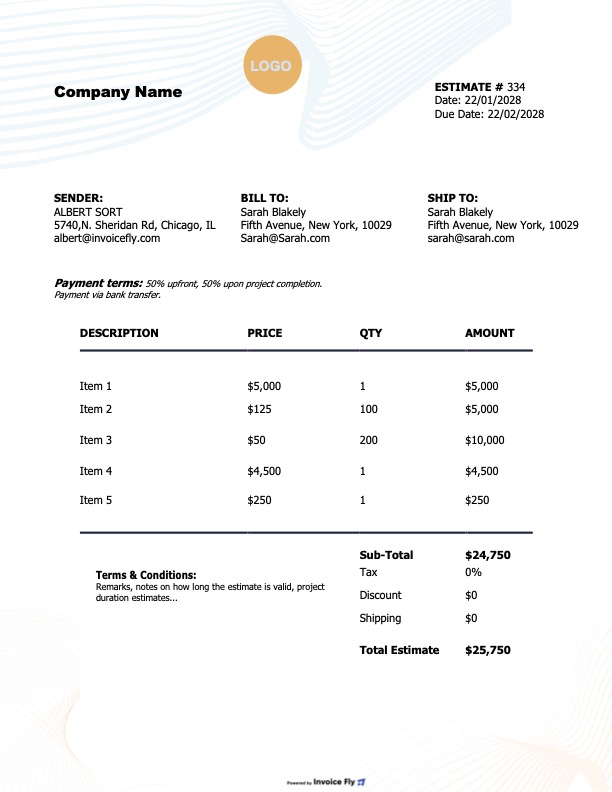
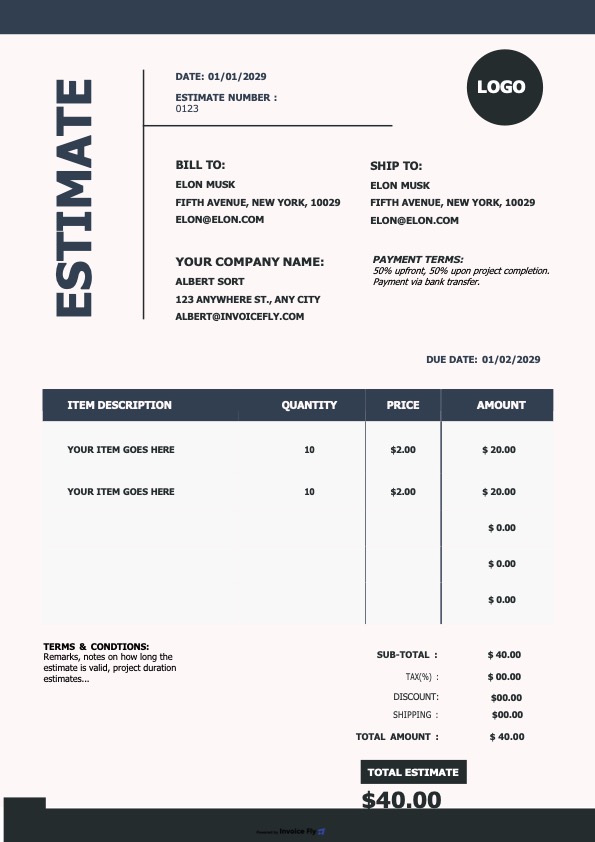
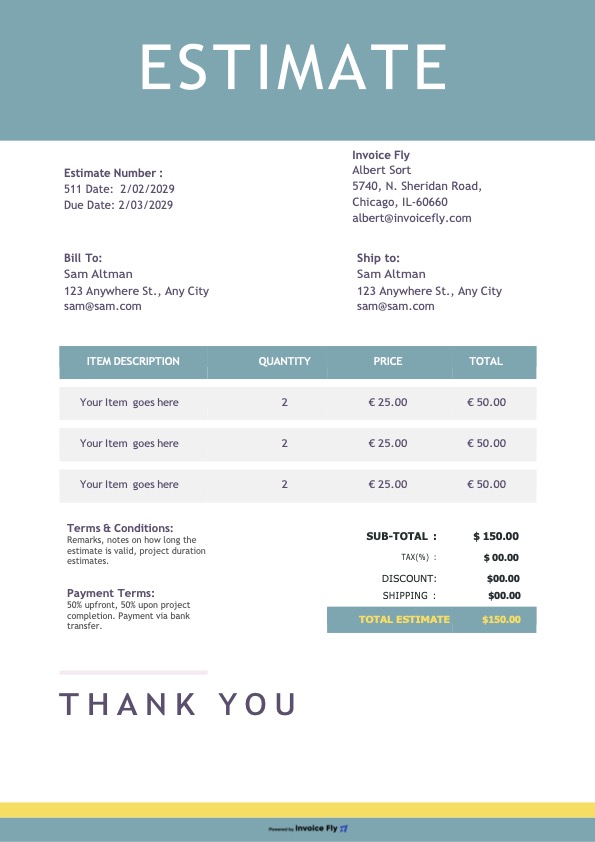
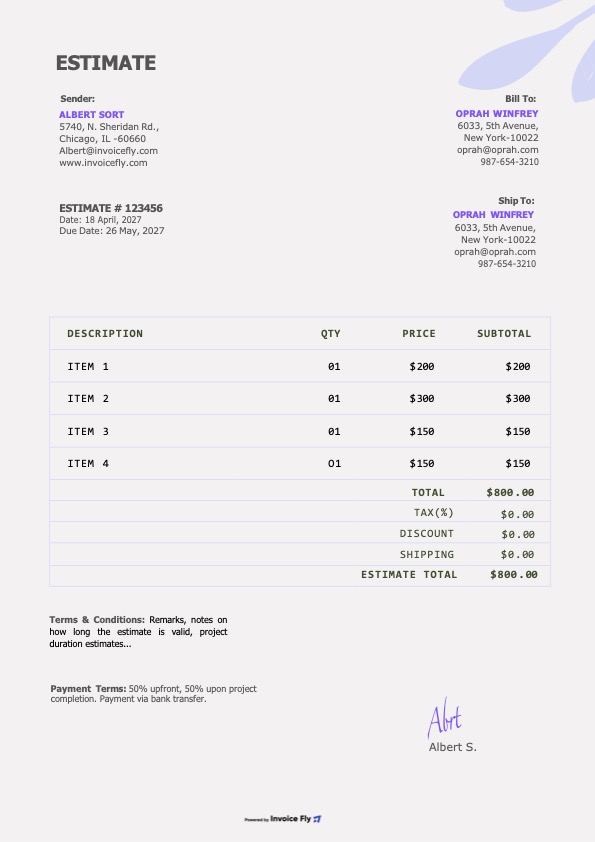
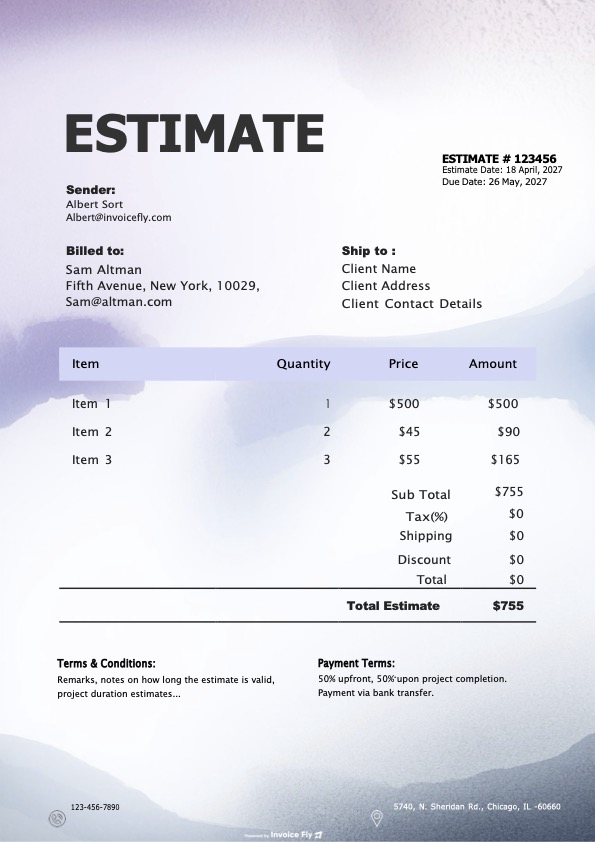
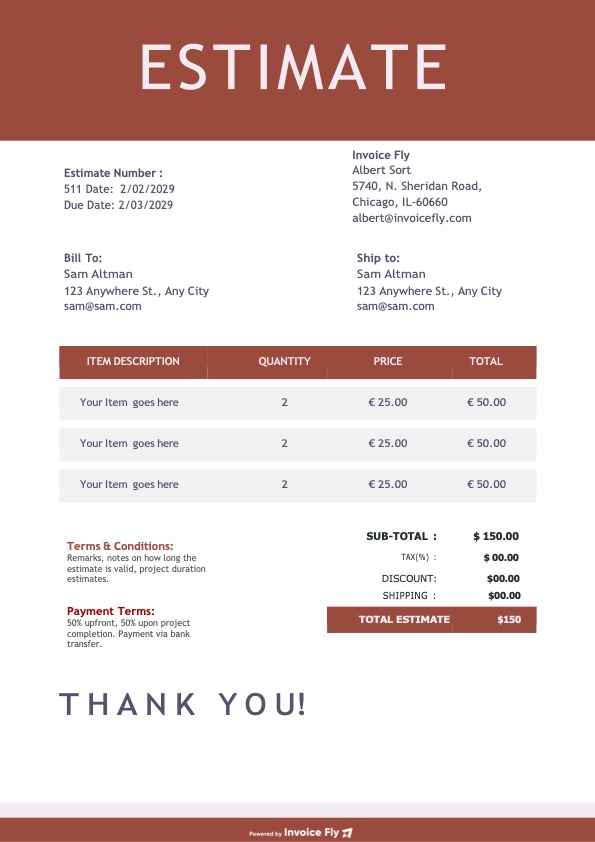
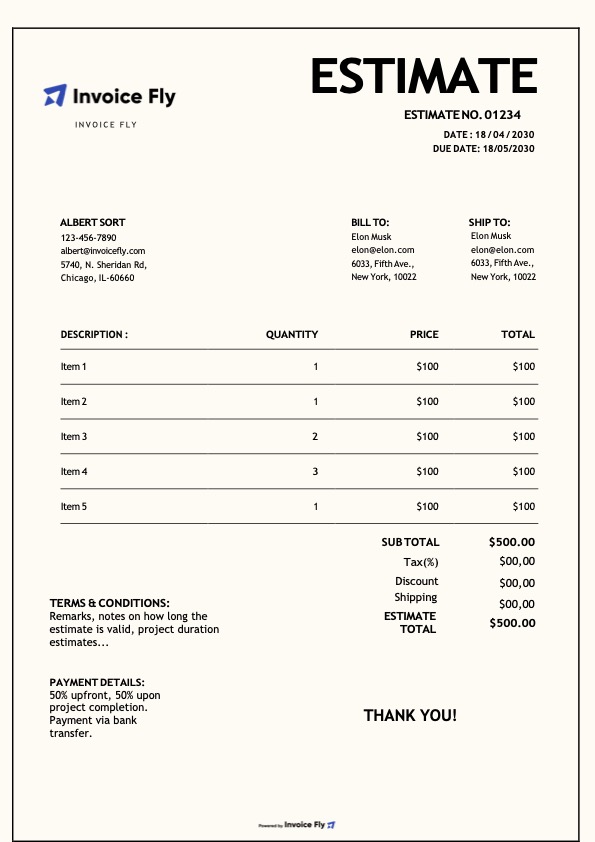
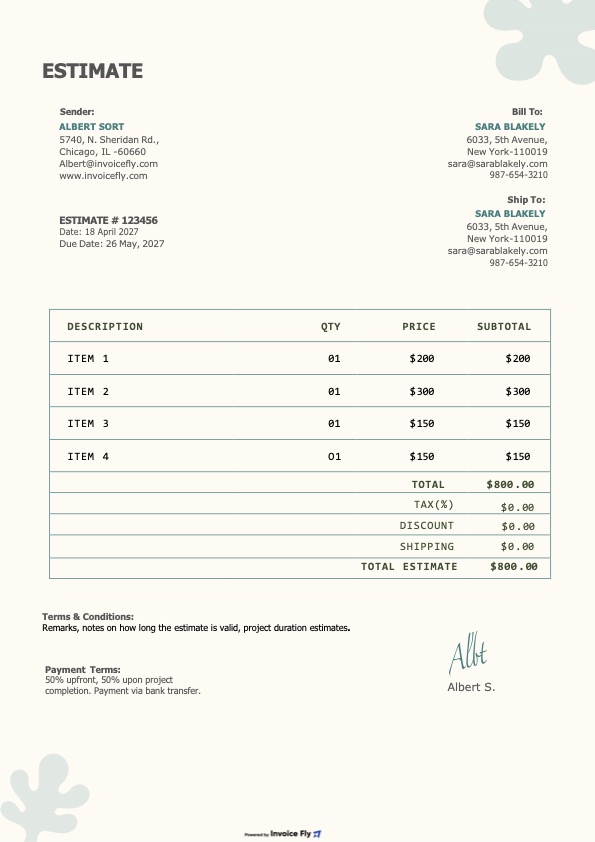
Use Invoice Fly’s free painting estimate templates to calculate labor, paint, and material costs, itemize your services, and give clients a clear price. Customize your template for interior or exterior painting, then edit it in Google Docs, Google Sheets, Word, or Excel, or download it as a PDF.
Why Use a Painting Estimate Template?
A painting estimate template helps you price jobs accurately, avoid missing costs, and give clients a clear breakdown before work begins.
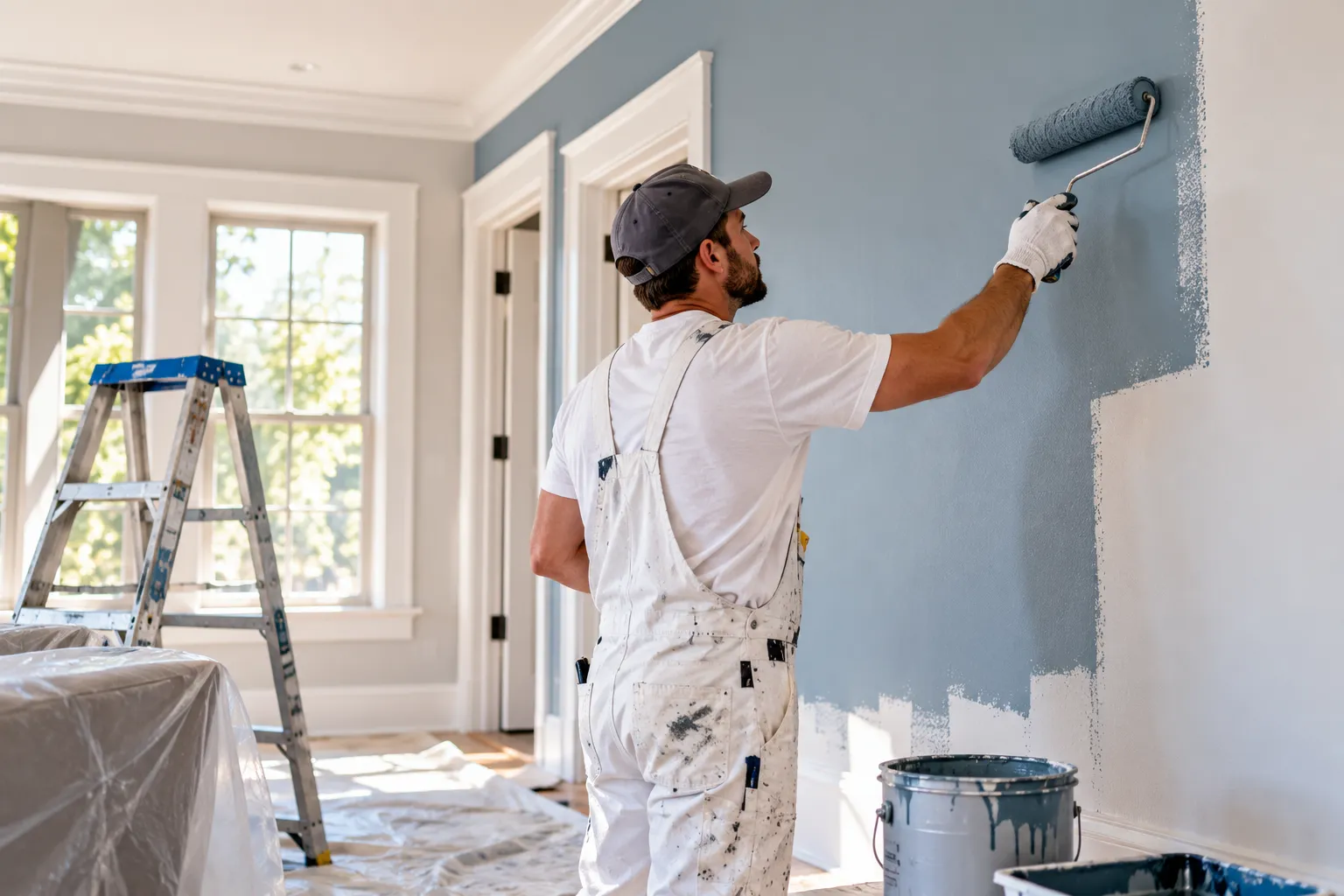
-
Improve Accuracy
Include labor, paint, supplies, and other project expenses to calculate painting costs and reduce pricing errors.
-
Win Client Trust
Present a professional painting estimate that clearly outlines the work, costs, and expected project price.
-
Save Time on Estimates
Use Invoice Fly’s free painting estimate templates to prepare estimates faster without creating each document from scratch.
-
Keep Projects Organized
Record estimated costs, services, and project details in one place to keep your painting jobs organized and your pricing consistent.
What Should Be Included in a Painting Estimate Template?
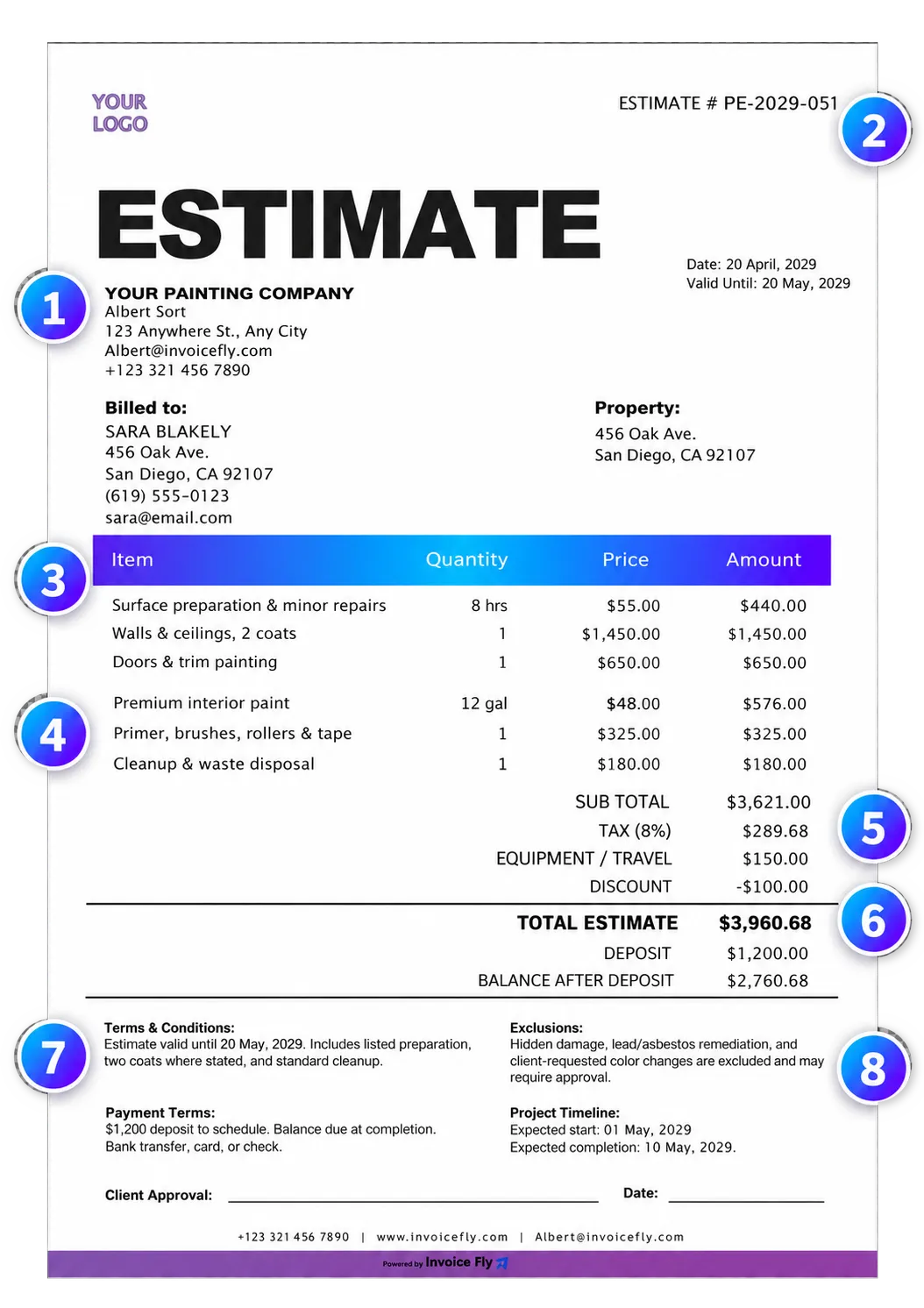
A painting estimate template helps you show clients what their painting project will cost before work begins. From paint and labor to surface preparation and cleanup, include these details to create a clear, professional estimate.
-
1
Painter and Client Information
Add your business name, logo, phone number, email, and the client’s name and property address so everyone knows who the estimate is for.
-
2
Estimate Number and Dates
Include a unique estimate number, the date you create it, and an expiration date so you can keep track of estimates and let clients know how long the price is valid.
-
3
Scope of Painting Work
Explain what needs painting, such as walls, ceilings, doors, trim, or exterior siding. Include any surface repairs, preparation work, and the number of coats.
-
4
Labor, Paint, and Material Costs
Break down the cost of surface preparation, painting, and cleanup. List the paint, primer, brushes, rollers, tape, and other supplies needed, along with quantities, labor rates, and prices so clients can see how you calculated the total.
-
5
Additional Charges
Include any extra costs for repairs, equipment rental, travel, or waste disposal so they don’t come as a surprise later.
-
6
Subtotal, Taxes, and Total Price
Show the subtotal, applicable taxes, any deposit, and the total estimated cost so clients can easily understand the price.
-
7
Payment Terms and Project Timeline
Explain when payments are due and include the expected start and completion dates to help everyone plan ahead.
-
8
Estimate Validity and Client Approval
State when the estimate expires, mention any exclusions or possible extra charges, and leave space for the client to approve the work.
Common Mistakes That Cost Painters Money on Estimates
Small estimating mistakes can eat into your profits. Avoid these common pitfalls when preparing a painting estimate.
| Common mistake | How to avoid it |
|---|---|
| Underestimating Preparation TimeSanding, scraping, patching, and priming can take up a significant share of the job. If you estimate 20 hours of prep but the work takes 30, you lose 10 hours of billable labor. | Inspect every surface before setting your price. |
| Forgetting to Price Trim and Doors SeparatelyTrim, baseboards, window frames, and doors require detailed work that can take longer than painting walls. For example, a home with 15 interior doors, crown molding, and baseboards may need dozens of additional labor hours. | List trim and door painting as separate line items in your estimate. |
| Overlooking Multiple Paint ColorsDifferent colors can mean extra masking, cutting in, and cleanup. A project with five wall colors may require more labor than one using a single color. | Account for each color zone when calculating your price. |
| Choosing Paint Without Considering CoverageLower-cost paint may require additional coats or more frequent touch-ups, increasing labor and material costs. | Compare coverage, durability, and price before recommending a product, and include the expected number of coats in your painting estimate. |
| Forgetting Touch-Ups and CleanupFinal touch-ups, cleanup, and a return visit can add time to a painting job. | Include these tasks in your labor calculation and clarify whether a follow-up visit is included in the quoted price. |
Tip: Use Invoice Fly’s free painting estimate template to itemize labor, paint, preparation, and additional services. A clear cost breakdown helps you set realistic prices and avoid overlooking expenses.
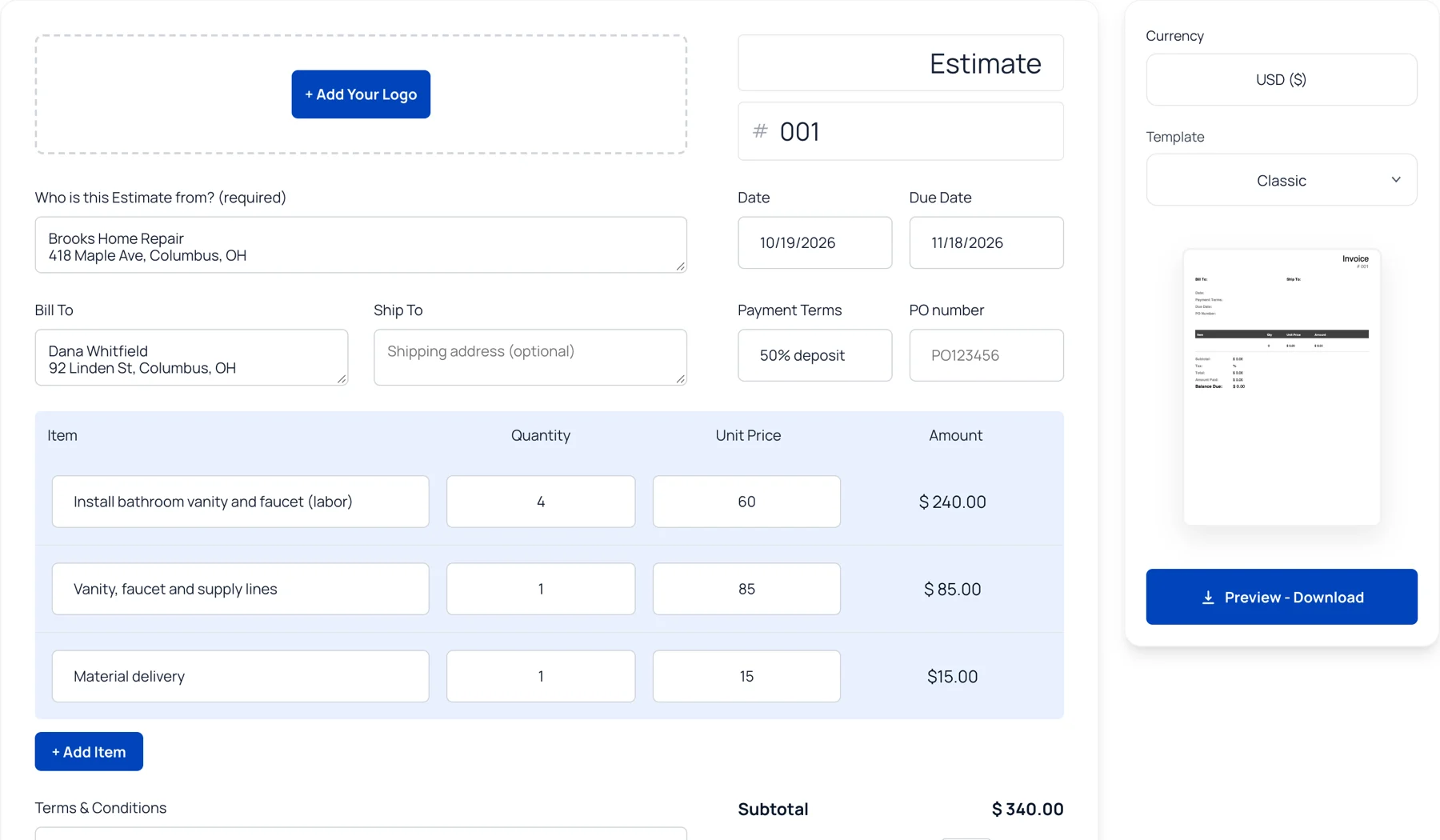
Create your first estimate free with our Online Estimate Generator.
Free Estimate Generator

Frequently Asked Questions About Painting Estimates
Start by inspecting the property and identifying the surfaces that need painting. Calculate preparation, labor, paint, and material costs, then outline the work, project timeline, payment terms, and total estimated price. A clear painting estimate helps clients understand what’s included before work begins.
Enter your business and client details, describe the painting work, and list labor, paint, and material costs. Include applicable taxes, additional charges, payment terms, and the estimated total. Review the details before sending the estimate to your client. You can also explore Invoice Fly’s free estimate templates to get started.
A painting estimate template should include business and client information, the scope of work, paint specifications, number of coats, surface preparation, labor and material costs, additional charges, total price, payment terms, project timeline, and client approval. You should also clarify warranties, exclusions, and any extra work that may affect the final cost.
Start with a free painting estimate template from Invoice Fly. Add your business logo and contact details, then customize the line items to match the project. Include the surfaces being painted, paint type, number of coats, preparation work, labor, materials, and any additional services before calculating the total. You can also use our free estimate generator to prepare a professional estimate.
Your painting estimate should explain exactly what the client is paying for. Include these details to set clear expectations and avoid misunderstandings.
Scope of Work: Specify the rooms and surfaces included, such as walls, ceilings, trim, and doors. For example, list the bedrooms, bathrooms, kitchen, and living room to be painted.
Paint Specifications: Include the paint brand, product, finish, and color for each area.
Number of Coats: State how many coats are included for each surface, noting that some colors or surfaces may require additional coats.
Surface Preparation: Describe tasks such as patching holes, sanding, caulking, and applying primer.
Furniture and Surface Protection: Explain whether floors and furniture will be covered and fixtures protected.
Project Timeline: Include expected start and completion dates, allowing for possible delays.
Payment Terms: Explain deposit requirements, progress payments, and when the final balance is due.
Warranty: If you offer a workmanship warranty, state what it covers and how long it lasts.
Exclusions and Additional Work: Clarify what is not included, such as major drywall repairs or wallpaper removal, and explain how additional work will be priced and approved.
Step 1: Inspect the Property. Check walls, ceilings, trim, and exterior surfaces for peeling paint, cracks, water damage, and repairs.
Step 2: Measure the Painting Area. Multiply each wall’s length by its height to calculate square footage. For example, a 12 ft × 10 ft wall covers 120 sq. ft. Subtract large doors and windows where appropriate.
Step 3: Calculate Preparation Costs. Estimate the time and materials needed for sanding, scraping, patching, and priming. Include these costs separately.
Step 4: Estimate Paint and Materials. Use the surface area, number of coats, and coverage listed on the paint can. For example, if one gallon covers 350 sq. ft., a 700 sq. ft. area needs approximately two gallons for one coat, before allowing for waste or extra coats.
Step 5: Calculate Labor Costs. Estimate the hours required for preparation, painting, and cleanup. For example, 12 hours at $35 per hour equals $420 in labor costs.
Step 6: Add Overhead and Profit. Include equipment, transportation, insurance, and other business expenses. Add your desired profit to arrive at a price that covers your costs.
Step 7: Create Your Painting Estimate. Use Invoice Fly’s free estimate generator to itemize labor, paint, materials, and additional charges. Check your calculations, include the project scope and payment terms, and send the estimate to your client.
Interior estimates often include wall repairs, sanding, masking, and furniture protection. Exterior estimates may involve pressure washing, scraping loose paint, repairing damaged wood, weather-resistant coatings, and equipment such as scaffolding or paint sprayers.
Exterior jobs are also affected by weather and access requirements, which can change labor costs and project timelines. Include the preparation, materials, equipment, and safety requirements specific to each job rather than using the same cost assumptions for both.
Calculate the area to be painted, estimate the amount of paint required, and add labor, preparation, supplies, equipment, and overhead.
For interior walls, multiply each wall’s width by its height and add the results. For ceilings, multiply length by width. Subtract doors and windows where appropriate.
Check the paint can for coverage. For example, if one gallon covers 350 sq. ft., a 700 sq. ft. surface needs approximately two gallons for one coat. Textured or porous surfaces may require more. Calculate trim and ceilings separately if they need different paint or finishes. You can also use Invoice Fly’s free calculators to help plan project costs.
Your price should cover labor, paint, supplies, equipment, overhead, and your desired profit. Rates vary by location, project type, surface condition, and preparation requirements, so avoid relying solely on a standard price per square foot.
You can calculate your costs internally using estimated labor hours and production rates, then present the client with a fixed project price when the scope is clear. Track actual costs against your estimates to see which jobs are profitable and improve your pricing over time. Invoice Fly’s profit margin calculator can help you evaluate your margins.
A painting estimate outlines the expected work and cost before the job begins. A contract sets out the agreed scope, payment terms, timeline, warranty, and other conditions. A final invoice lists the charges for the work completed, including any approved changes or additional services.
Depending on the project, the estimate and contract may be separate documents or combined with written terms and client approval. Once the job is complete, use the final agreed charges to prepare the invoice. You can create one using Invoice Fly’s free invoice generator or browse our free invoice templates to keep your painting business paperwork organized.
Invoice Fly Academy
Learn how to estimate painting jobs, calculate paint and labor costs, and price projects with confidence. Explore practical tips to prepare accurate estimates, manage expenses, and grow your painting business.
More Free Tools
Explore free Invoice Fly tools to help you estimate painting jobs, calculate project costs, and manage your business paperwork.
- PDFDOCXXLSX
- Paint cost calculatorArea700 ft²Coats2Gallon$48Paint cost$192
- Download PDFEstimate generatorESTIMATE#1042Walls & ceilings, 2 coats$1,450.00Premium interior paint$576.00Total$2,026.00