What is a Landscape Estimate?
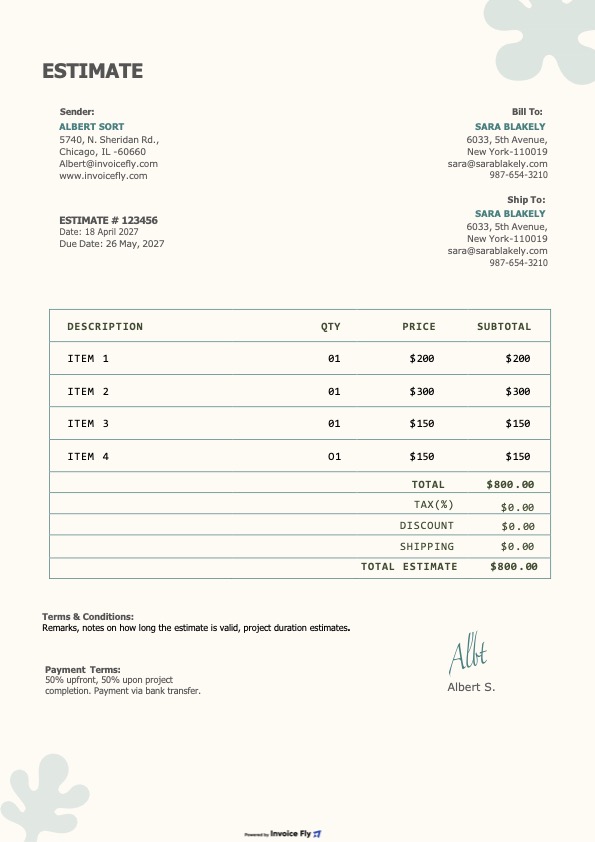
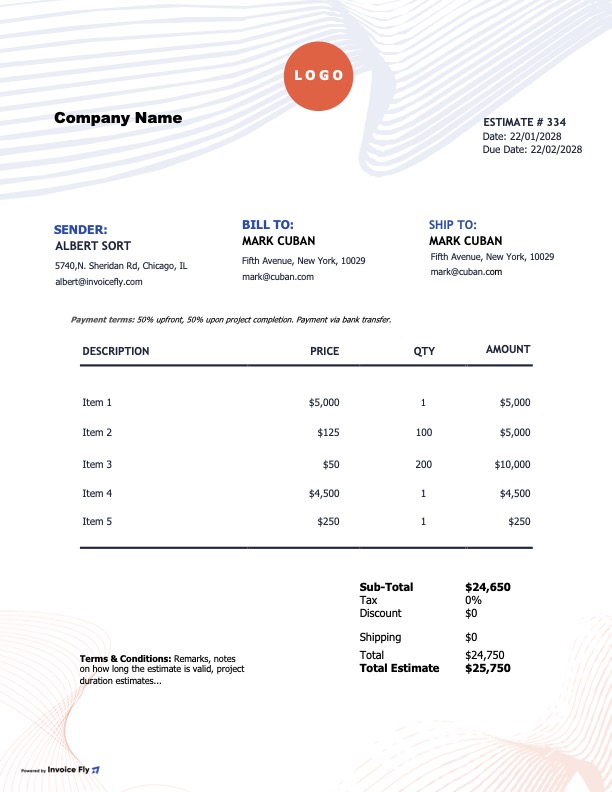
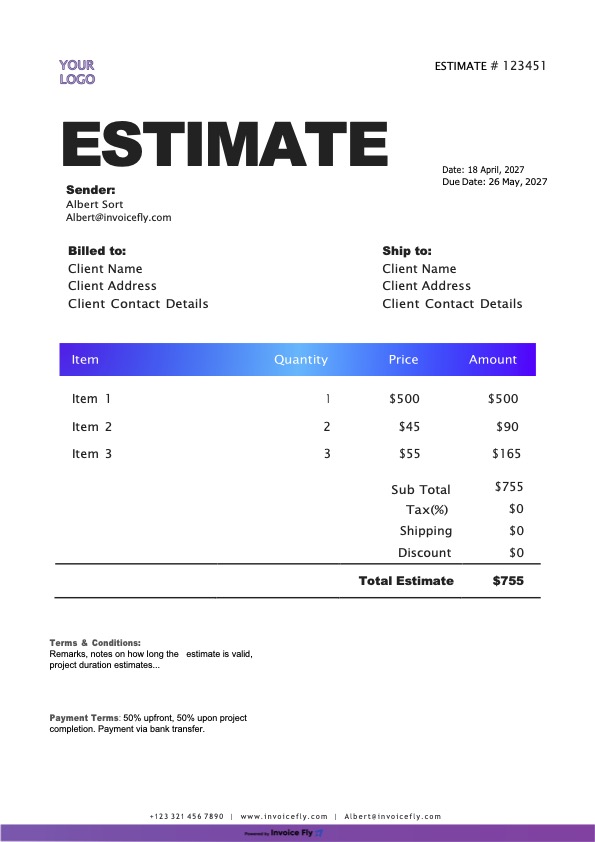
A landscape estimate gives your customer an idea of how much a landscaping project is likely to cost. It takes into account the work involved, estimated labor hours, materials, equipment, and other job expenses.
An estimate isn’t quite the same as a quote, bid, or proposal. Here’s how they differ:
Estimate
An approximate cost based on the information available. The final price may change if the project scope, materials, or requirements change.
Quote
A more specific price for an agreed scope of work. It sets out what you’ll charge and the conditions that apply.
Bid
A formal offer to complete a project for a proposed price, often submitted when a customer is comparing several landscaping contractors.
Proposal
A more detailed presentation of your services, pricing, project approach, timeline, and relevant experience or past work.
For example, a customer might request a landscape estimate to plan a backyard makeover, collect bids from several contractors, and review proposals before choosing who gets the job.
Why Are Landscaping Estimates So Important?
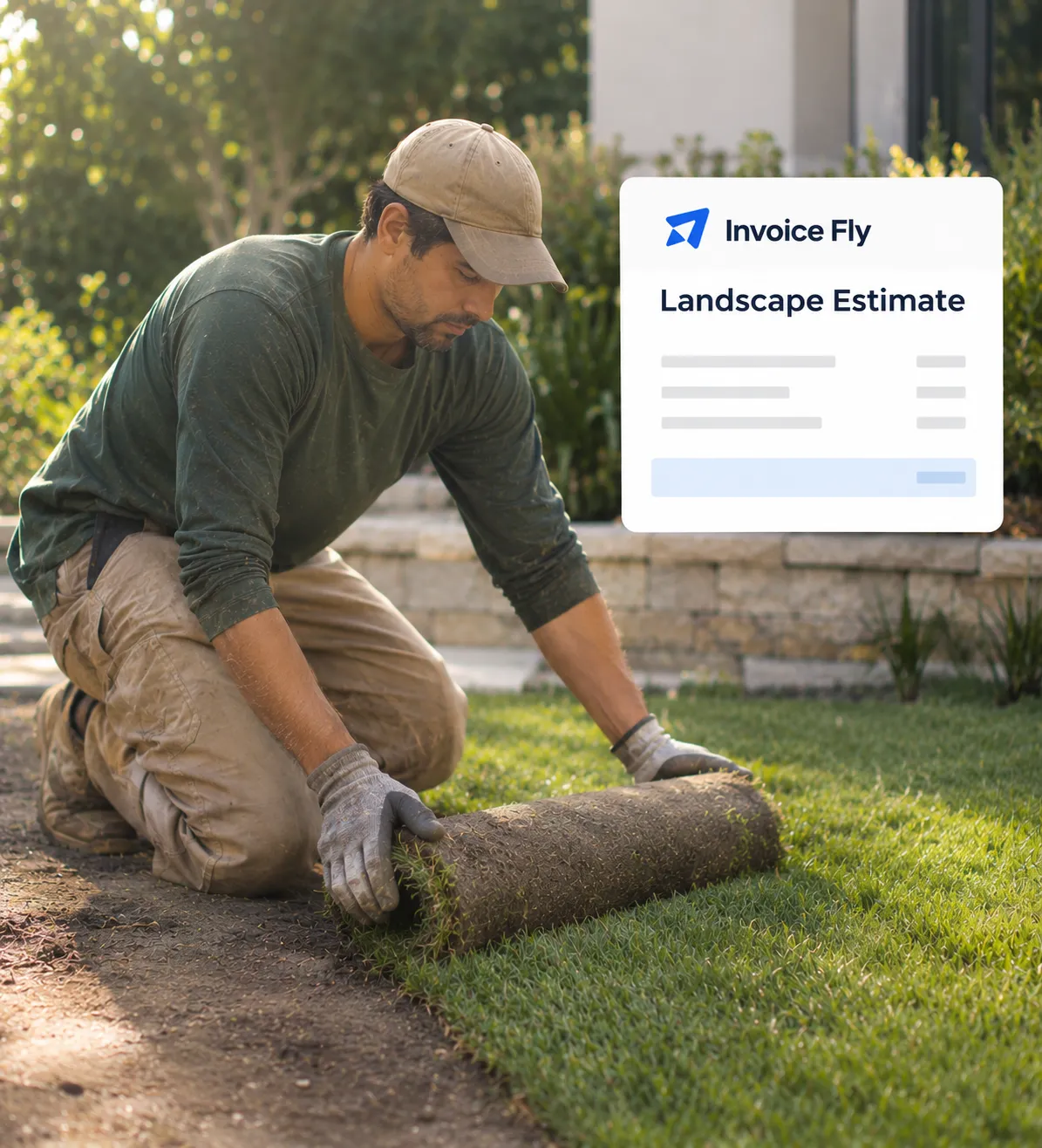
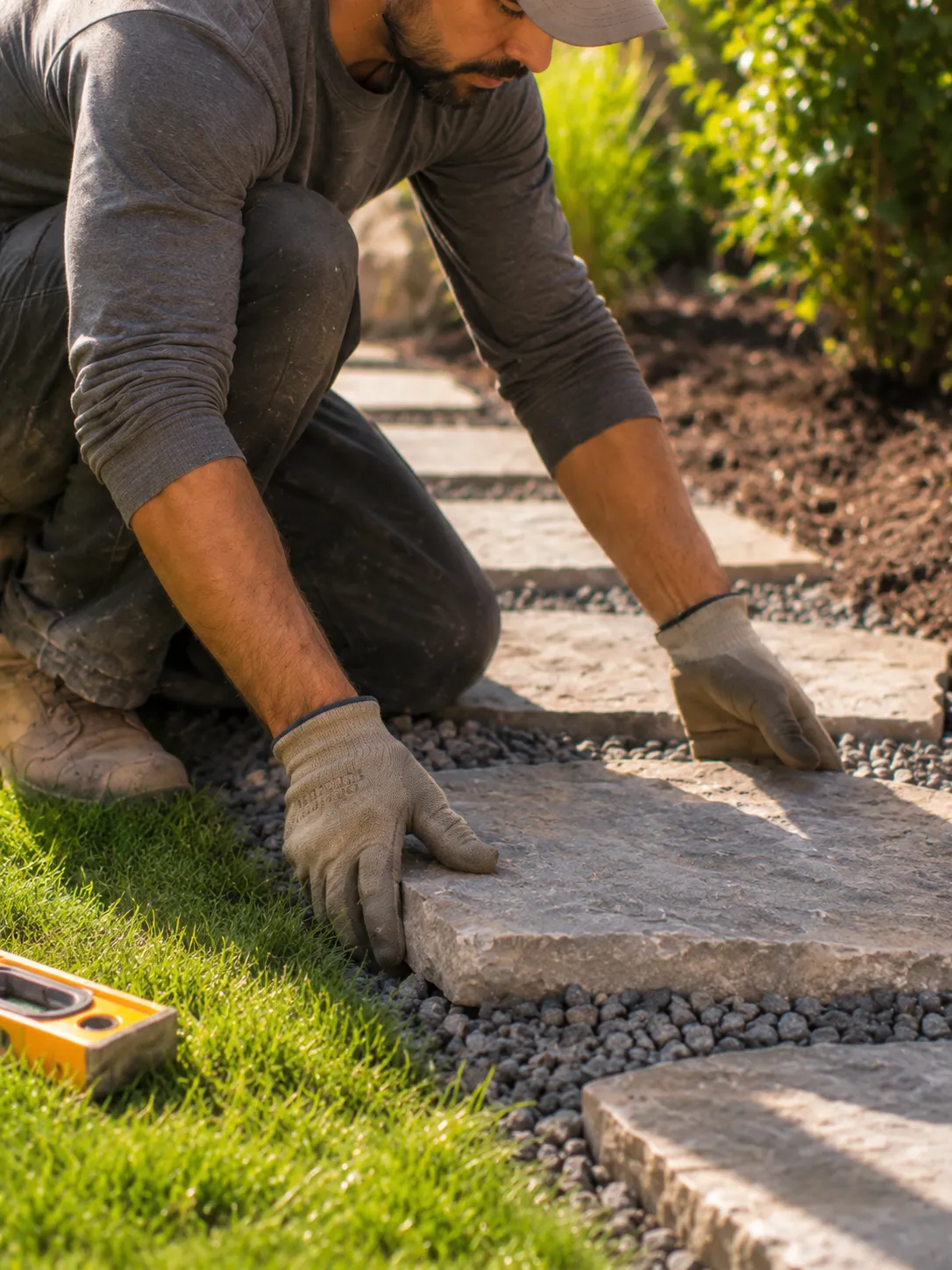
No two yards are alike, and every landscaping job comes with its own costs and challenges. A good landscaping estimate template helps you price the work properly, plan ahead, and keep customers happy before the first shovel hits the ground.
-
Protect Your Profits
Plants, soil, pavers, equipment, and labor all add up. Account for your costs and desired markup before settling on a price, so every job has room to make money.
-
Keep Customers in the Know
Nobody likes unexpected costs halfway through a project. Show customers what’s included, what they’ll pay, and what could change the price before work begins.
-
Plan for the Unexpected
A sloped yard, difficult access, or tricky terrain can turn a straightforward job into a bigger project. Consider these conditions before estimating your time, labor, and materials.
-
Price Every Job Its Own Way
Lawn mowing, garden maintenance, patio installation, and landscape design all come with different requirements. Tailor your estimate to the work involved rather than using the same price for every job.
-
Keep Projects Running Smoothly
A clear estimate gets you and your customer on the same page from the start. It gives everyone a shared understanding of the work, costs, and expectations.
What Should Be Included in a Landscaping Estimate?
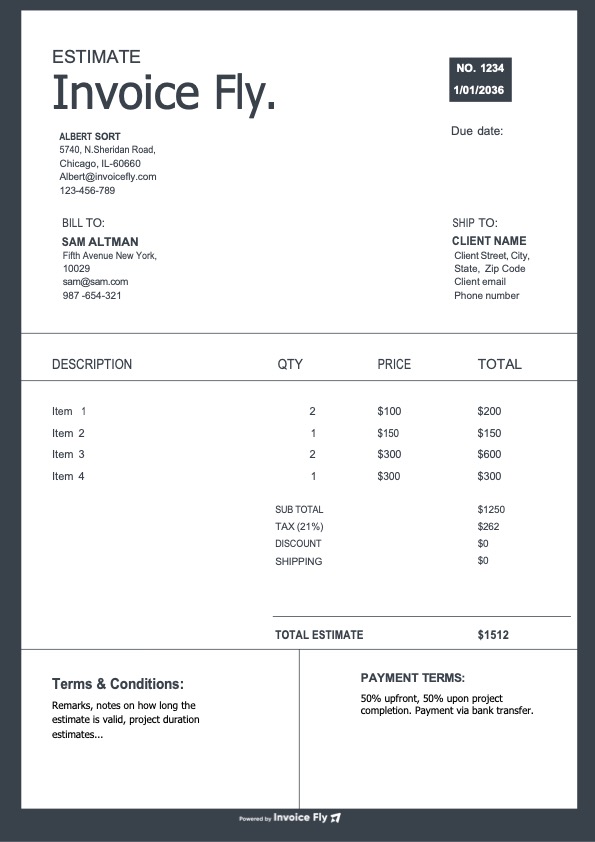
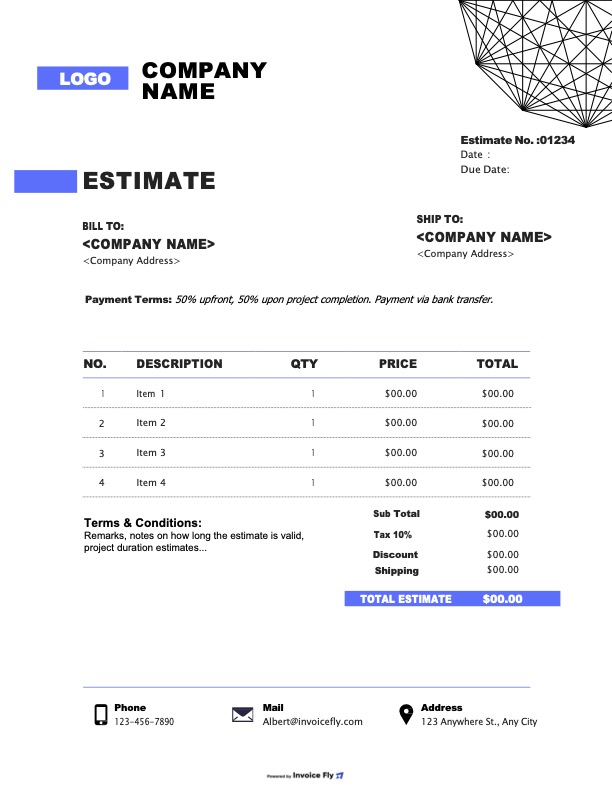
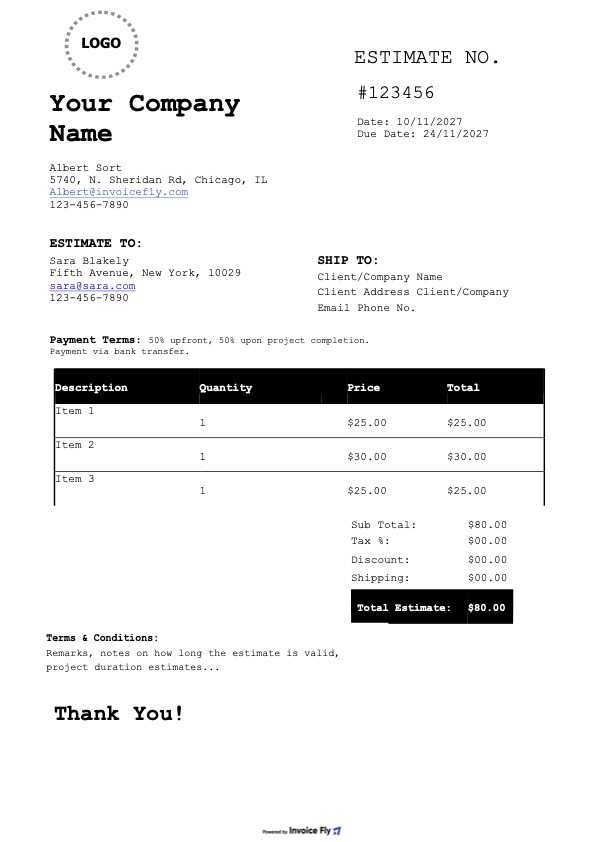
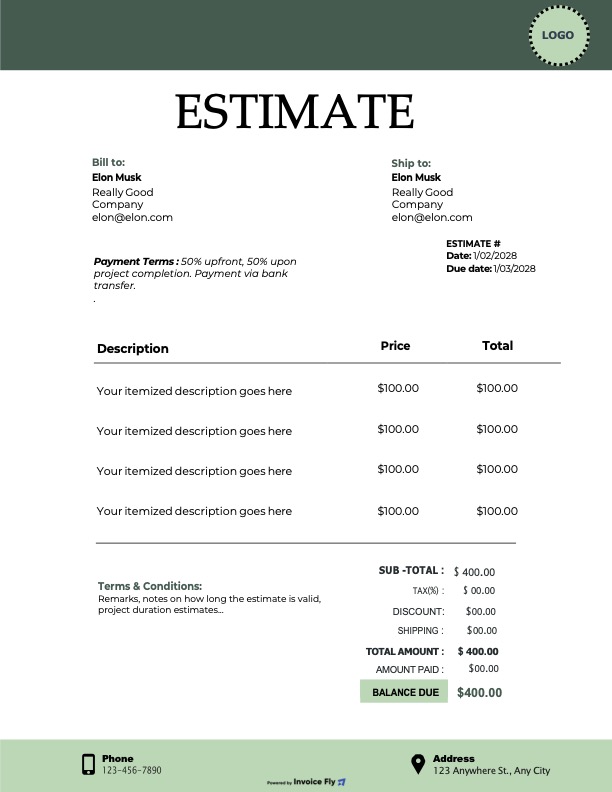
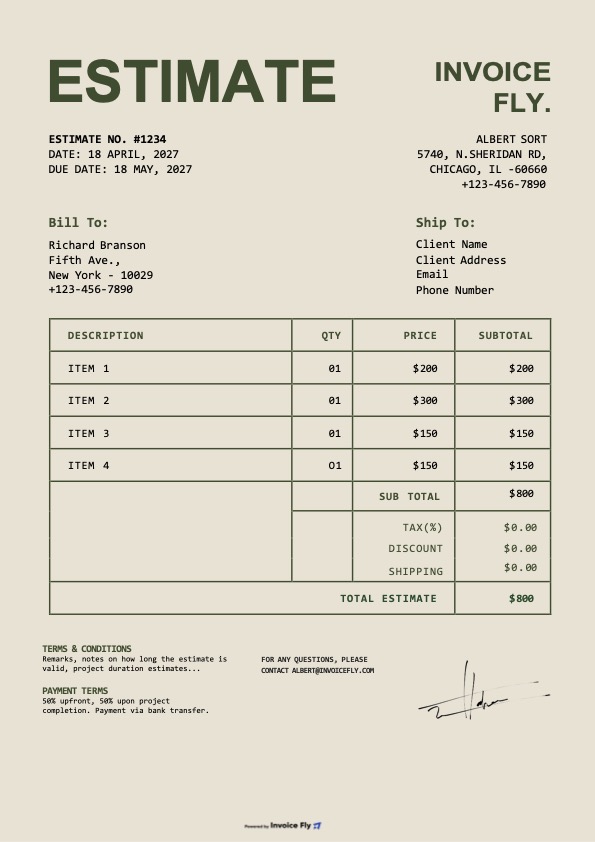
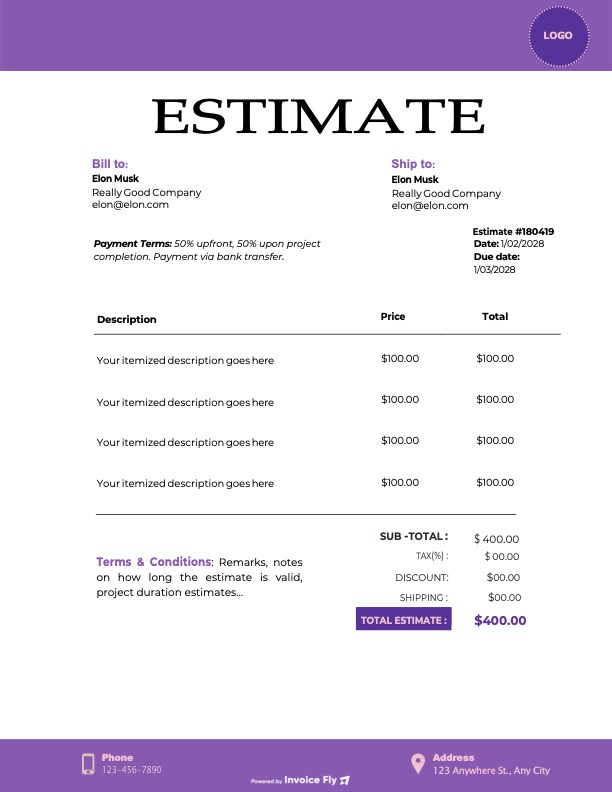
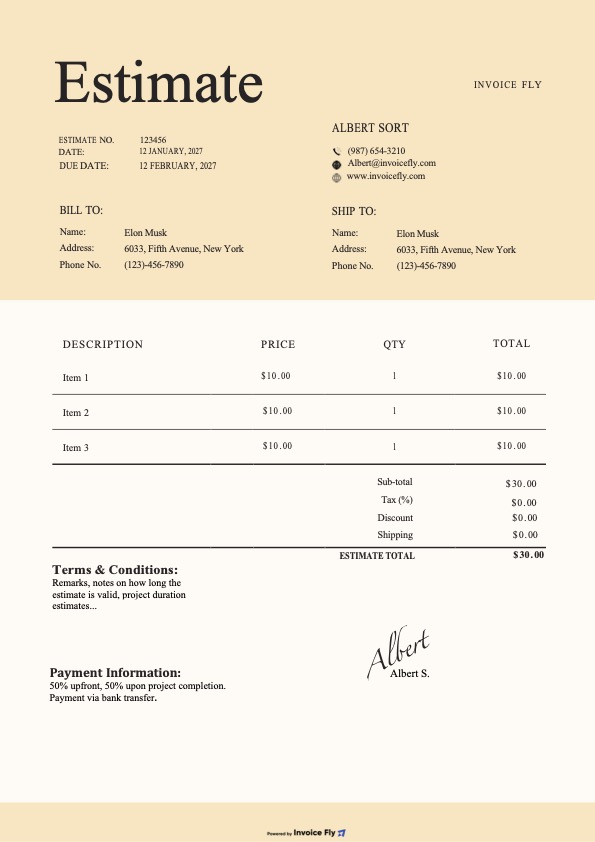
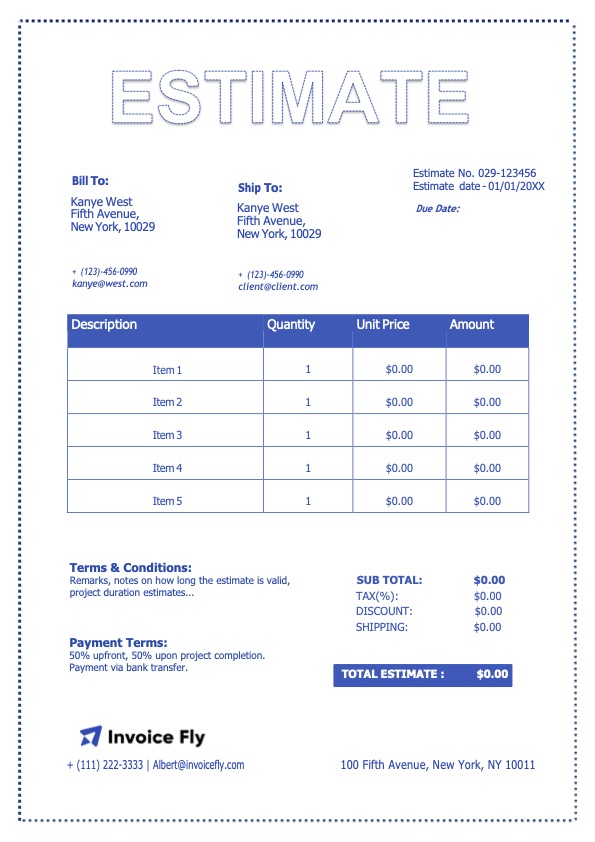
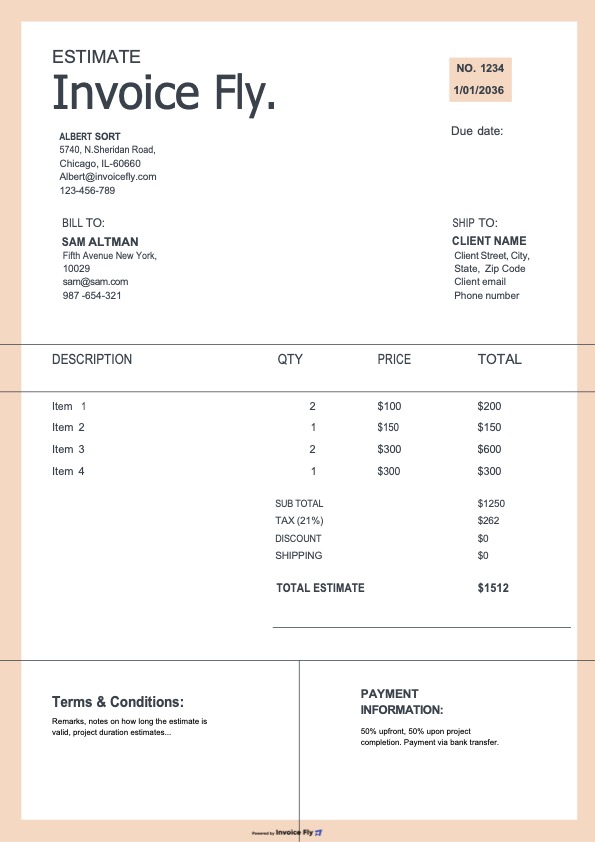
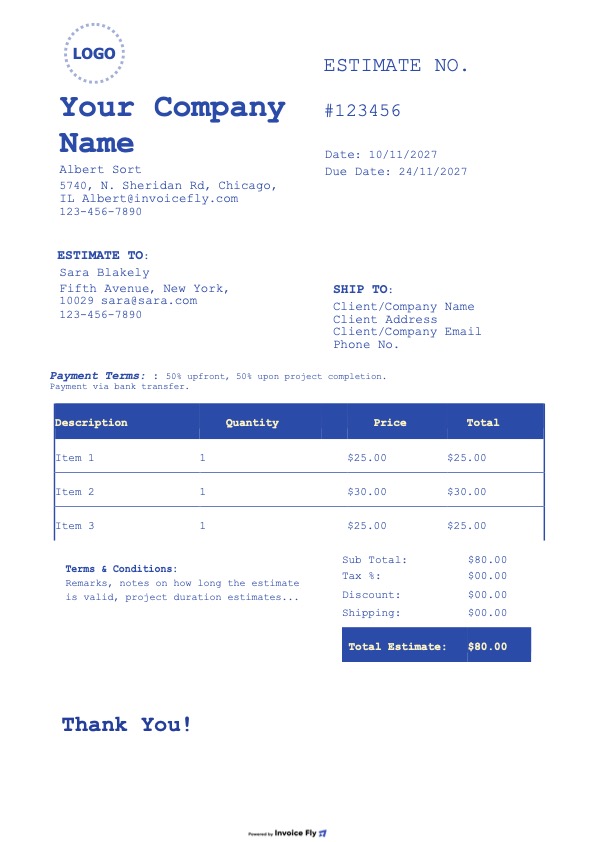
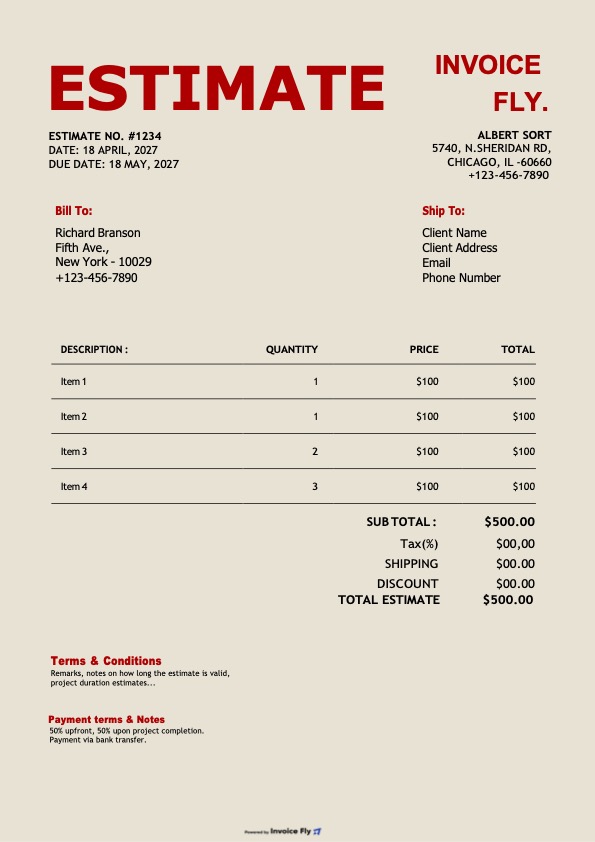
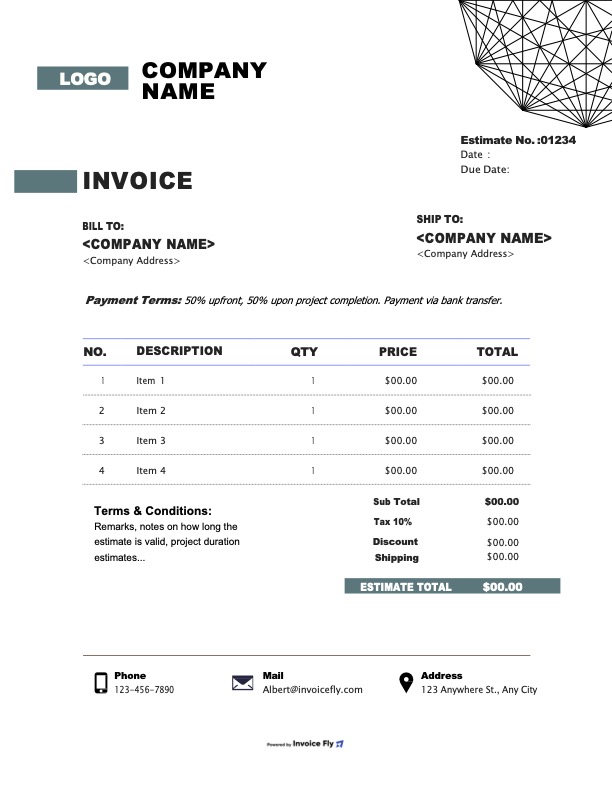
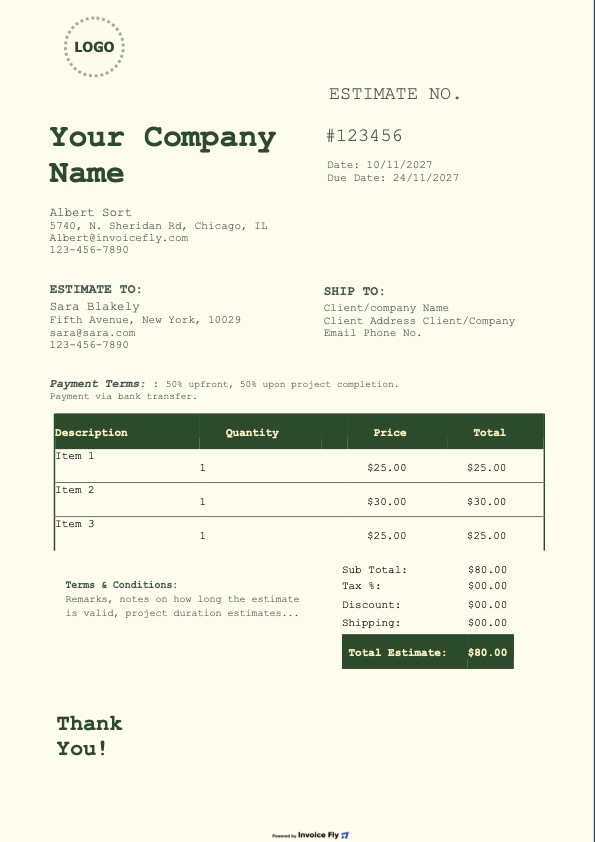
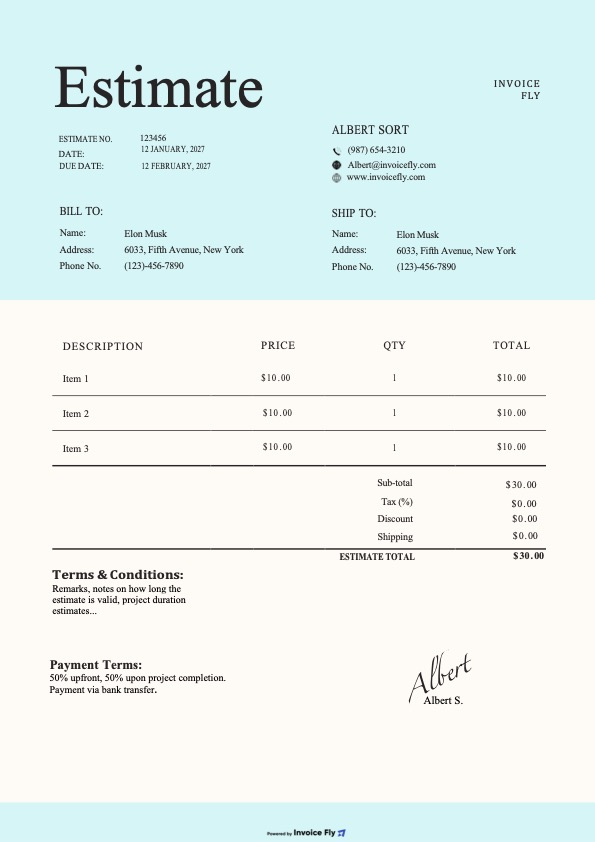
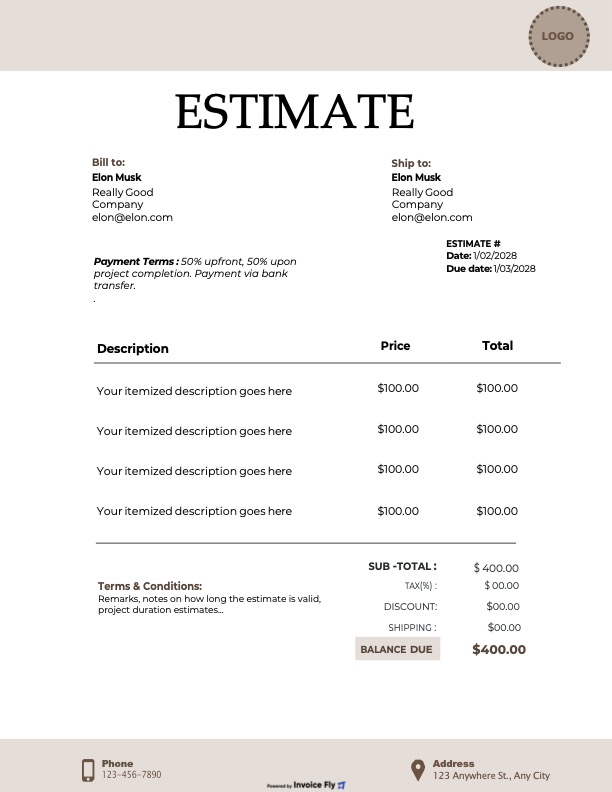
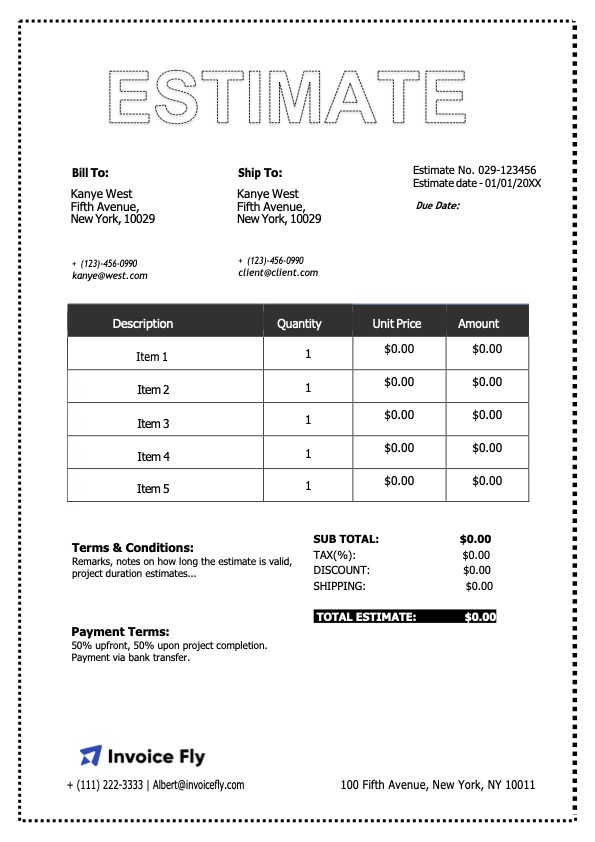
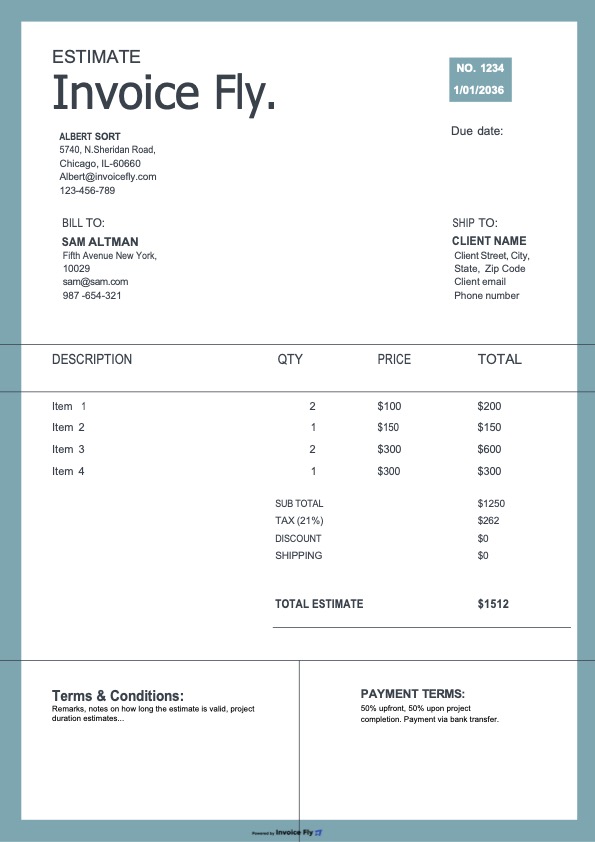
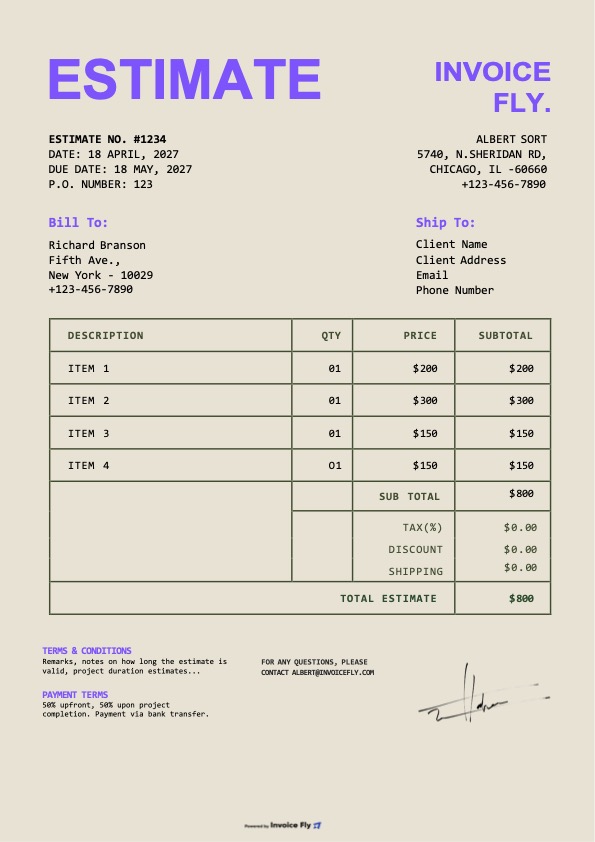
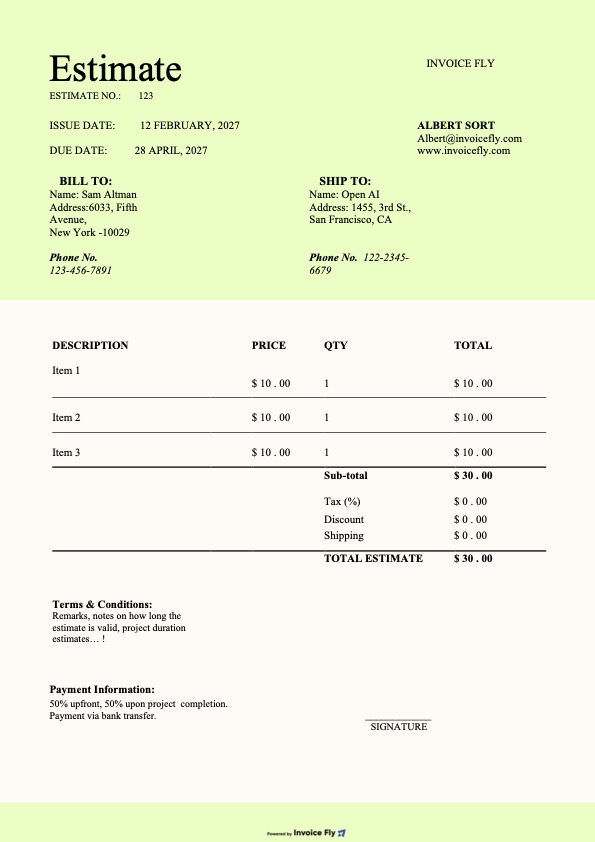
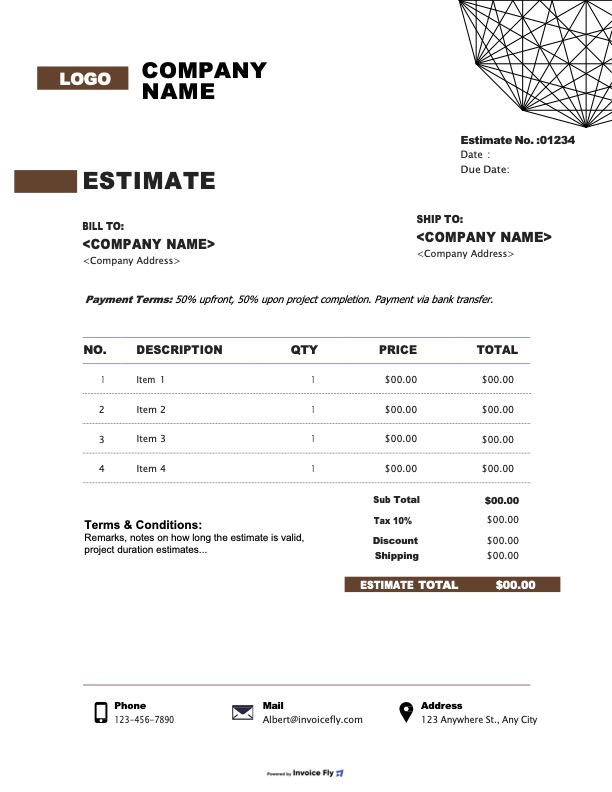
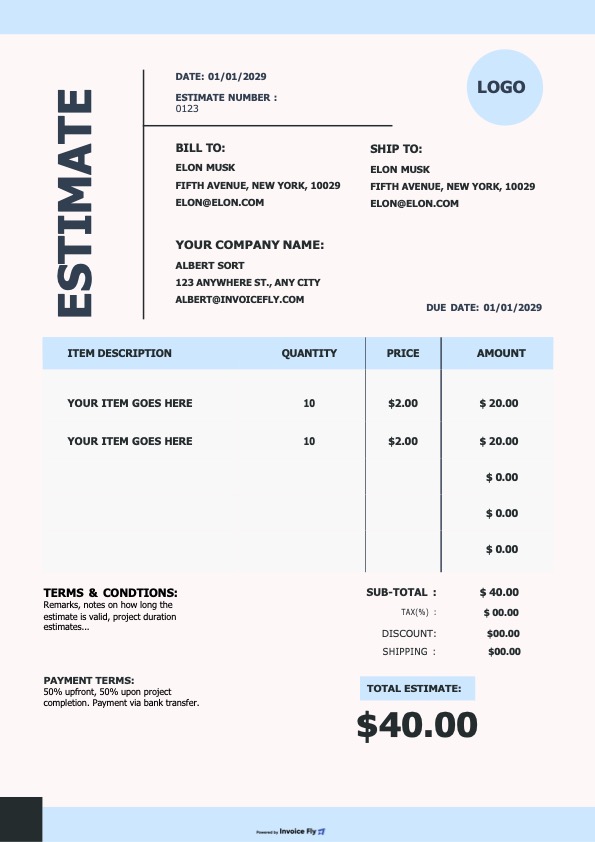
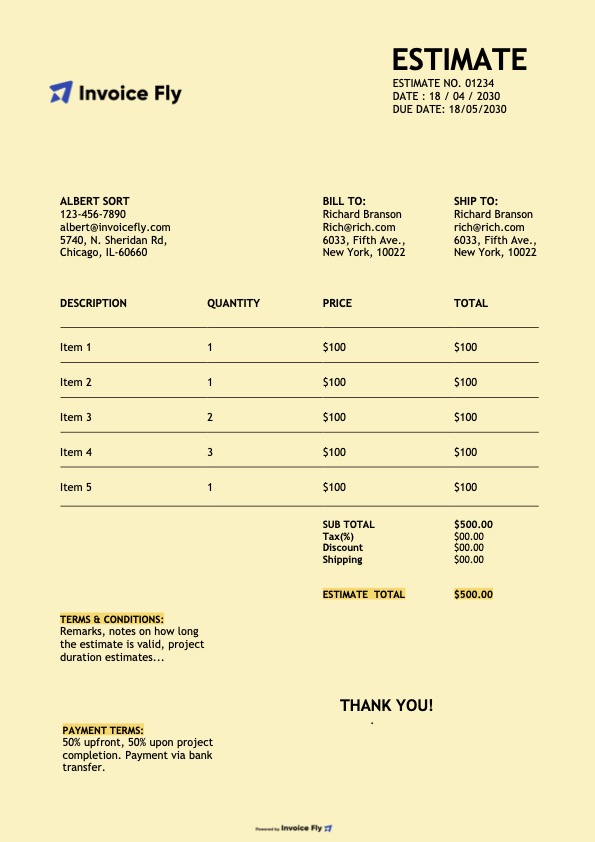
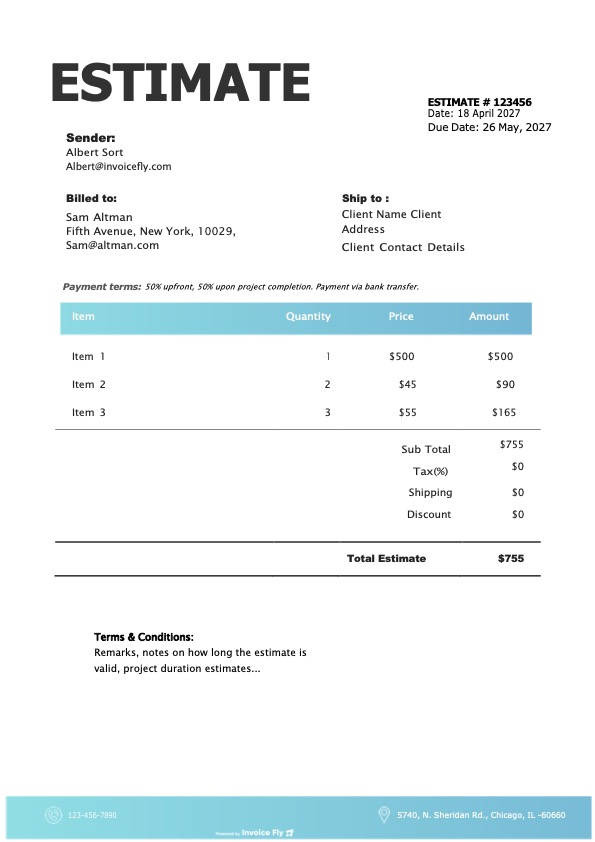
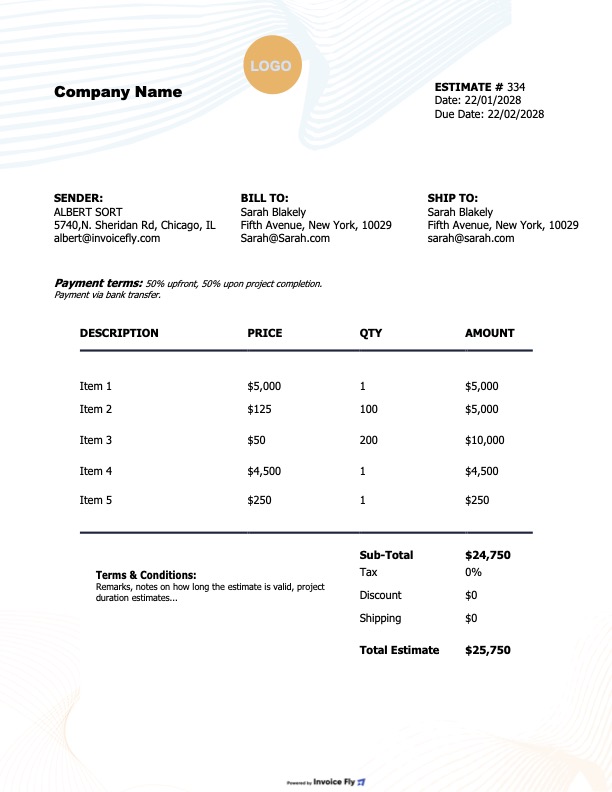
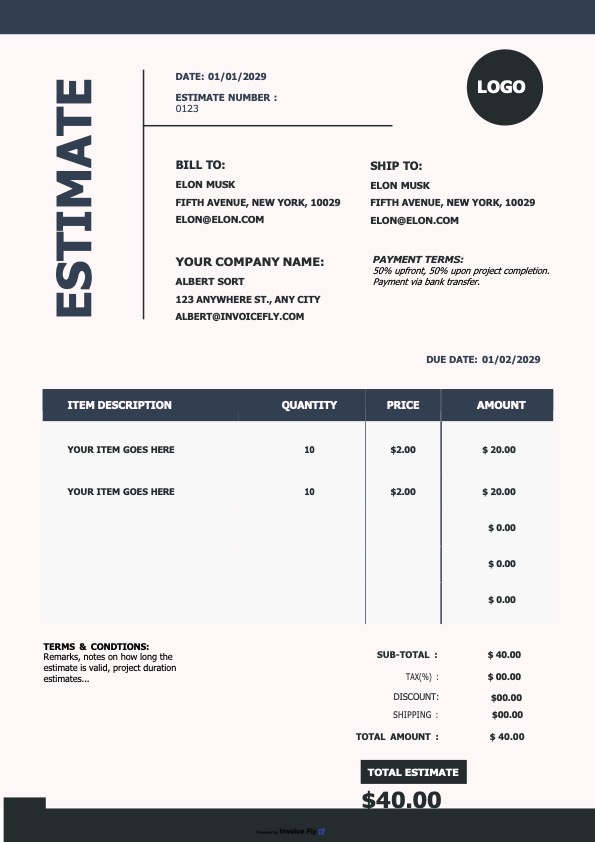
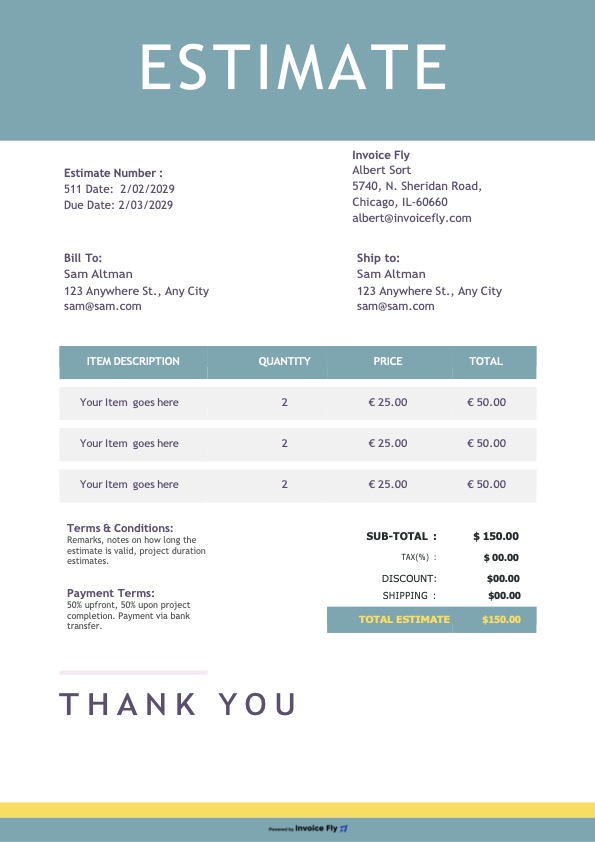
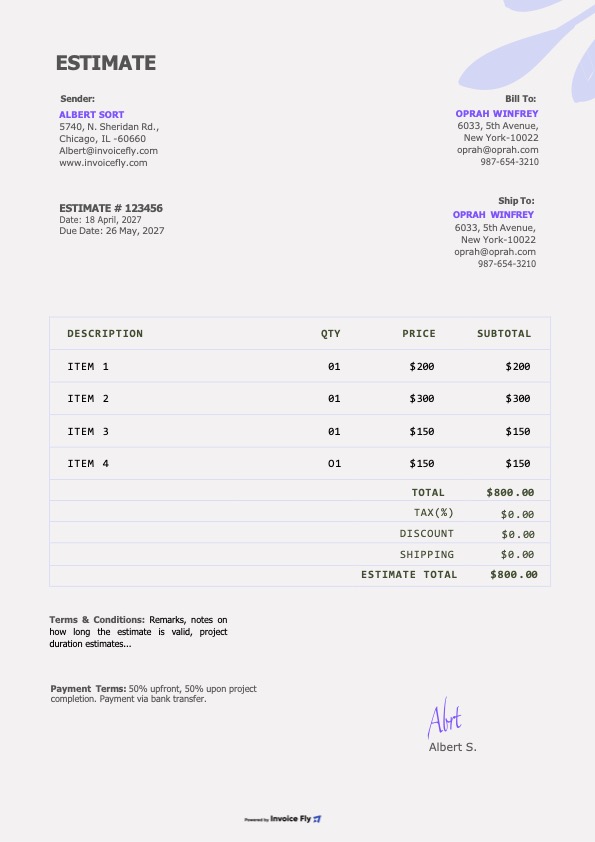
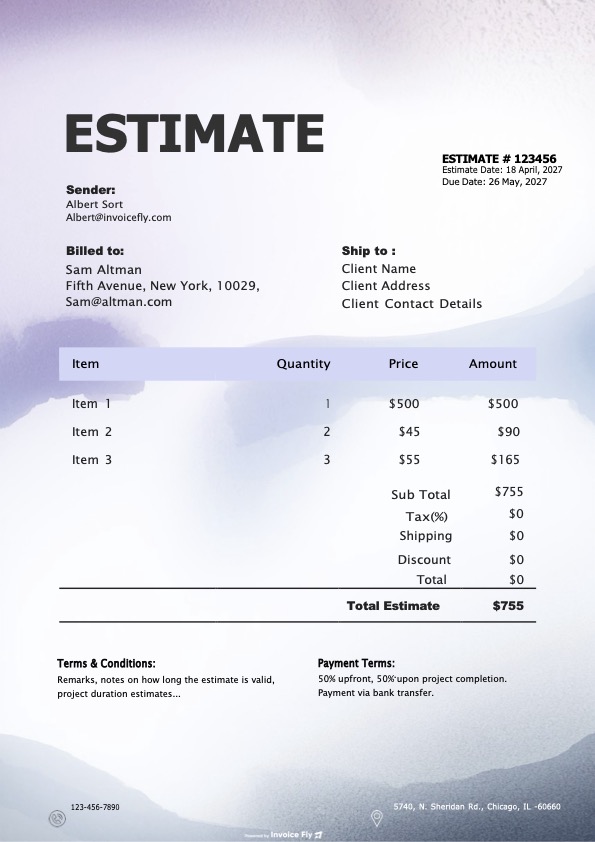
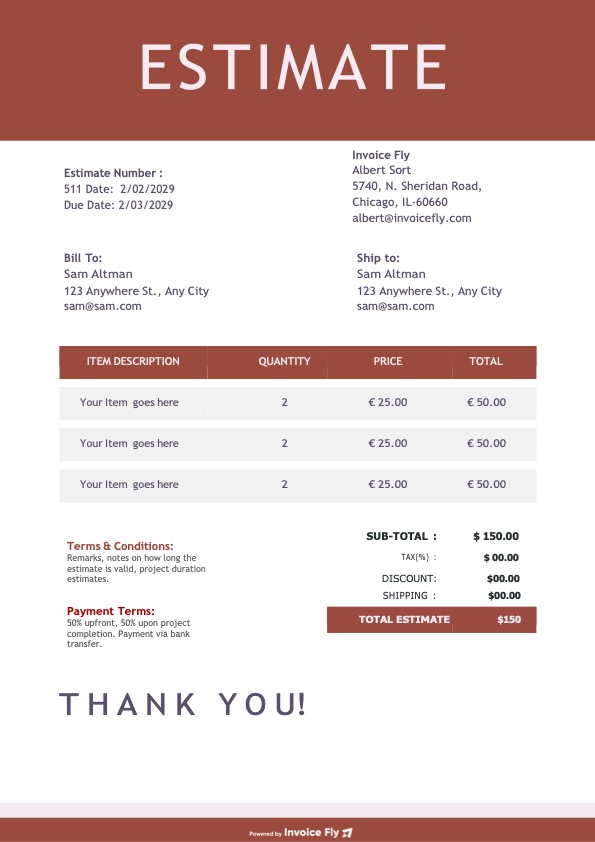
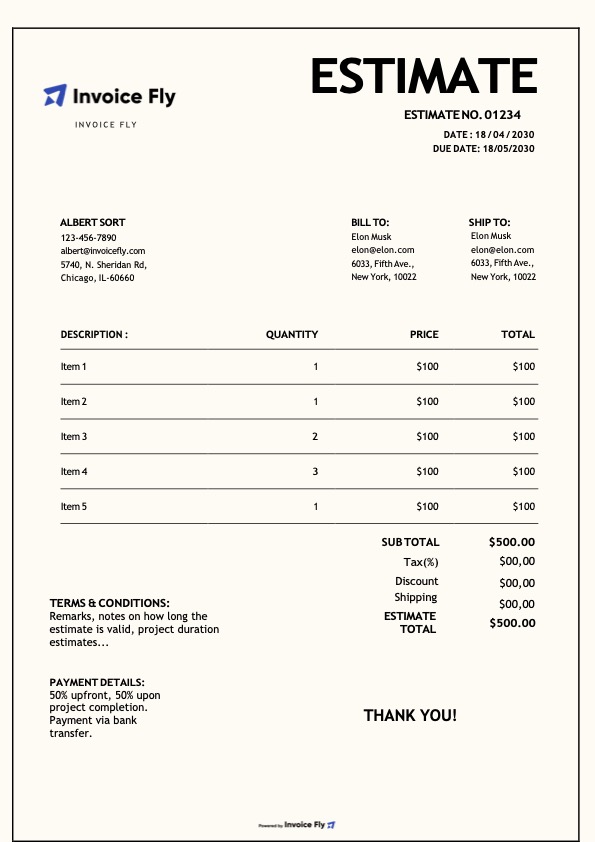
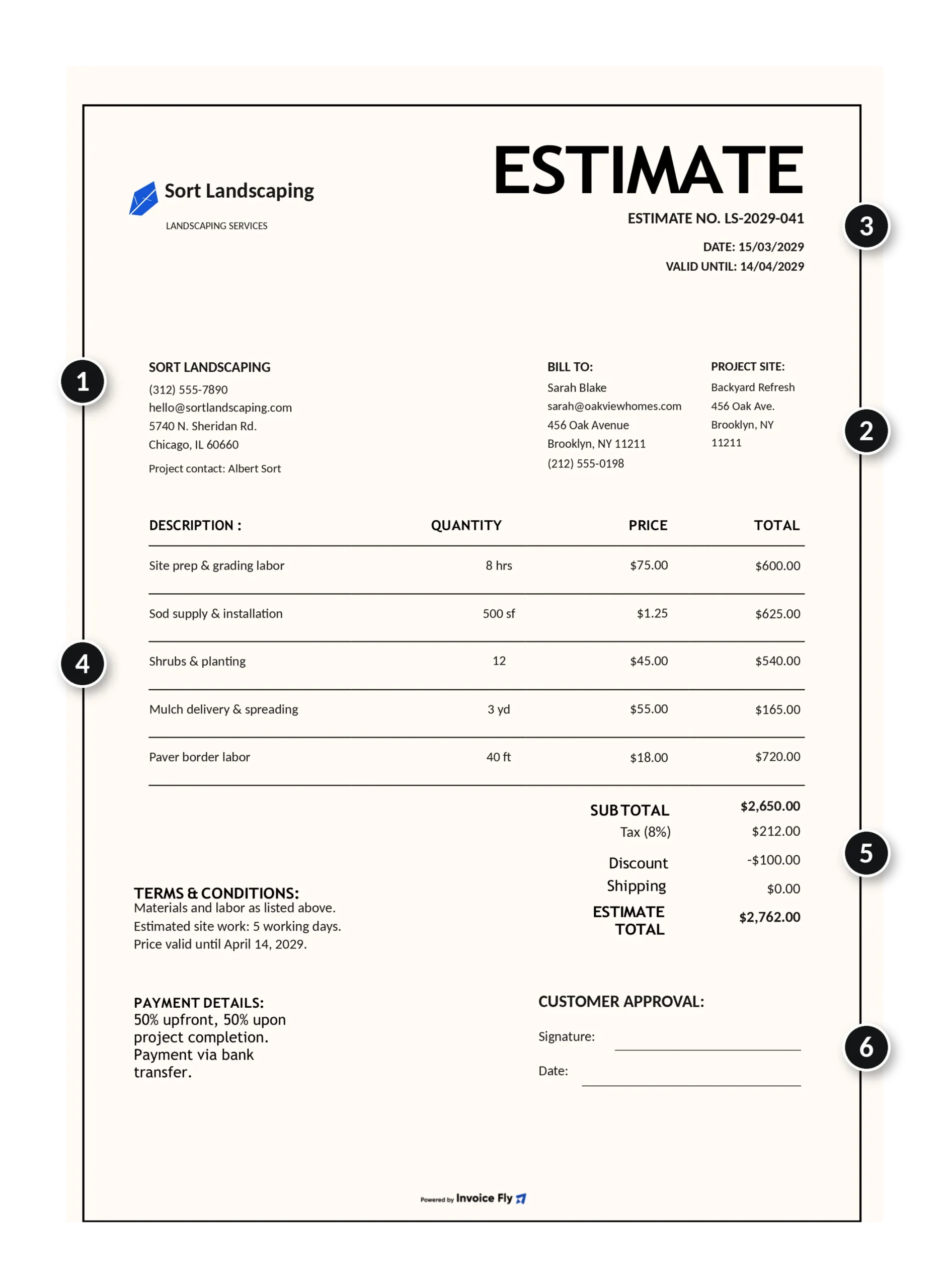
A good landscaping estimate gives customers a clear breakdown of the proposed work and expected costs. Use Invoice Fly’s landscaping estimate template to keep your project details and pricing organized.
-
Your Business Information
Include your landscaping company’s name, logo, address, phone number, and email. Add a project contact so customers know who to reach with questions.
-
Customer and Project Details
Add the client’s name, contact information, project name, and property address where the landscaping work will take place.
-
Estimate Number and Date
Give every estimate a unique reference number and include the date it was prepared. This makes landscaping estimates easier to organize and track.
-
Labor and Materials Breakdown
List the work, estimated labor hours, and materials needed, such as sod, shrubs, soil, mulch, planter boxes, and pavers. Include quantities and unit prices so customers can see where the costs come from.
-
Estimated Cost Summary
Add up the labor, materials, and other project charges. Show the subtotal, applicable taxes, discounts, and estimated total.
-
Customer Approval and Signature
Leave space for the customer’s signature and date to confirm they accept the proposed work and pricing.
How to Estimate a Landscaping Job
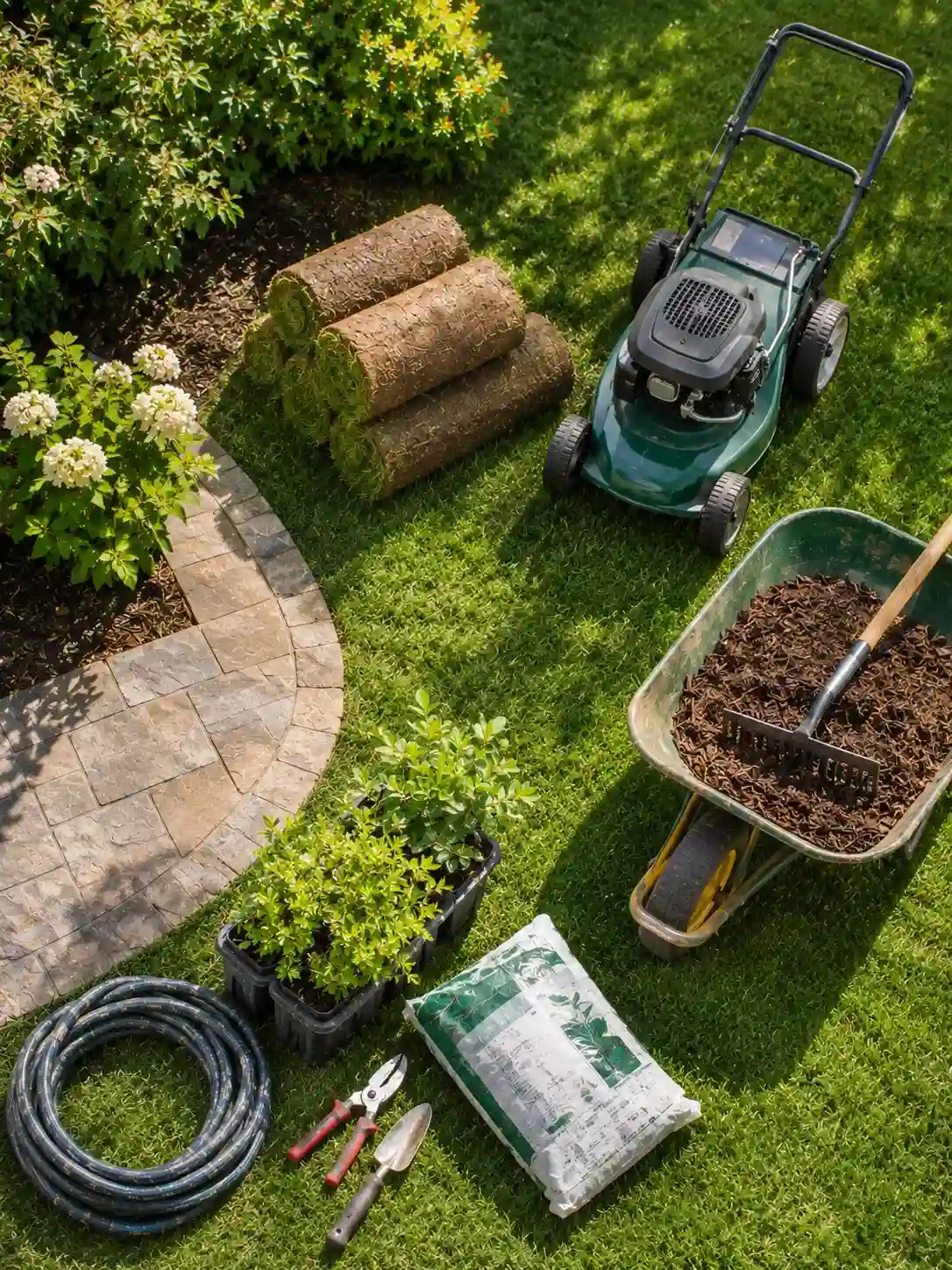
Every yard has its own challenges, so getting your pricing right starts with understanding the job. Follow these seven steps to calculate your landscaping costs, protect your profit, and prepare an accurate estimate.
-
Visit the Property and Understand the Job
Talk with the customer about their plans, budget, and timeline. Walk the property to see what needs to be done and spot any potential challenges.
-
Measure the Work Area
Calculate square footage for lawns, patios, and garden beds. Measure edging and retaining walls by length, and check the terrain, drainage, and site access.
-
Work Out Material Costs
Calculate how much soil, mulch, sod, plants, pavers, and other supplies you’ll need. Check supplier prices and allow for material waste.
-
Calculate Labor Costs
Estimate how many workers and hours you’ll need for preparation, planting, lawn mowing, installation, and cleanup. Multiply the estimated hours by your labor rates.
-
Factor in Equipment and Extra Expenses
Account for equipment rentals, fuel, delivery, waste removal, permits, and subcontractor costs where applicable.
-
Add Overhead and Profit
Remember the costs of running your landscaping business, including insurance, vehicles, and administration. Add your desired profit margin so the job is worth taking.
-
Review Your Total Project Cost
Add up your labor, materials, equipment, and overhead. Check that your final price covers the work involved and leaves room for a healthy profit before preparing your estimate.
Create Your Landscaping Estimate with Our Free Estimate Generator
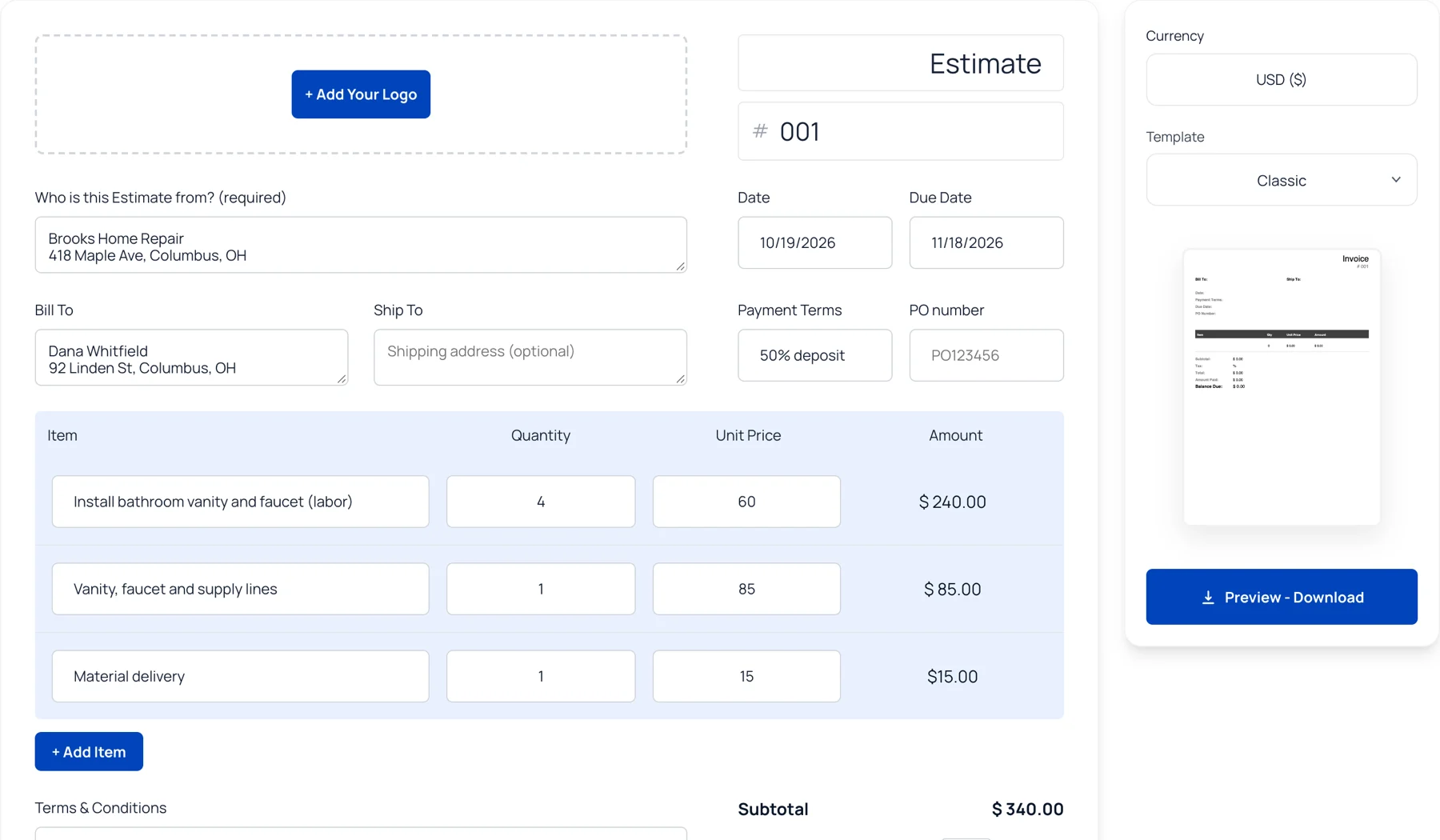
Prefer to build your estimate online? Add your landscaping labor, materials, and equipment costs to Invoice Fly’s free estimate generator, let automatic calculations handle subtotals, taxes, and totals, and download a professional estimate as a PDF, ready to send to your customer.
Try Our Online Estimate Generator