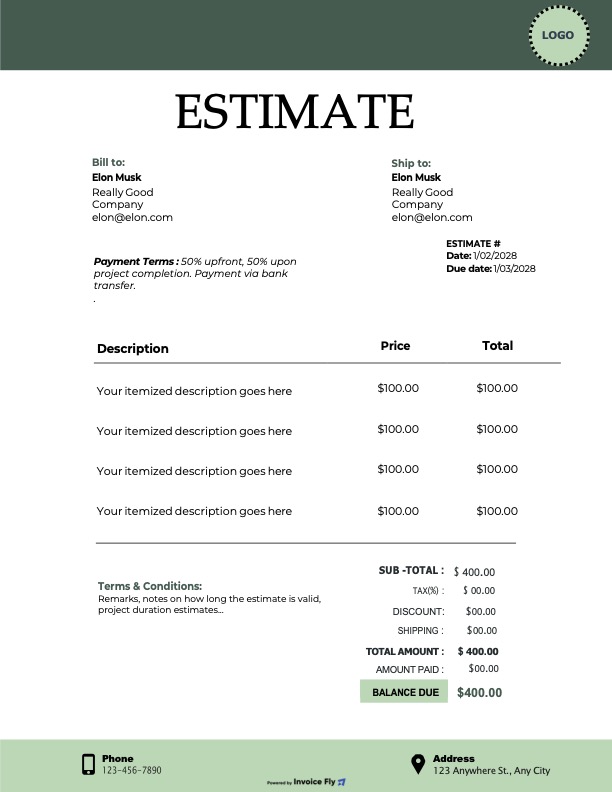
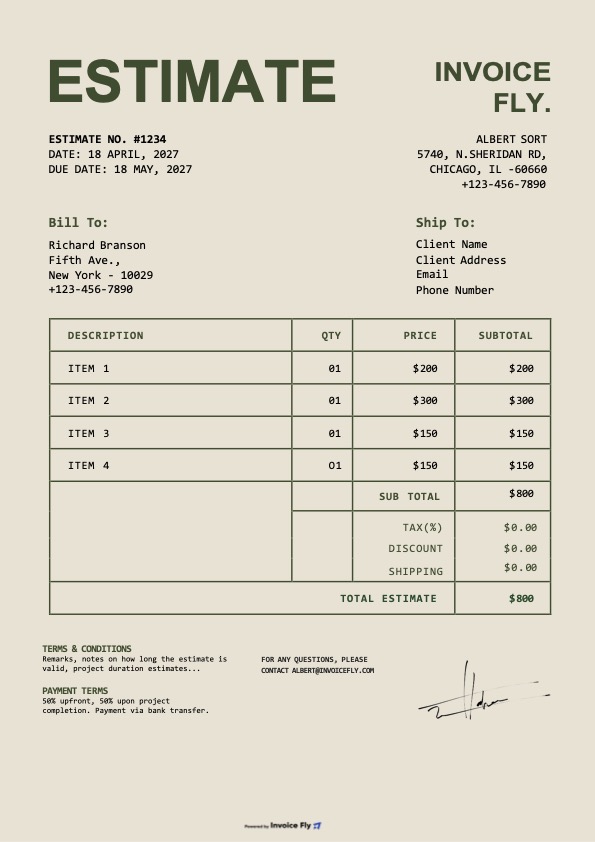
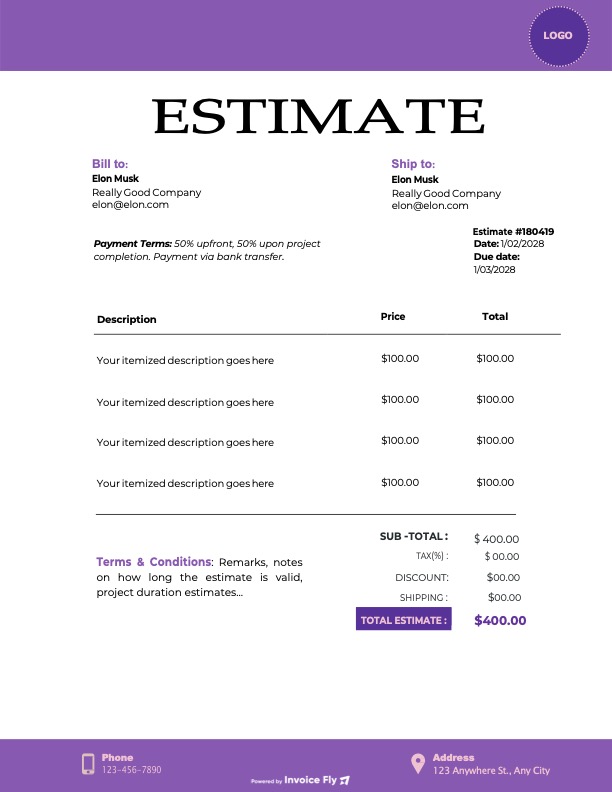
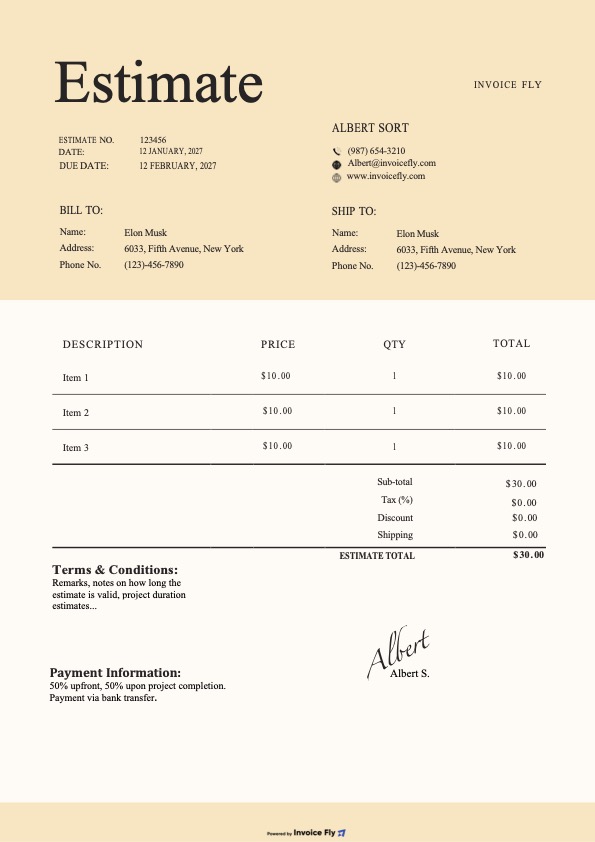
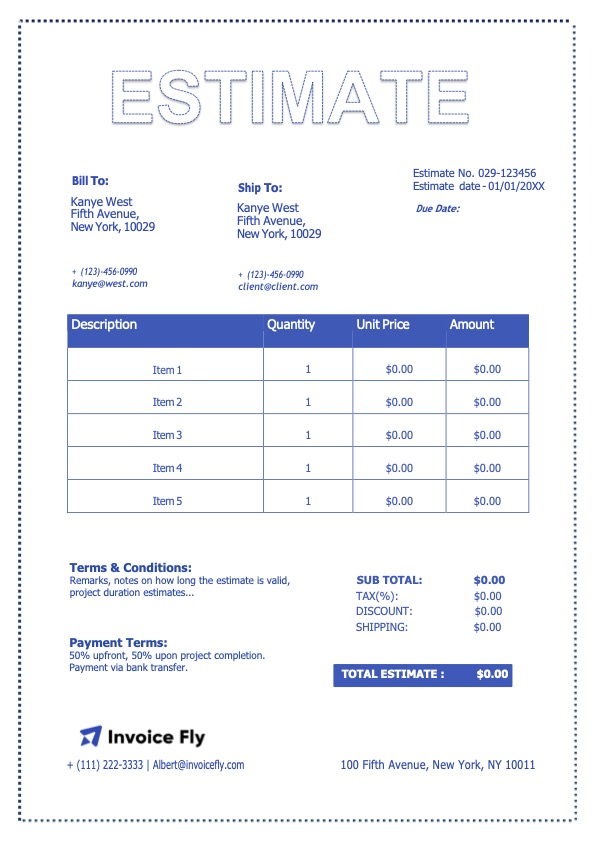
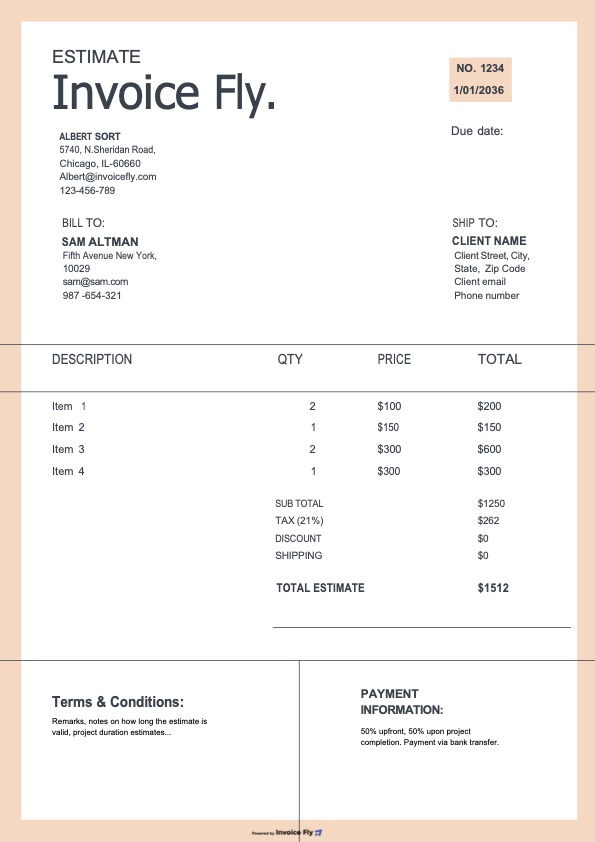
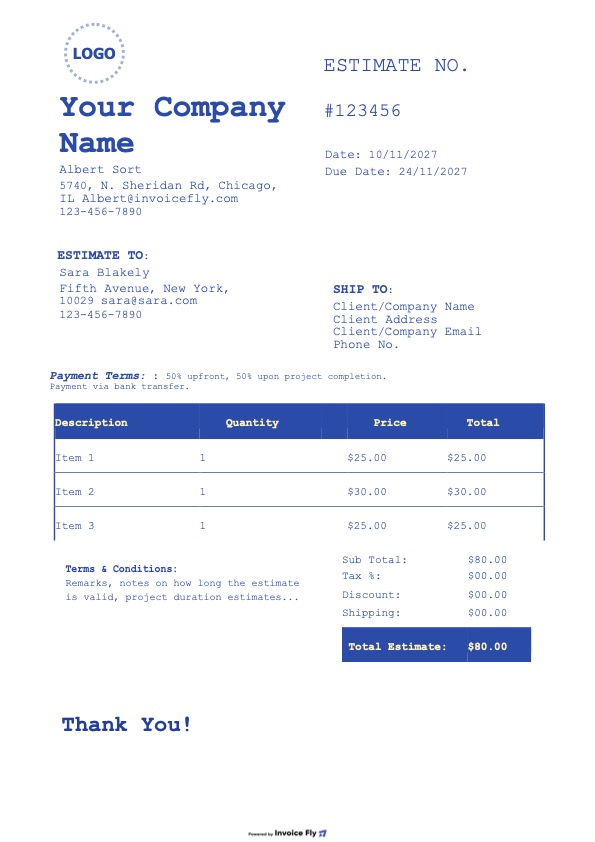
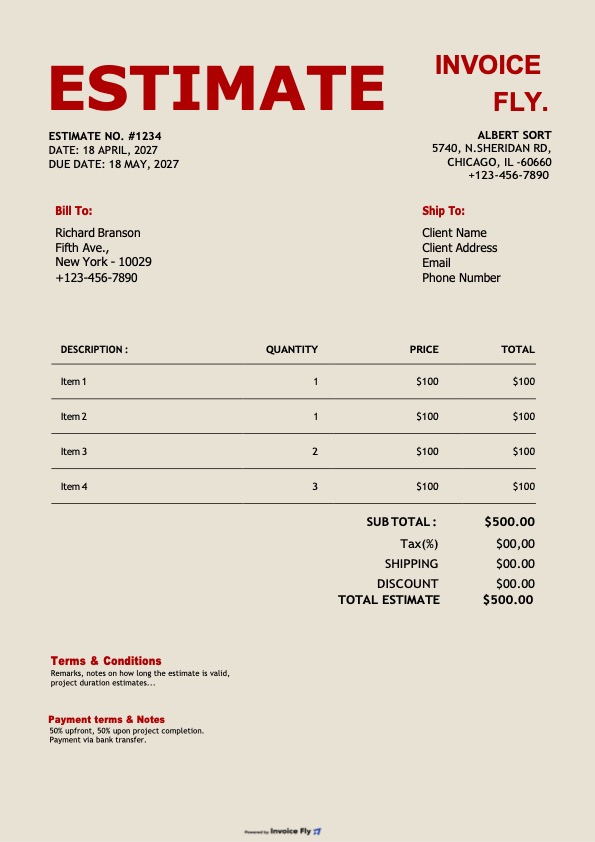
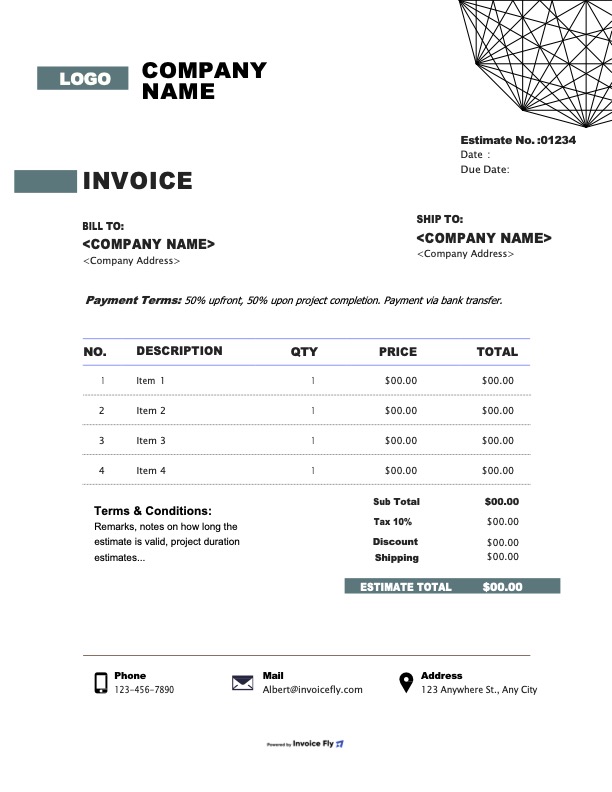
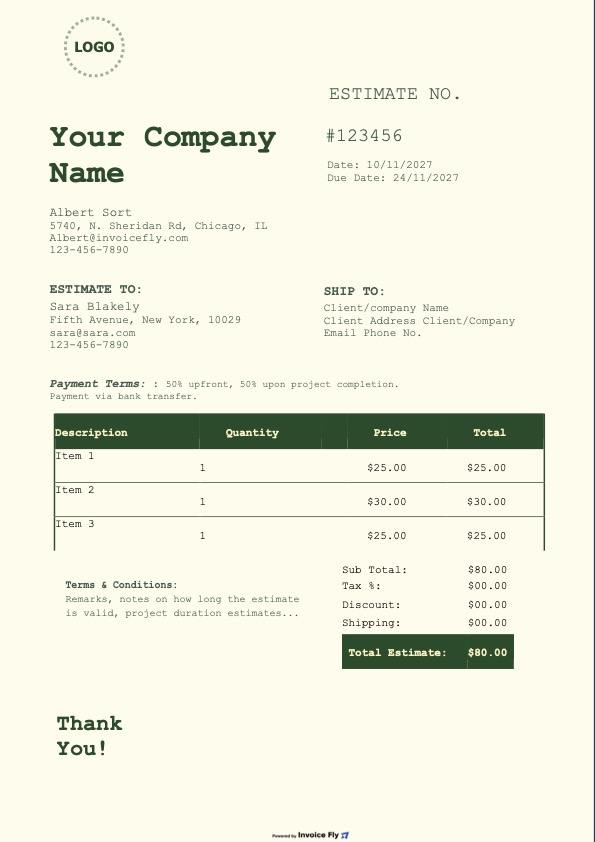
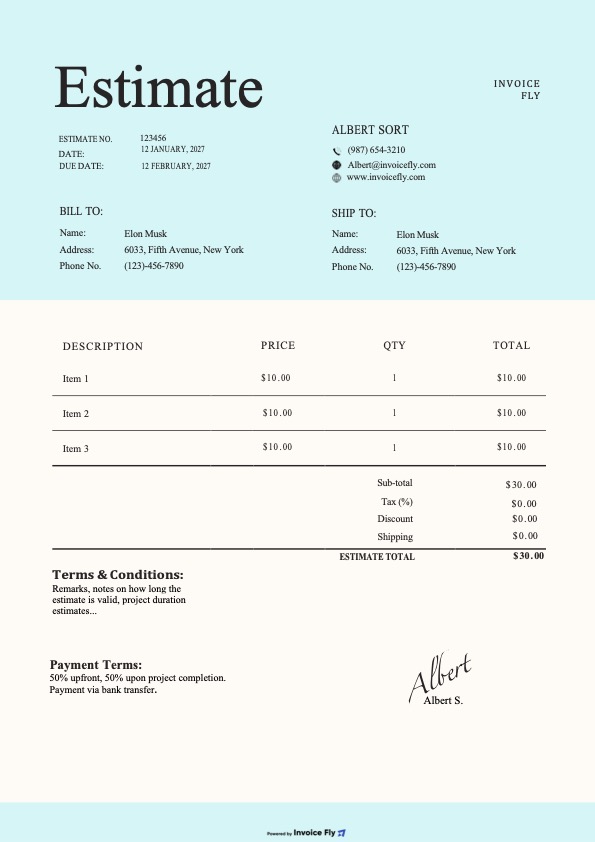
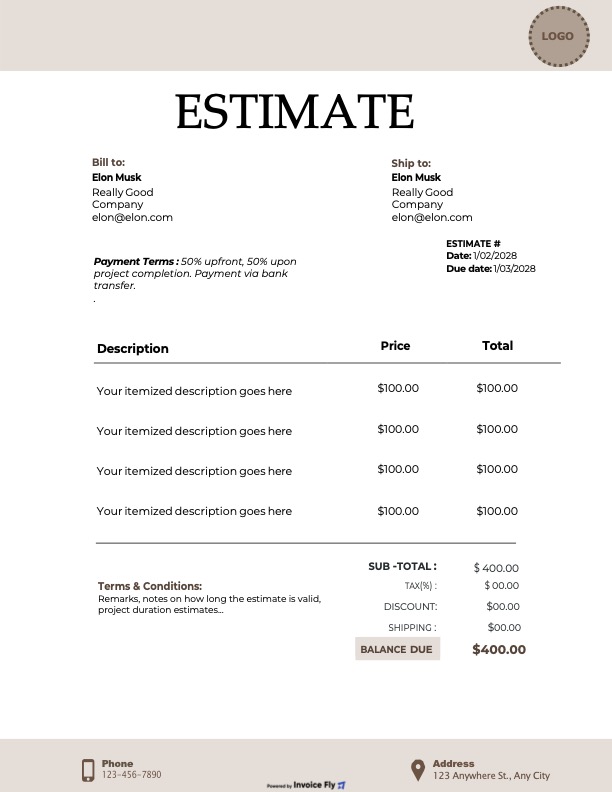
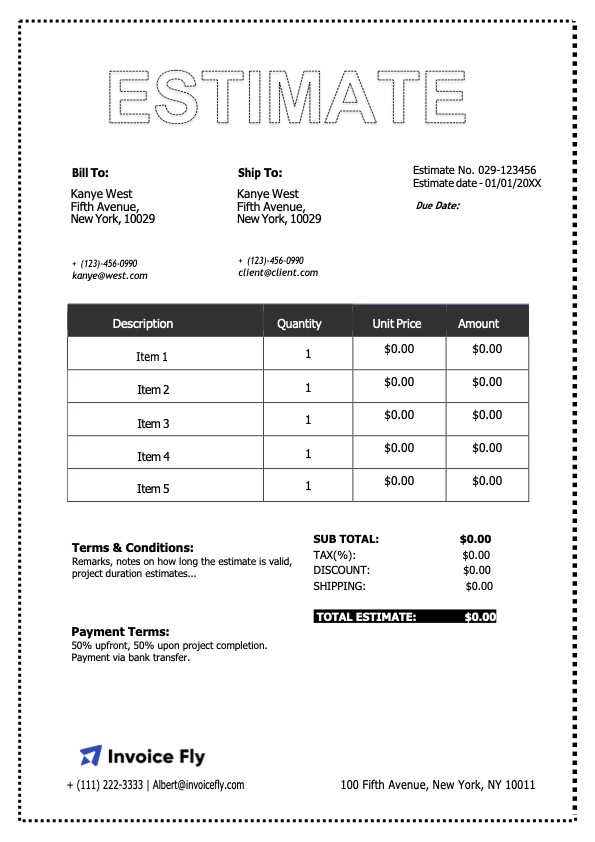
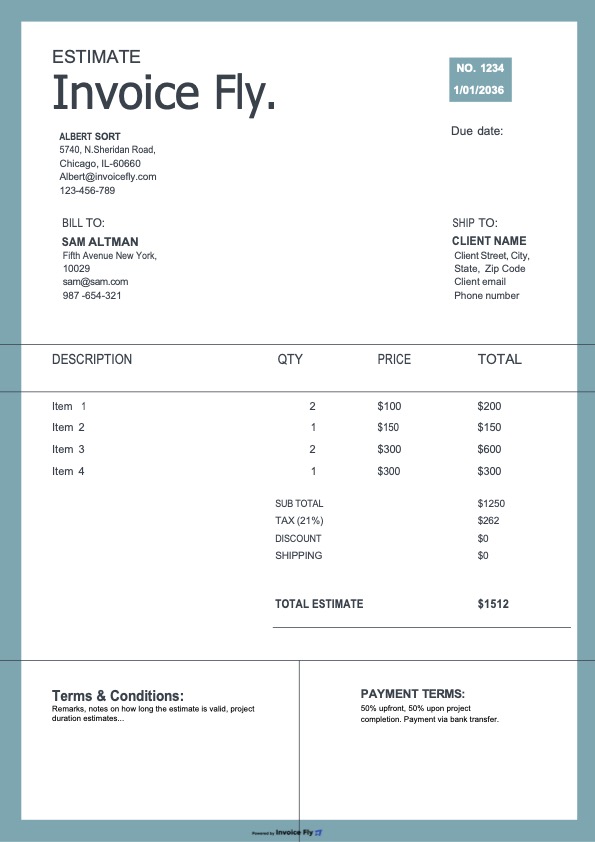
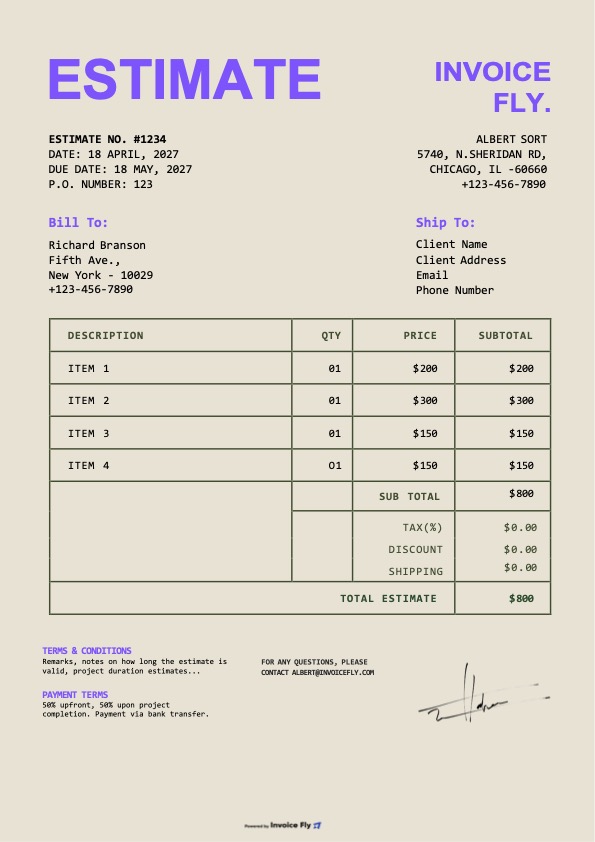
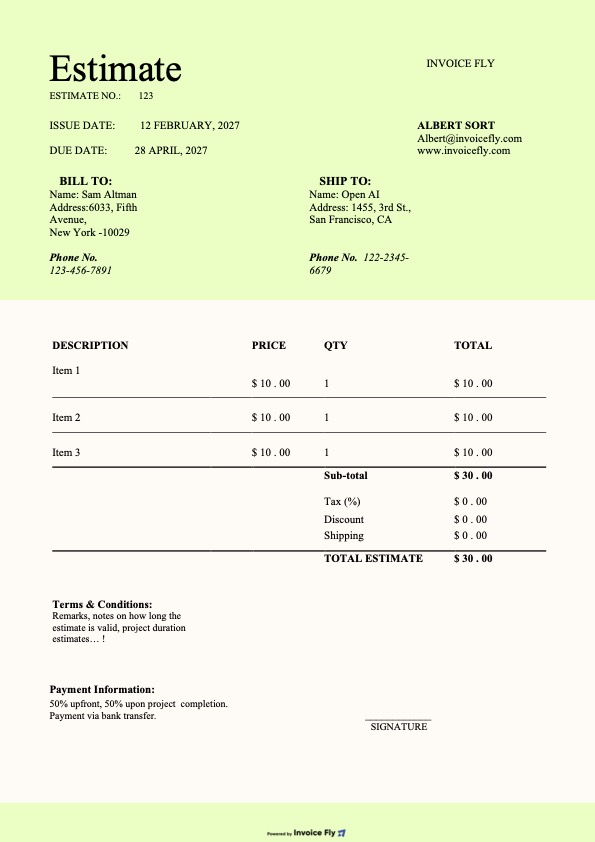
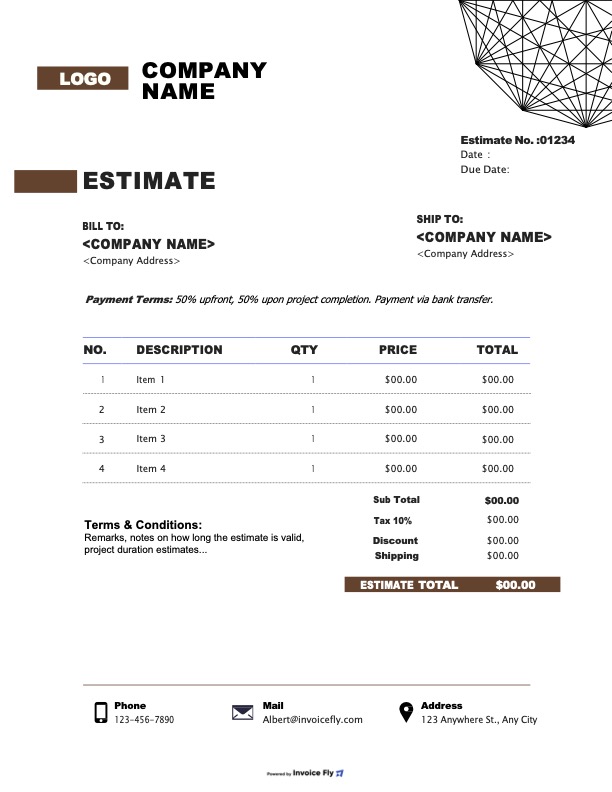
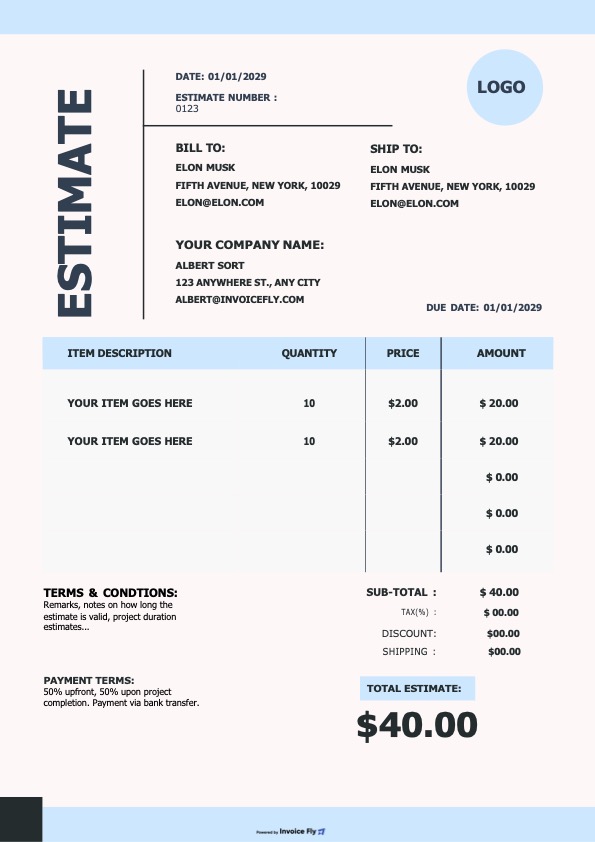
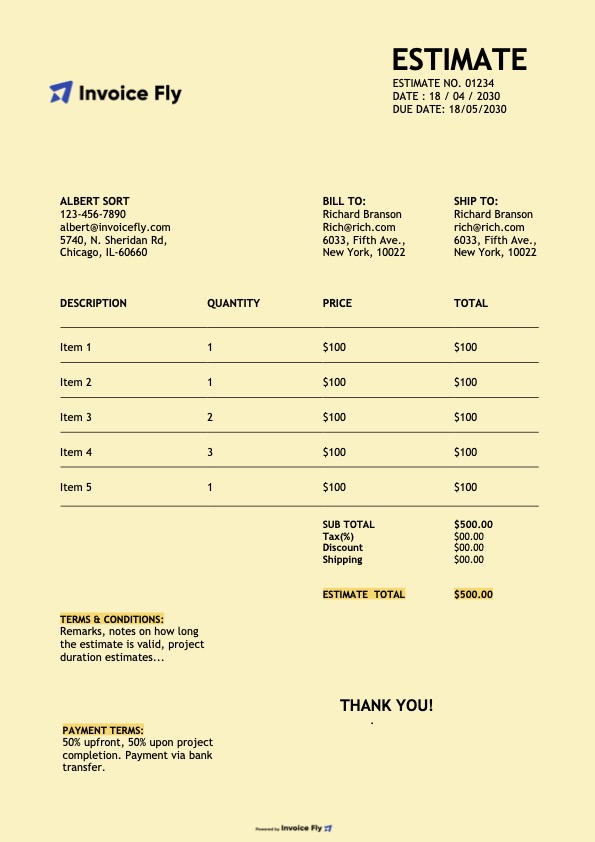
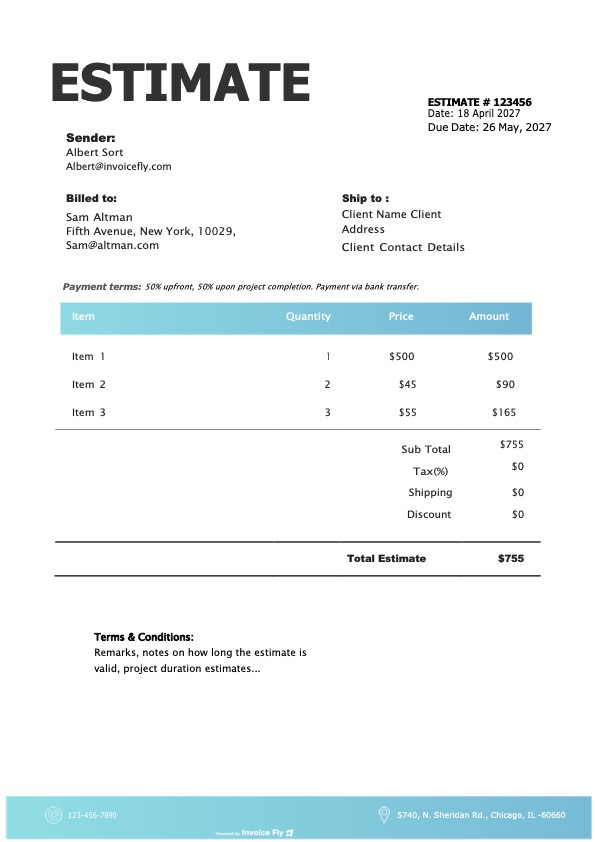
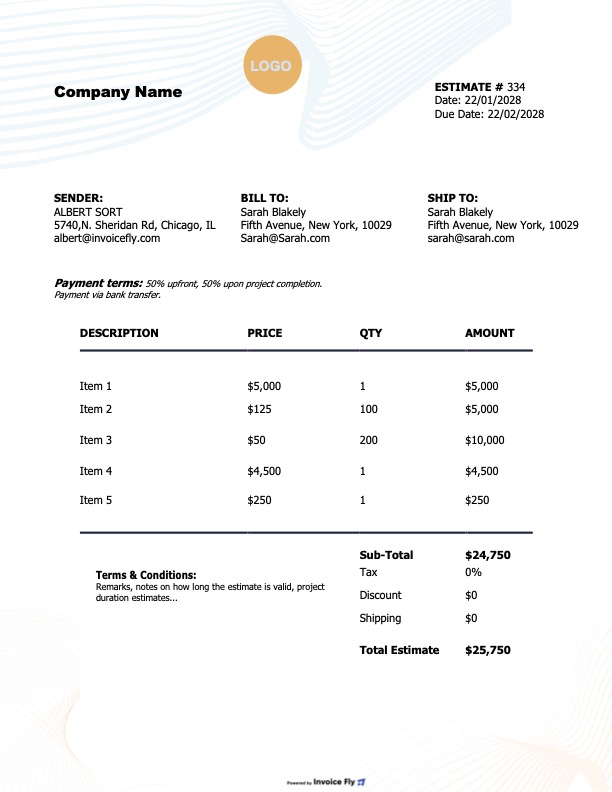
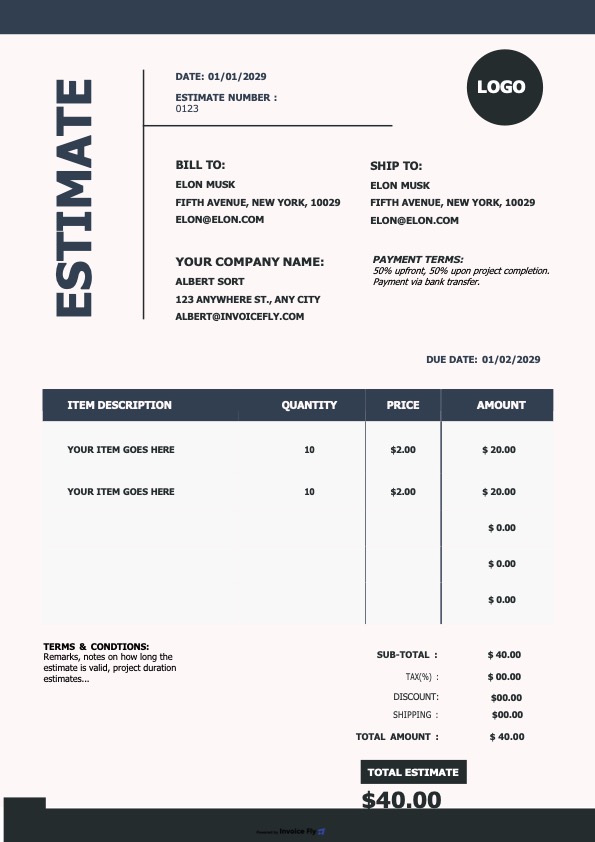
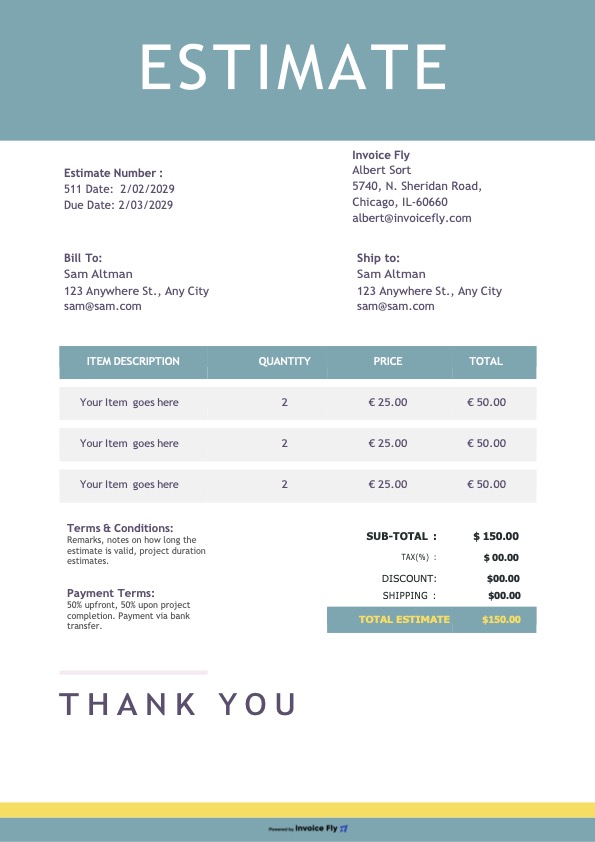
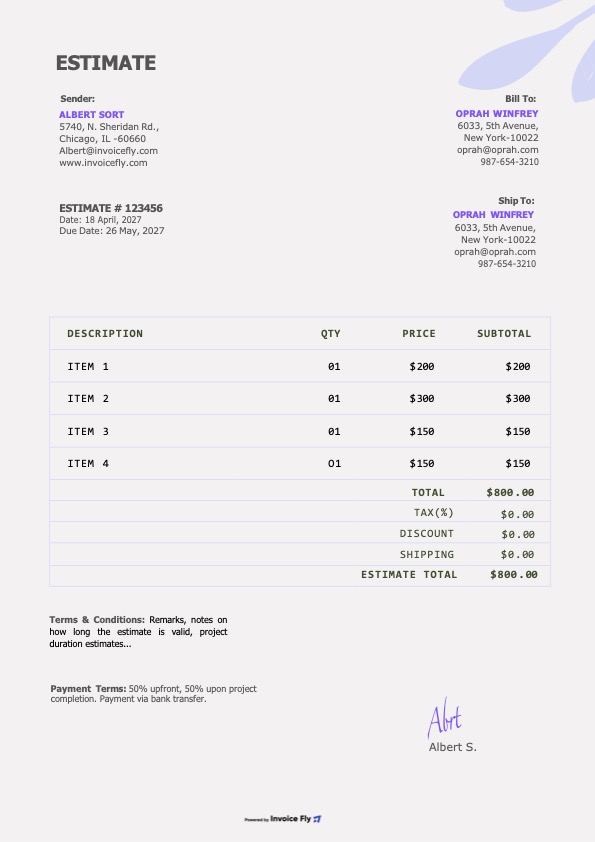
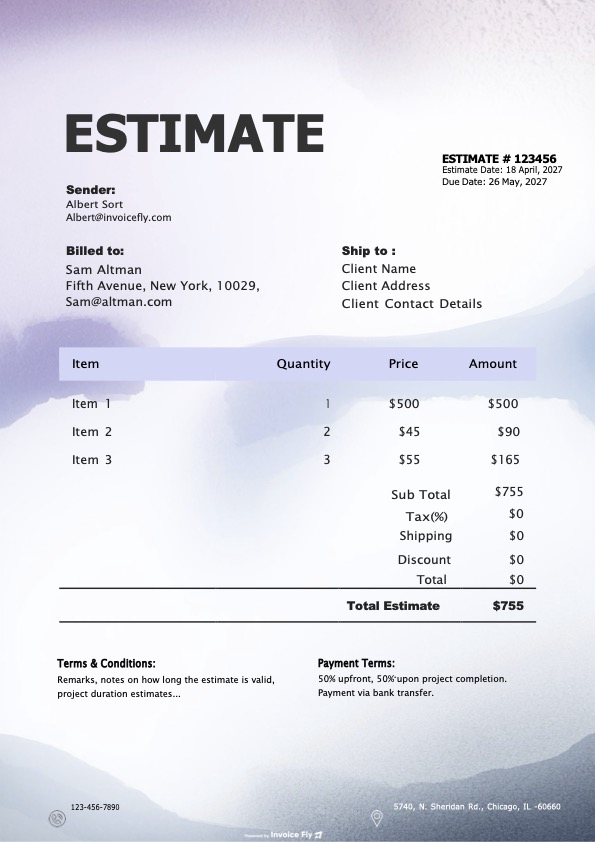
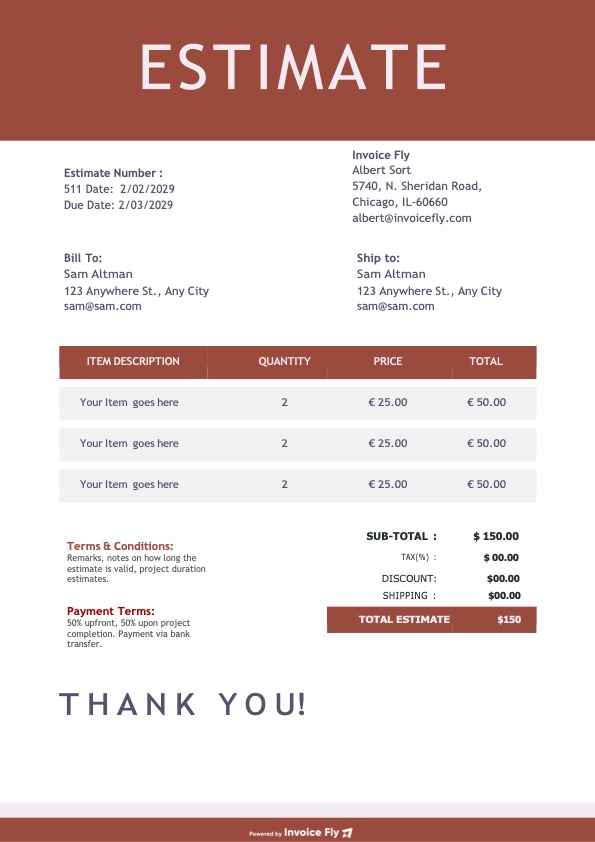
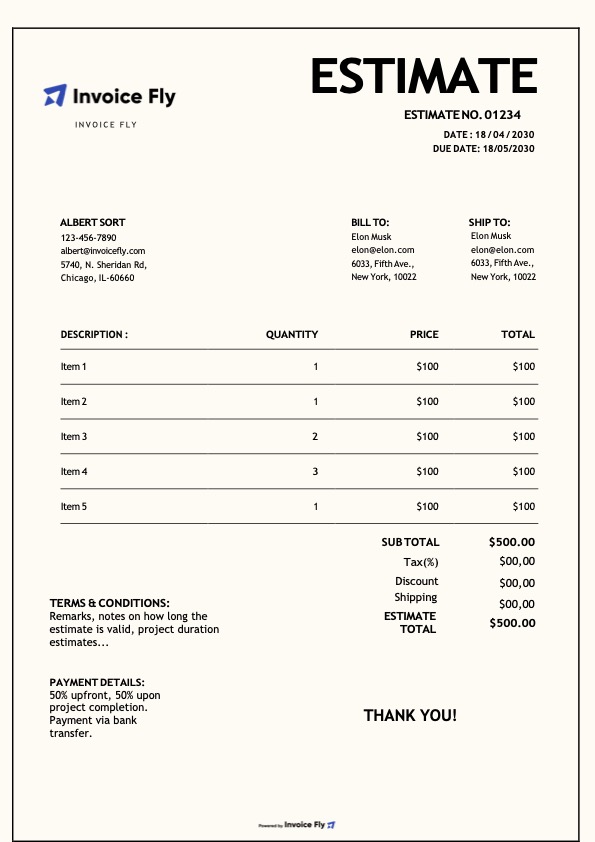
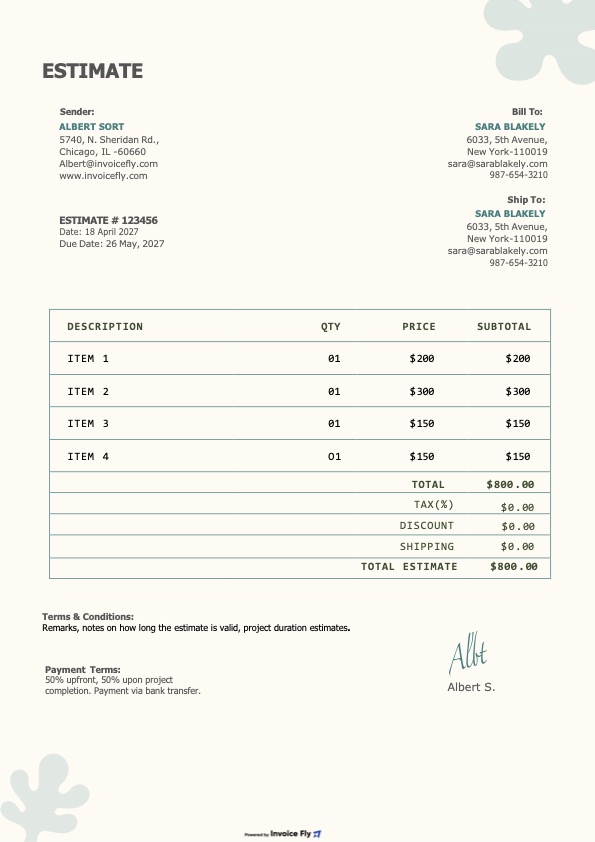
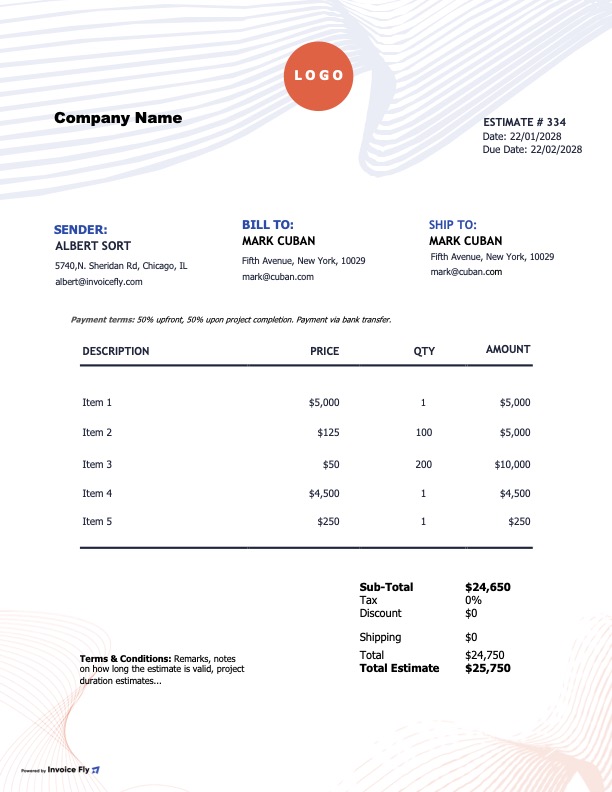
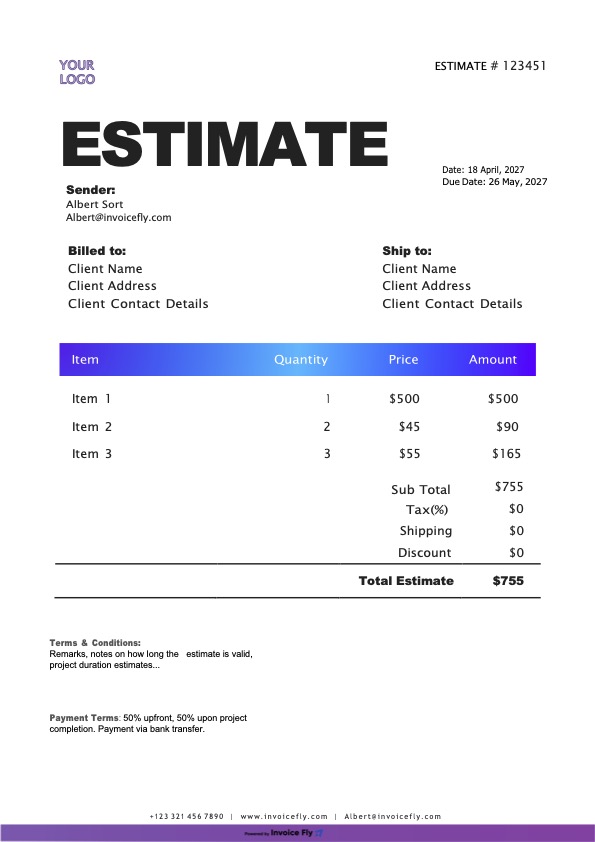
Free Handyman Estimate Template

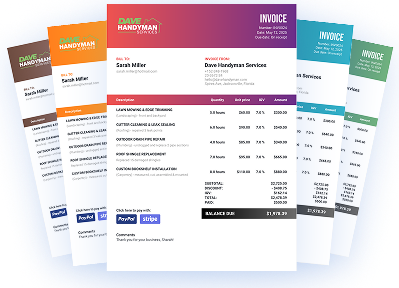
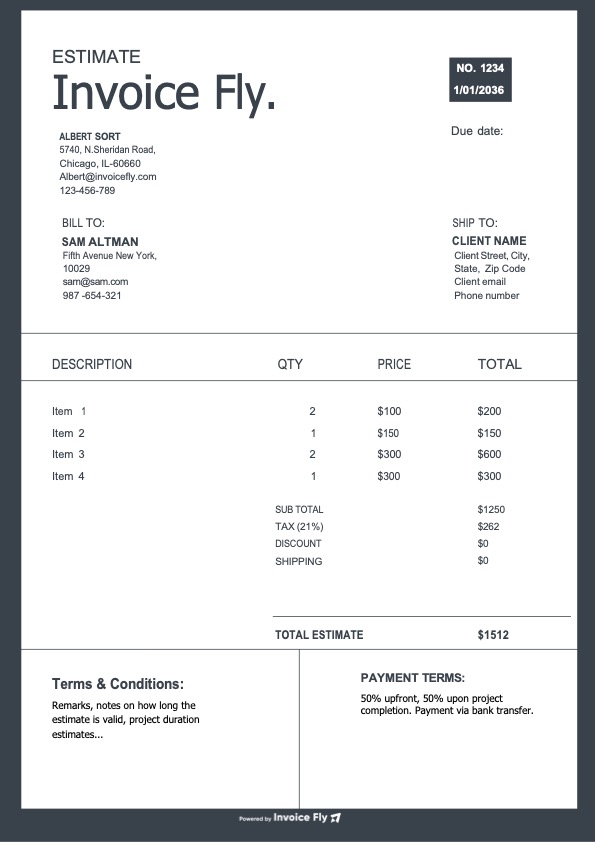
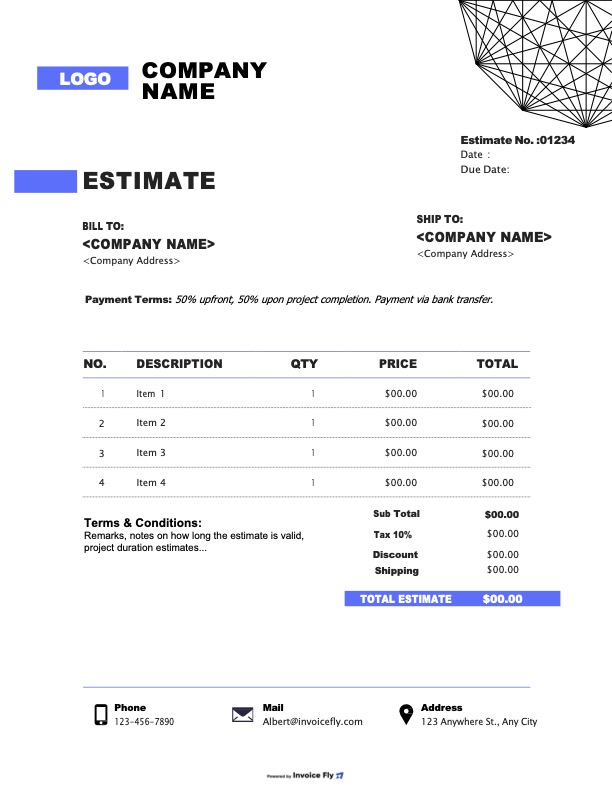
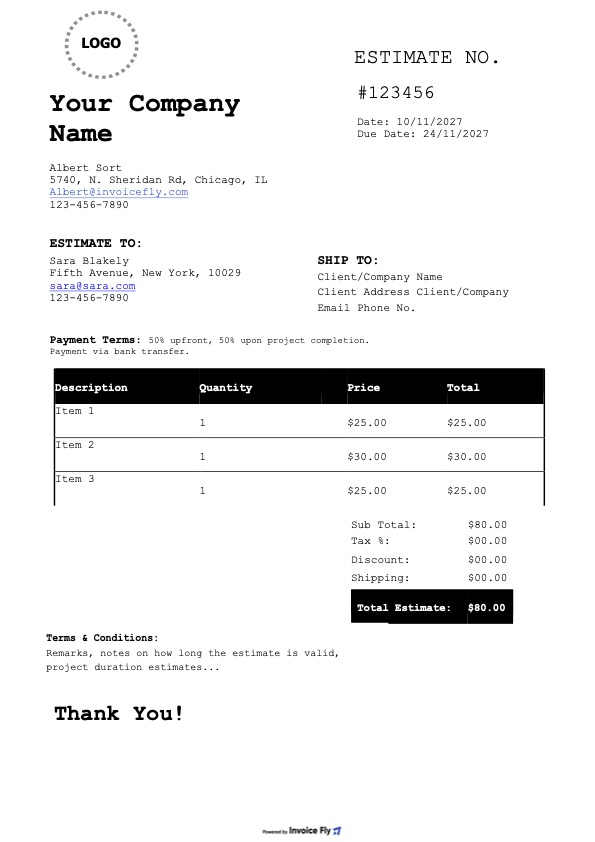
Create professional handyman estimates with free, customizable templates from Invoice Fly. Itemize labor, materials, and repair costs to give customers a clear breakdown of expected expenses before work begins. Download or edit your estimate in PDF, Google Sheets, Excel, Google Docs, or Word format.

Colors

Styles

Formats

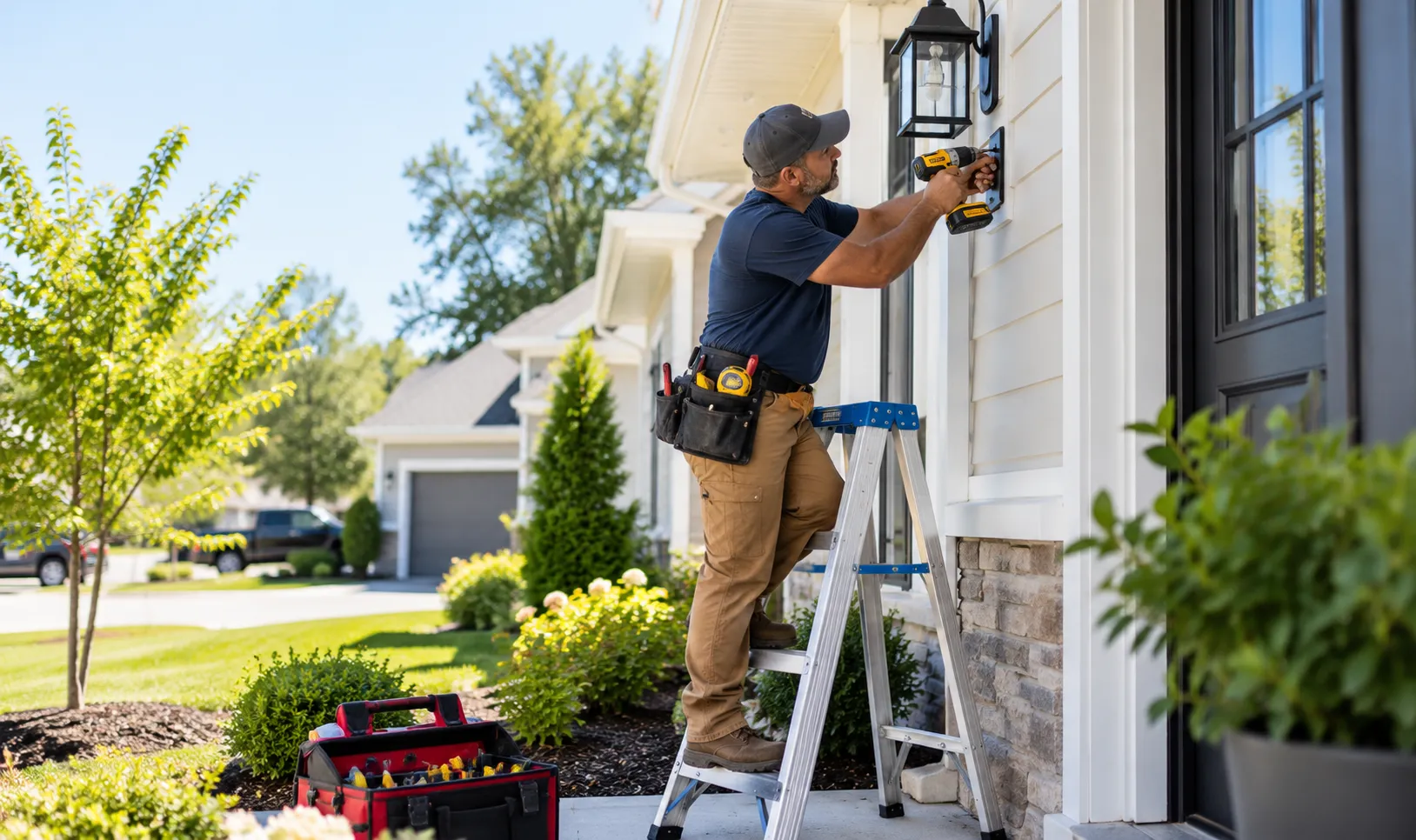
Handyman on a ladder installing an outdoor wall light on a home, with a tool bag on the porch
A light fixture swap, priced the same way as any other job: labor + materials + extras, agreed before the first screw goes in.

How to Estimate Handyman Jobs: 5 Simple Steps

Most handyman jobs come down to the same math. Work through these steps in order and every estimate you send will be clear, consistent, and easy for customers to approve.

  1. Assess the Job

    Understand the work required, materials needed, property access, and potential complications. For unfamiliar or complex jobs, request photos or inspect the property before preparing your estimate.

  2. Calculate Labor Costs

    Break the job into tasks and estimate the time needed for each. Include preparation, travel, setup, and cleanup where applicable. Multiply your estimated hours by your hourly rate.

    Example:4 hours × $60/hour = $240.

  3. Calculate Materials and Additional Costs

    List the required materials, quantities, and prices. Add applicable delivery, equipment rental, disposal, or travel fees, along with any agreed materials markup.

    Example:Materials $85 + delivery $15 = $100.

  4. Calculate the Estimated Total

    Add labor, materials, and additional charges. Account for applicable taxes, discounts, and deposits so the customer understands the expected cost.

    Example:Labor $240 + materials and delivery $100 = $340 before applicable taxes.

  5. Prepare and Send Your Estimate

    Include the scope of work, itemized costs, estimated total, payment terms, and estimate validity period. Get customer approval before starting, and confirm any additional costs if the scope changes. Use an Invoice Fly handyman estimate template to organize job costs and send customers clear, professional estimates.

Benefits of Using a Handyman Estimate Template

Pricing a repair job shouldn’t mean starting from scratch every time. A handyman estimate template helps you break down costs, explain your pricing, and get customers on the same page before work begins.
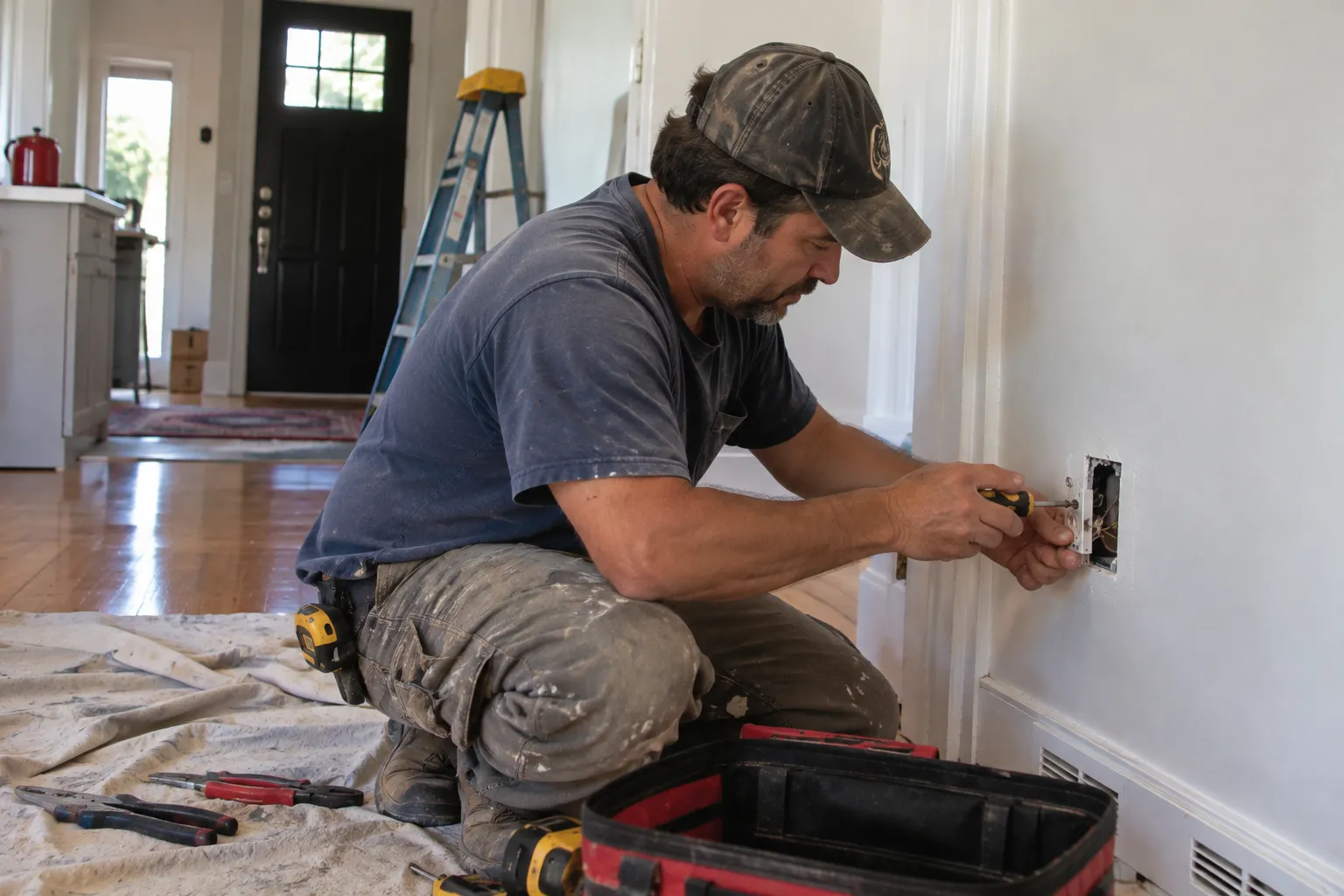
Handyman kneeling on a drop cloth while installing an electrical outlet in a home, with a tool bag and pliers beside him
  • Break Down Every Cost

    List labor, materials, and extra charges so customers can see what they’re paying for.

  • Price Jobs with Confidence

    Account for the time, supplies, and work involved before sending an estimate.

  • Get Customers on the Same Page

    Outline the work included and expected costs to avoid surprises later.

  • Spend Less Time on Paperwork

    Reuse a free handyman estimate template for repairs, installations, and home improvement jobs.
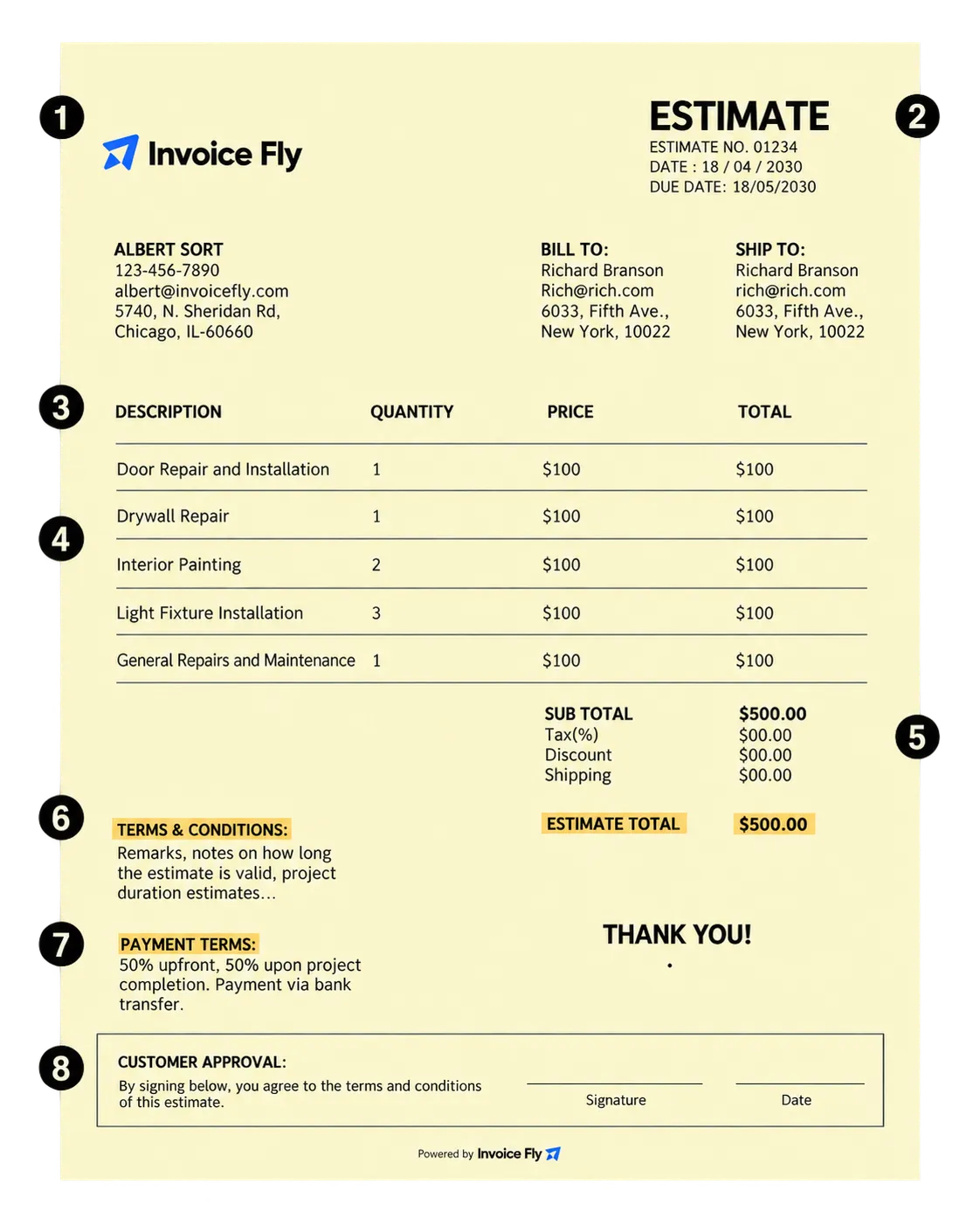
Elements of a handyman estimate template: 1 business details, 2 customer and job details, 3 description of work, 4 labor, materials and additional costs, 5 estimated subtotal, taxes and total, 6 scope and exclusions, 7 payment terms and validity, 8 conditions and customer approval

What to Include in a Handyman Estimate

A handyman estimate should cover these essential elements so customers understand the work, pricing, and conditions before approving the job.

  1. Business Details

    Business name, logo, phone number, email, and business address.

  2. Customer and Job Details

    Customer contact information, property address, estimate number, and date.

  3. Description of Work

    A clear breakdown of the repairs, installations, or home improvement tasks included.

  4. Labor, Materials, and Additional Costs

    Estimated labor hours and rates, materials, supplies, equipment rental, delivery, and other applicable charges.

  5. Estimated Subtotal, Taxes, and Total

    Itemized costs, discounts, applicable taxes, and the estimated project price.

  6. Scope and Exclusions

    Outline the work covered by the estimate and specify what is not included.

  7. Payment Terms and Validity

    Include deposits, payment schedules, accepted payment methods, and how long the estimate remains valid.

  8. Conditions and Customer Approval

    Explain potential extra costs from unexpected repairs or scope changes, and include space for customer acceptance before work begins.

Common Handyman Estimating Mistakes to Avoid

A clear estimate helps you set expectations with customers before a job begins. Avoid these common mistakes when preparing a handyman estimate.

  • Underestimating Labor Time

    Account for preparation, travel, setup, cleanup, and the time required to complete each task.

  • Forgetting Material and Supply Costs

    Include all necessary parts, hardware, consumables, and delivery fees to avoid underpricing the job.

  • Leaving Out Additional Charges

    Factor in equipment rental, disposal, parking, and other job-related expenses where applicable.

  • Being Vague About the Scope of Work

    Describe the repairs or installations included in the estimate and clearly identify any exclusions.

  • Ignoring Unexpected Repairs

    Explain how hidden damage or additional work may affect the final price, and get customer approval before proceeding with changes.

  • Failing to Set Clear Payment Terms

    Specify any deposit, payment schedule, and estimate validity period so customers know what to expect.

  • Starting Without Customer Approval

    Get written acceptance of the estimate before beginning work to reduce misunderstandings about pricing and scope.

Using a free handyman estimate template from Invoice Fly helps you organize costs, outline the work, and present a professional estimate before starting a job.

Frequently Asked Questions

To write a professional handyman estimate, assess the job, calculate labor and material costs, include any additional charges, and outline the work involved. Use a handyman estimate template to organize these details, show the estimated total, and explain payment terms and potential extra costs. Get the customer's approval before starting work.

A handyman estimate should include your business and customer details, estimate number and date, description of the work, labor costs, materials, additional charges, estimated taxes, and total price. You should also specify the scope of work, exclusions, payment terms, estimate validity, and customer approval.

Yes! Invoice Fly offers a free handyman estimate template that you can customize for repairs, installations, and home improvement jobs. Add your business details, outline the work, itemize labor and material costs, and calculate the estimated total. Use Invoice Fly to create a clear, professional estimate and help customers understand the expected cost before work begins.

Yes. A printable handyman estimate template is useful when you prefer to discuss a job in person or provide a physical copy to a customer. Include the job description, estimated labor and material costs, additional charges, and terms so the customer can review the expected price.

Yes. A handyman estimate template in Excel can help you list materials, calculate labor costs, and add up estimated expenses using spreadsheet formulas. It can be useful if you regularly estimate similar jobs, but check your formulas and totals before sending the estimate to a customer.

Estimate how many hours each task will take and multiply the total hours by your hourly rate. Include preparation, travel, setup, and cleanup when applicable. For example, four hours at $60 per hour equals $240 in estimated labor costs, before materials, additional charges, and applicable taxes.

To price a handyman job, assess the work required, estimate labor hours, calculate material and supply costs, and account for expenses such as equipment rental or delivery. Consider the job's complexity and your usual pricing structure. Present the breakdown clearly so customers understand how you arrived at the estimated total.

For jobs where costs may change, you can account for potential unexpected expenses. The amount depends on the project's complexity and uncertainty; there is no universal percentage that applies to every job. Explain how unforeseen work will be handled and obtain customer approval before charging for changes.

An estimate is an expected cost based on the information available about a job. A quote generally sets out a specific price for an agreed scope of work and may be binding depending on its terms and applicable law. Make the pricing basis clear so customers understand whether the amount may change.

The validity period depends on the job, material prices, and your business practices. State an expiry date or a clear validity period on the estimate so customers know how long the pricing applies. If costs change after that period, review the estimate before proceeding.

Send the estimate after assessing the job and calculating the expected labor, materials, and other costs, but before beginning work. For complex repairs, inspect the property first or explain which costs cannot be confirmed until further investigation. Get approval before starting the agreed work.

Create your first estimate free with our Online Estimate Generator.

Free Estimate Generator
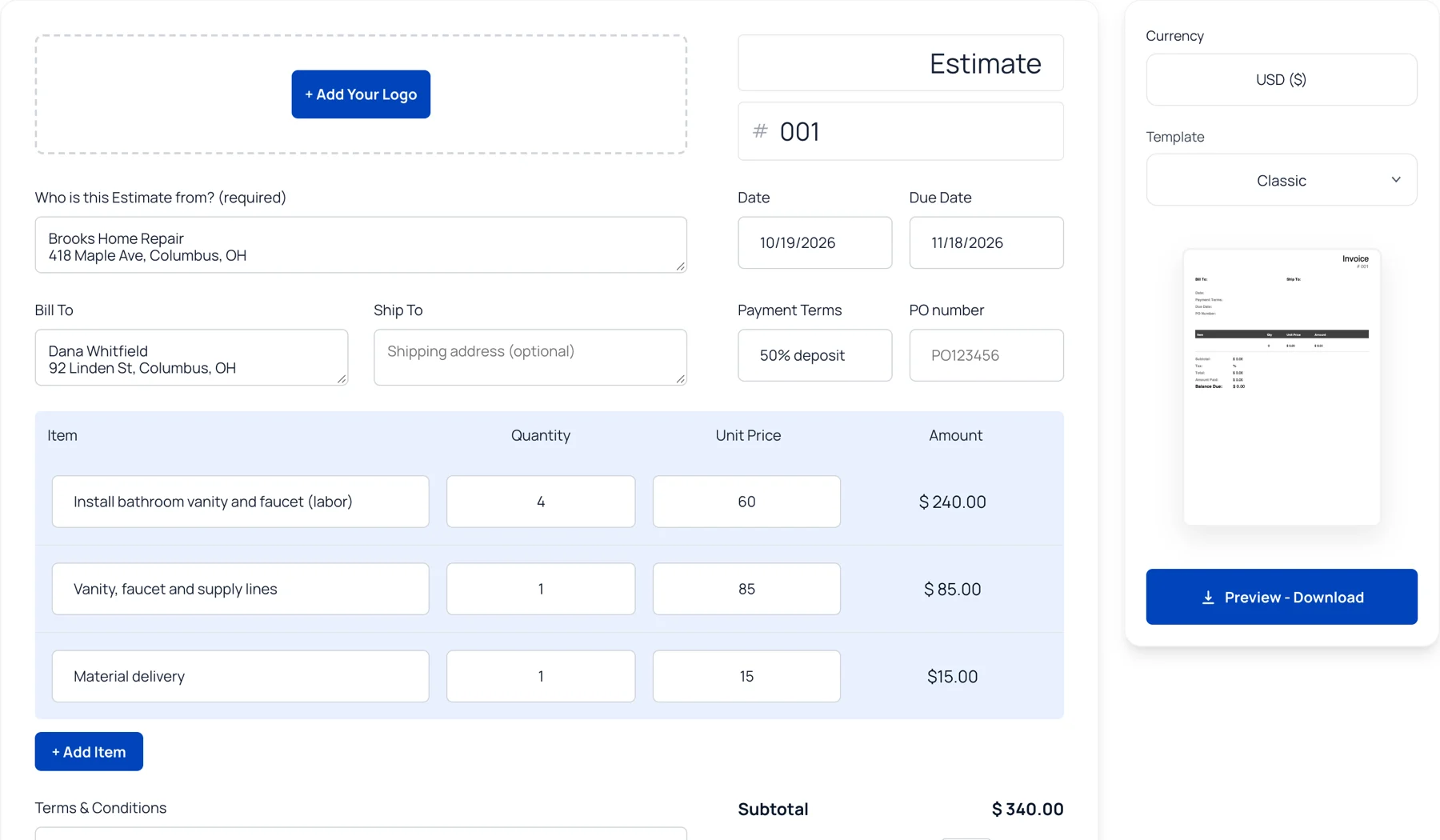

Invoice Fly free online estimate generator with handyman line items, totals and template options

Explore the Invoice Fly Academy

Learn how to create accurate estimates, price handyman jobs, and manage your service business with practical guides from Invoice Fly Academy.

Invoice Fly app

Get Started for Free

Create professional handyman estimates in minutes with Invoice Fly. Customize your estimate, add job costs, and send it to your customer.